A tribunal’s stay on Urdu as a prerequisite for Naib Tehsildar posts has reignited a fierce debate in Jammu and Kashmir over language, governance, and identity in a politically sensitive region, writes Masood Hussain
The decision of the Central Administrative Tribunal (CAT) to stay Jammu and Kashmir’s order mandating Urdu as a basic qualification for recruitment to the post of Naib Tehsildar has reignited a long-standing and deeply sensitive debate on language, identity, and governance in a region long shaped by its multilingual past and contested present. This has pushed Urdu to re-emerge as a source of contention despite being a language of love and unity.
At the centre of this controversy lies a deceptively simple question: Should knowledge of Urdu continue to be essential for candidates applying to revenue department posts in Jammu and Kashmir, a region where the language has served as the cornerstone of administrative, judicial, and land revenue affairs for more than a century?
The Controversy
Earlier last week, the Jammu Bench of the CAT, comprising Rajinder Singh Dogra (Judicial Member) and Ram Mohan Johri (Administrative Member), ordered the Jammu and Kashmir Services Selection Board (JKSSB) to suspend its notification requiring Urdu as a prerequisite for the Naib Tehsildar post. In its interim relief, the tribunal directed the Board to accept applications from all candidates possessing a graduation degree with knowledge of any one of the Union Territory’s five official languages, Hindi, English, Urdu, Dogri and Kashmiri.
“It is the petitioners’ contention that such a restriction is arbitrary and discriminatory, as the Act recognises multiple languages as official languages of the Union Territory,” the CAT order stated. “This Court hereby stays the operation of the relevant provisions of the Jammu and Kashmir Revenue (Subordinate) Service Recruitment Rules of 2009, insofar as they mandate graduation with knowledge of Urdu as the minimum qualification for the post of Naib Tehsildar.”
This ruling followed a petition filed by Jammu-based aspirants, including Rajesh Singh and others, who argued that making Urdu a mandatory criterion was “unconstitutional, discriminatory, and violative of equality.” Represented by senior advocate Abhinav Sharma and advocate Abhirash Sharma, the petitioners challenged the rule under the Jammu and Kashmir Revenue (Subordinate) Service Recruitment Rules of 2009.
The decision was immediately celebrated by the Bharatiya Janata Party (BJP), which had been campaigning for the removal of Urdu as a compulsory requirement ever since the JKSSB issued its notification in June 2025 for 75 vacant Naib Tehsildar posts.
Calling it a “victory against linguistic discrimination,” BJP legislator R S Pathania said, “There will be no discrimination on the basis of language now. Everyone qualified in any of the five official languages can apply.”
However, this judicial order has sparked a strong backlash in Kashmir.
Quick Reactions
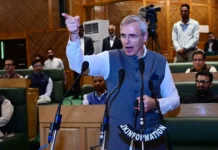
Chief Minister Omar Abdullah publicly criticised the CAT decision, calling it administratively unwise. “Even before Independence, our revenue records were in Urdu. How will a Revenue Department official function without knowing the language? It is essential for administrative efficiency,” he said. Abdullah recalled that IAS and JKAS officers in the past were allowed to learn basic Urdu after selection, and suggested a similar policy instead of removing the requirement altogether.
PDP president Mehbooba Mufti, a former Chief Minister, struck a sharper tone, expressing “deep disappointment” and alleging that “divisive politics” were influencing the judiciary. “Urdu, a recognised official language for decades, is now being unfairly communalised,” she said in a post on X (formerly Twitter). “This requirement is rooted in administrative necessity, not sectarian preference.”
Sajad Lone, president of the Peoples Conference and MLA from Handwara, went a step further, calling the CAT ruling a step toward the “linguicide” of Urdu and a systematic marginalisation of the Kashmiri-speaking majority. “It’s ironic that a language that once gave Kashmiris a small edge in bureaucratic exams is now being targeted. This will deeply skew the playing field,” he said.
Lone’s party, along with the PDP and the National Conference, argued that Urdu is not endemic to any religion or region within Jammu and Kashmir. Rather, it emerged historically as a unifying official medium under the Dogra Maharajas, particularly during Maharaja Pratap Singh’s reign.

The Historical Context
The roots of Urdu’s prominence in Jammu and Kashmir run deep. During the early Dogra period, Persian was the state’s official language. That changed in the late 19th century, when Maharaja Pratap Singh adopted Urdu as the sole official language, aiming to replace Persian and unify the administrative machinery of a region with diverse geographies, faiths, and ethnicities.
It was under the stewardship of Sir Walter Lawrence, the British officer appointed as the first Settlement Commissioner in 1889, that Urdu became the de facto language of land settlement. The first comprehensive land records of Jammu and Kashmir, many of which still form the basis of revenue management, were inscribed in Urdu, a tradition that has remained unchanged.
Even now, vital records like shajras (ancestral land documents), girdawaris (crop inspection registers), and jamabandis (record-of-rights) are maintained in Urdu, which is also the working language in lower courts, police records, and tehsil offices.
Not so long ago, the IAS officers who would get the Jammu and Kashmir cadre were supposed to have working knowledge of Urdu, and they had to pass a simple test conducted by the Jammu and Kashmir Public Service Commission. This order was revoked not so many years ago when the IAS officers joined hands to undo it in response to a simple order asking them to pass the examination.
“Once the officers would get their cadres, Lal Bahadur Shastri National Academy of Administration (LBSNAA) would teach them the language they would require, and there was a famous teacher, Arshaduddin, who would teach Urdu,” one former IAS officer said. “It may not be around anymore.” In Jammu and Kashmir, it would be followed up by IMPARD as part of the orientation course specially designed for them.
Despite this deep administrative embedding, the political tide began to turn after the abrogation of Article 370 in August 2019. The subsequent Jammu and Kashmir Official Languages Act, 2020, passed by the BJP-led Central government, added Dogri, Hindi, Kashmiri, and English to the list of official languages, diluting Urdu’s exclusive status.
The Notification
On June 9, 2025, the JKSSB issued its notification for Naib Tehsildar vacancies, specifying that candidates must demonstrate “working knowledge of Urdu.” That triggered protests, particularly in the Jammu region, where aspirants alleged that the clause unfairly favoured Kashmir-based candidates. The fact is that in more than seven of the 10 districts that make Jammu region, Urdu is the lingua franca.
Leader of the Opposition Sunil Sharma from the BJP claimed that the Urdu requirement was an attempt to “institutionalise discrimination” and petitioned Lt Governor Manoj Sinha to intervene.
That appeal ultimately found its way to the CAT, which not only entertained the petition but stayed the process. The JKSSB, acting on the interim order, has now deferred its recruitment advertisement and put the selection process on hold.
Linguistic Polarisation
The issue has laid bare the widening cultural and political gap between Jammu and Kashmir. While political and civil society voices in Kashmir emphasise Urdu’s role in ensuring continuity in land revenue administration, voices from Jammu see it as a symbol of imposed cultural dominance.
Former Revenue Secretary Ashraf Mir noted that “even in 2015, when PDP was in coalition with the BJP, Urdu was a mandatory language for Naib Tehsildar recruitment. Nobody opposed it then.” He suggested that the recent opposition to Urdu appears to be “opportunistic and politically motivated.”
“Urdu is not a sectarian language,” Tanvir Sadiq, ruling JKNC’s chief spokesperson, echoed this sentiment. It has served as a bridge across regions, and its elimination from official eligibility only undermines the efficiency of our governance.”
A Logical Debate
What complicates the debate is the delicate balance between upholding administrative rationality and respecting democratic inclusion. If official land records, court rulings, and police documentation are in Urdu, would it not be counterproductive to appoint officers who are unfamiliar with the language?
Supporters of the Urdu clause argue that the logic is straightforward: you cannot appoint an ophthalmologist to treat children just because he or she holds an MBBS. Specialisation matters. Some argue that if a reserved position cannot be given to an open merit candidate, how can a non-language knowing person get into a position where he or she does not know the lingua franca.
On the other hand, the BJP’s response insists that any of the five official languages must be treated equally. The CAT ruling has, at least for now, vindicated this view.
The Road Ahead
The case is slated for its next hearing on August 13. The General Administration Department (GAD) and JKSSB are expected to file their detailed response. Whether the government will argue for reinstating Urdu as a working requirement or accommodate a compromise, such as providing language training to selected candidates, remains to be seen. The crisis in Jammu and Kashmir is that it has too many centres of power. It is Raj Bhawan on one side and the Chief Minister’s Secretariat on the other end. Who decides on crucial issues, nobody knows. Manoj Sinha has been asserting that he has control over the police and nothing else, but the Chief Minister and his team have been consistently insisting that the dual control has impacted governance seriously.
But for now, the issue has rekindled an emotive and polarising discourse that cuts across linguistics, politics, and administrative priorities in Jammu and Kashmir. More than a recruitment clause, it has snowballed into a serious crisis on how the region balances history, inclusion, and governance in its post-Article 370 trajectory.
As things stand, the question remains: Is this a genuine exercise in linguistic equality or another act in the slow erosion of a cultural foundation that has defined Jammu and Kashmir’s governance for over a century?
Only time, and perhaps the court, may tell someday.