Jammu and Kashmir’s Assembly avoided debate on its deepening reservation regime even as new data revealed shrinking open merit opportunities, regional disparities, and rising frustration, making merit the latest casualty of policy imbalance, reports Maleeha Sofi
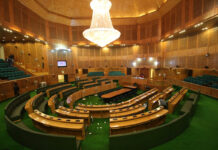
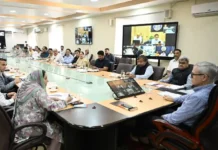
The week-long session of Jammu and Kashmir’s post-2019 assembly was expected to witness an intense debate on Jammu and Kashmir’s controversial reservation regime, its expanding reach, and its impact on public recruitment. It did not. Despite widespread anticipation that issues like the declining share of open merit seats, government services and professional admissions would dominate the floor, discussions remained subdued. Yet, scattered interventions by some lawmakers like Sajad Lone and Waheed Parra compelled the government to table data that, once made public, has revived one of the most contentious policy debates in recent years.
The data, covering selections made in the past three years, paints a picture of a steadily shrinking space for open merit aspirants. Across the Jammu and Kashmir Administrative, Accounts, and Police Services, collectively seen as the backbone of Jammu and Kashmir’s ‘second rung’ bureaucracy, candidates from reserved categories have consistently outnumbered those in the general category.
The Civil Service Data
In the Jammu and Kashmir Administrative Service (JKAS), for instance, 39 open merit candidates were selected in 2023 compared to a total of 50 from Scheduled Caste (SC), Scheduled Tribe (ST), Economically Weaker Section (EWS), and other reserved groups.
The following year, while open merit selections improved slightly to 56, reserved categories accounted for 43. The trend persisted in 2025, where only 24 open merit candidates were selected, while reserved categories retained nearly equal representation across all three civil services.
The Jammu and Kashmir Accounts Service shows the same downward trajectory: 29 open merit selections in 2023, 27 in 2024, and just 15 this year. In the Police Service, 26 open merit candidates made it in 2023, 25 in 2024, and a mere 9 in 2025, with reserved categories taking the majority share each year.
While these figures do not suggest any legal breach of quotas, they have reignited a debate about fairness and representation. Critics argue that merit-based opportunities are becoming “structurally narrower,” especially since the reservation framework was expanded in 2024. “The numbers speak for themselves,” said one legislator, adding that open merit candidates are being “systematically edged out.”
The Official Side
Responding to the mounting criticism, the government maintained that the existing reservation structure is guided by the Jammu and Kashmir Reservation Act of 2004 and the subsequent Rules of 2005, read with the latest notification, SO 176 of March 15, 2024. It acknowledged receiving several grievances about the system and said a Cabinet Sub-Committee was constituted in December 2024 to review and rationalise the policy “in consultation with all stakeholders.”
“The Cabinet Sub-Committee has already submitted its report to the Council of Ministers, which will finalise it after requisite approvals,” the official reply stated. Chief Minister Omar Abdullah later confirmed that the report had been accepted by the Cabinet and forwarded to the Lt Governor for approval.
Bleeding Merit
However, the larger question remains unresolved: how far can reservations go before they undermine the very principle of open competition? The government’s own reply, citing landmark Supreme Court cases, suggests a wide interpretative space.
In Indra Sawhney v. Union of India (1992), the Court held that reservations “ordinarily should not exceed 50 per cent,” but allowed exceptions in “extraordinary circumstances.” The government also referred to Janhit Abhiyan v. Union of India (2022), which upheld the 10 per cent EWS quota and clarified that the 50 per cent ceiling is a “rule of prudence,” not an inviolable limit.
It is under this flexible reading that Jammu and Kashmir’s reservation framework has evolved. In February 2024, after Parliament amended the 2005 Reservation Rules, the Lt Governor’s administration notified new quotas for Pahadis, Padaris, Kolis, Gadda Brahmins, and several other castes.
A month later, the Social Welfare Department distributed the quota share, cutting the open merit’s proportion below 50 per cent. The new policy, in effect, reserves about 61 per cent of seats in jobs and professional admissions, leaving only 39 per cent for open merit candidates.
Opposition leaders, including PDP’s Waheed Parra and NC MP Aga Ruhullah Mehdi, have described this as “discriminatory and unconstitutional.” Parra said the policy represents “the deliberate structural disempowerment of Kashmir’s youth.” Sajad Lone, who also raised the issue in the Assembly, said, “This is not social justice; it is political engineering through recruitment.”
Unfair Distribution
The government, however, insists that the policy “broadly aligns with constitutional provisions and judicial principles.” But figures tabled by the Revenue Department suggest otherwise, at least in implementation. Over the past two years, a total of 8.21 lakh reservation certificates were issued across Jammu and Kashmir. Of these, 6.78 lakh, about 82 per cent, were issued in Jammu, while just 1.45 lakh were issued in Kashmir.
The disparity is stark across categories. In the SC category, Jammu accounts for more than 69,000 certificates, compared to just 474 in Kashmir, a meagre 0.64 per cent of the total. For the ST category, Jammu received 5.25 lakh certificates (87 per cent) against 76,656 (13 per cent) in Kashmir. Similarly, in the Economically Weaker Sections (EWS) category, Jammu got 18,963 certificates (88.5 per cent) out of a total of 21,386, while Kashmir received only 2,431.
Even in the Actual Line of Control (ALC) category, Jammu dominates with 85 per cent of certificates. Officials justify this on the ground that both divisions share different stretches of the border, but the imbalance remains glaring. Only in the Resident of Backward Area (RBA) category does Kashmir lead, with 31,804 certificates compared to Jammu’s 15,595.
These numbers have added a regional dimension to the reservation debate, exposing deep inequalities in the way benefits are distributed. “After political and geographical disempowerment, this is administrative disempowerment,” Parra said, accusing the government of “erasing and killing merit.”
The National Conference has offered a more guarded view, suggesting bureaucratic rather than political bias. NC spokesperson Imran Nabi said the imbalance “seems one-sided, particularly in EWS certificates,” but expressed hope that the administration would “address it through proper audit and correction.”
Crisis Continues
In parallel, the government is pursuing an aggressive employment drive. Over the past two years, more than 11,000 youth have secured government jobs through the Jammu and Kashmir Public Service Commission (JKPSC) and the Services Selection Board (JKSSB). Recruitment is underway for another 3,478 police constables, 621 posts in the Health and Medical Education Department, and 351 clerical positions, among others.
At the same time, 17,953 posts remain vacant across government departments, including 2,960 gazetted and nearly 15,000 non-gazetted positions. The Health Department alone accounts for 7,285 of these vacancies.
Officials say the recruitment process is governed by the Combined Competitive Examination Rules, 2018, and that “efforts are on” to hold examinations annually. But they have not committed to a timeline or indicated any change in the quota ratio. If the present pattern persists, the 17,000 upcoming vacancies could follow the same trend, with open merit selections shrinking further.
The government’s interpretation of reservation may stand on constitutional ground, but the lived experience of aspirants tells a different story, one of narrowing space, rising frustration, and perceived injustice. The Supreme Court’s “rule of prudence” on the 50 per cent cap was meant to preserve balance. In Jammu and Kashmir, that balance appears to have tilted decisively.
As the Assembly adjourned, the silence over the issue was louder than debate. The data tabled has already shaped a new political conversation, not about whether reservation should exist, but whether it has now gone so far that merit itself has been reserved out of relevance.
The matter of reservations has already reached the courts, where it will take its own course before a verdict emerges. Meanwhile, the Omar government’s committee report remains entangled in the bureaucratic maze, its recommendations still undisclosed, and their fate uncertain. Whether the Lt Governor, now the final authority in Jammu and Kashmir’s twin power structure, will endorse them is anyone’s guess. By the time the administration arrives at a definitive position, merit may well have either decayed within the system or departed as part of a continuing brain drain. This may not trigger an immediate law and order crisis, but in the long run, it could evolve into one of the gravest challenges to the socio-economic and political stability of the erstwhile state.