by Babra Wani
SRINAGAR: From the quiet orchards of Kulgam in south Kashmir to the high-tech labs of Germany’s Max Planck Institute, Ubaid Manzoor has travelled a long, purposeful road. That journey has now yielded a scientific breakthrough that could transform one of the world’s dirtiest industrial processes, the extraction of nickel, a metal essential to electric vehicles and renewable energy systems.
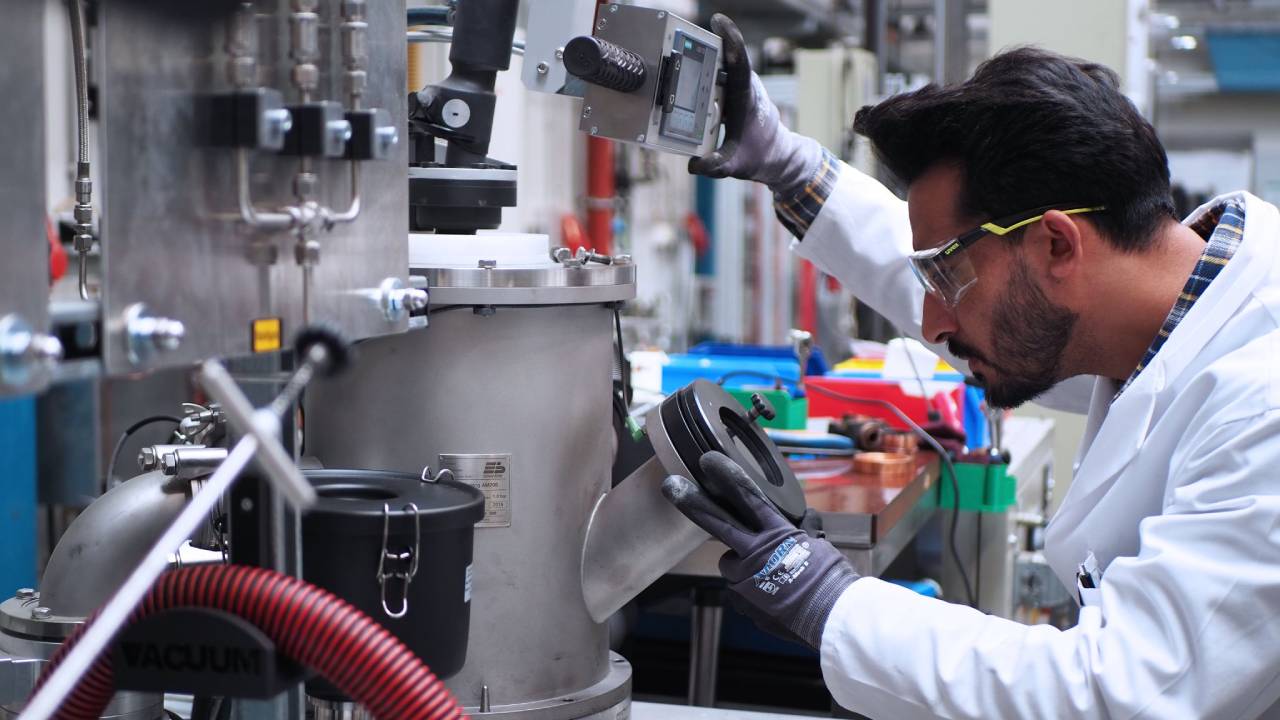
Manzoor, a PhD candidate at the International Max Planck Research School for Sustainable Metallurgy in Düsseldorf, is the first author of a landmark study published in Nature on April 30. The research, conducted under the guidance of Professors Isnaldi Souza Filho and Dierk Raabe at the Max Planck Institute for Sustainable Materials (MPI-SusMat), introduces a carbon-free, energy-efficient method of extracting nickel from low-grade ores using hydrogen plasma.
The significance of the innovation lies not only in its scientific novelty but in its potential to realign the global clean energy transition with genuinely sustainable practices. Today’s conventional nickel extraction processes, largely powered by fossil fuels, release close to 20 tonnes of carbon dioxide for every tonne of nickel produced. As the world shifts toward electric mobility, the demand for nickel is expected to double by 2040, making the current model environmentally untenable.
Manzoor’s method, by contrast, slashes carbon emissions by 84 per cent and improves energy efficiency by 18 per cent, offering a way out of what scientists call the “green paradox”, where efforts to decarbonise the energy sector are undercut by carbon-intensive material production.
“Nickel is essential for EV batteries and renewable energy systems, but its conventional production is one of the most polluting industrial processes,” Manzoor told Greater Kashmir. “My goal is to make metal extraction sustainable and drive forward a cleaner, more resource-efficient future.”
The technique he has helped pioneer uses hydrogen plasma, the fourth state of matter formed when hydrogen gas is superheated, to reduce nickel oxides in an electric arc furnace directly. Unlike traditional methods that require multiple stages such as calcination, smelting, and chemical leaching, this single-step process produces a usable nickel-iron alloy and emits only water vapour. Even the residual slag from the process is non-toxic and suitable for construction applications such as bricks and cement.
What makes the innovation more relevant for countries like India is its effectiveness in extracting nickel from low-grade laterite ores, which comprise roughly 60 per cent of global nickel reserves but are often ignored due to processing challenges. In India’s mineral-rich regions like the Sukinda Valley in Odisha, such ores are frequently discarded as waste. Manzoor’s hydrogen plasma process could make this material viable, enhancing resource efficiency and reducing the dependence on imported high-grade ores.
“This approach allows us to make use of what is otherwise discarded,” said Prof Dierk Raabe, co-author of the study, to The Hindu. “It’s a scalable and pragmatic solution that can align metallurgy with climate goals.”
Manzoor’s journey began with a bachelor’s degree in metallurgical engineering at NIT Srinagar, followed by a master’s at IIT Roorkee, where he first explored hydrogen-based steelmaking. That interest matured into his current doctoral research at one of Europe’s leading materials science institutions. His work has received international acclaim: Bioengineer.org described the hydrogen plasma method as a “transformative leap” in sustainable metallurgy, while The Hindu termed it “game-changing”.
Still, experts caution that the road to industrial adoption will not be without hurdles. Building the infrastructure for renewable hydrogen and retrofitting existing metallurgical plants will require capital and coordination. Pratik Kumar, assistant professor at IIT-Jammu, noted that while the technical feasibility of the process has been established, economic and logistical challenges remain. “But despite these hurdles,” he said, “this is one of the most promising alternatives to conventional nickel production we’ve seen so far.”
The European Research Council has supported the study through an Advanced Grant, and discussions are already underway to test the method in pilot-scale industrial trials. If successful, the hydrogen plasma process could be extended to the extraction of other critical minerals, such as cobalt, which are central to the green energy transition.
While the spotlight is firmly on Manzoor, it is worth noting that a parallel innovation has emerged from India itself. Nandini Mukherjee, a materials scientist, has also developed a similar hydrogen plasma-based technique for nickel extraction. Her team’s work, likewise published in Nature, follows a different technical pathway but arrives at the same critical goal: cutting the carbon cost of extracting a key clean energy metal.
The convergence of these breakthroughs, one from the snow-clad valleys of Kashmir and the other from India’s academic research corridors, reflects a broader scientific shift toward climate-aligned metallurgy. But in the symbolic register, Manzoor’s contribution resonates beyond the laboratory. In a region where global headlines are often shaped by conflict, his achievement presents a different narrative, one where young Kashmiri scientists are helping lead the world toward a greener, more sustainable future.
“Science has no borders,” Manzoor has said. “And sustainable progress is something we all must pursue, wherever we come from.”