NEW DELHI: In a landmark judgment that may redefine the contours of post-divorce maintenance, the Supreme Court has directed a man to pay his divorced wife Rs 50,000 per month as permanent alimony, with a 5 per cent increase every two years. The apex court has also upheld a previous ruling mandating that the husband clear the outstanding mortgage on their former matrimonial home and transfer the property to his ex-wife.
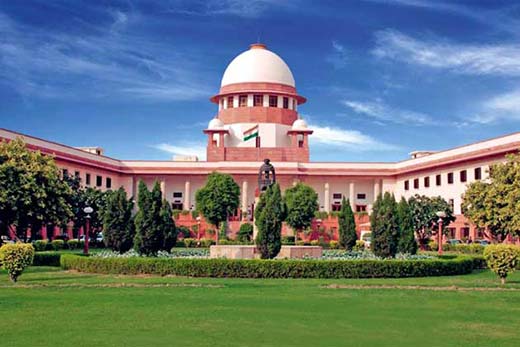
A bench comprising Justices Vikram Nath and Sandeep Mehta ruled that the revised quantum of alimony more accurately reflects the standard of living the woman had enjoyed during the marriage. The woman, who has remained unmarried and financially dependent since the couple separated in 2008, had been receiving Rs 20,000 monthly as interim maintenance. She approached the Supreme Court seeking a review of the permanent maintenance amount, citing the significant rise in her ex-husband’s earnings.
The bench found merit in her plea and revised the maintenance, saying: “The quantum of permanent alimony fixed by the High Court requires revision.” The husband, a hotel management professional with a fluctuating income history peaking at Rs 21 lakh per annum, argued that his current income was lower and that he had new responsibilities after remarriage, including caring for elderly parents.
However, the Court rejected his plea, stating that maintenance obligations must be assessed not only on present income but also on past and potential earnings. “The wife, who has remained unmarried and is living independently, is entitled to a level of maintenance that reasonably secures her future,” the Court said. It also issued a caution against deliberate underreporting of income in maintenance disputes, reaffirming that such tactics would not be entertained.
The Court further ruled that their 26-year-old son, now financially independent, is no longer entitled to routine maintenance. However, it left the door open for the father to voluntarily contribute to educational or other needs. It clarified that the son’s inheritance rights remain unaffected, and he is free to pursue any legal entitlements under the law.
This verdict marks the culmination of a legal battle that began in 2008 when the husband filed for divorce. Although a trial court initially dismissed the plea, the Calcutta High Court granted divorce in 2019, citing mental cruelty and an irretrievable breakdown of the marriage. The High Court had earlier fixed Rs 20,000 as permanent maintenance with a 5 per cent increase every three years.
Legal commentators have welcomed the Supreme Court’s ruling as a significant step forward in the evolution of matrimonial law. Neelam Singh, Advocate-on-Record at the Lucknow High Court, said the judgment is “a benchmark that reinforces the court’s role as a guardian of justice.” Nikita Anand of Magnus Legal Services added: “Maintenance is not charity but a right, calibrated to genuine financial realities.”
The ruling assumes added importance in light of a recent Kerala High Court judgment, which held that even a divorced wife who had earlier relinquished her claim to maintenance can seek it later if her circumstances change. That verdict, delivered by a division bench of Justices Satish Ninan and P. Krishna Kumar, upheld that agreements attempting to permanently contract out of maintenance obligations are against public policy.
The Kerala ruling drew upon earlier Supreme Court precedents to hold that courts can modify maintenance orders if justified by a change in circumstances. It reinforced that a wife’s right to alimony is grounded in the objective of preventing destitution, rather than merely contractual obligations.
Together, these two judgments broaden the legal framework around post-divorce support in India. They clarify that financial obligations towards a former spouse are not static but may evolve under life’s changing circumstances. Courts, the rulings suggest, will continue to uphold the spirit of maintenance laws as instruments of social justice rather than mere procedural formalities.