Since the abrogation of Article 370 in 2019, the Martyrs’ Day (July 13) has disappeared from the official calendar. While the administration maintains its silence, political parties, civil society groups, and the families of the slain persist in remembrance, defying erasure through quiet commemorations at Srinagar’s Mazar-e-Shuhada, writes Syed Shadab Ali Gillani
On July 13, 1931, a crowd gathered outside Central Jail Srinagar, where Abdul Qadeer Khan was on trial for inciting dissent against the Dogra regime. With people offering prayers, a rumour was set that the prisoner had been awarded a sentence. It triggered a crisis, and the guns started firing.
Bodies of the slain and the injured were taken to a patch of land that became the Martyrs’ Graveyard. In the days that followed, young Sheikh Muhammad Abdullah led protests. The killings galvanised Kashmir’s political awakening, leading to the formation of the Muslim Conference, later the National Conference, and contributed to the Glancy Commission Report of 1932 and the Praja Sabha elections.
The day was first observed officially as Youm-e-Shuhada by pre-1947 political organisations. Post-1947, the Jammu and Kashmir government continued the tradition, declaring it a public holiday with wreath-laying ceremonies and processions across the region.
Today, the day is no longer listed in the official calendar.
The Ghosts of July 13
In the week leading up to July 13, a date etched into Kashmir’s political memory, the familiar drumbeat of statements, demands, and political grandstanding resumed. Once a public holiday to mark the sacrifice of 22 men whose sacrifice laid the foundations of a change, Martyrs’ Day has become a contested symbol in post-2019 Kashmir, where its official status remains revoked and its legacy fiercely disputed.
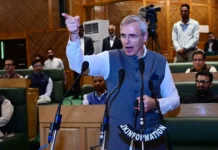
The Jammu and Kashmir National Conference (JKNC) said it has written to the District Magistrate of Srinagar, seeking permission to assemble at Mazar-e-Shuhada to lay floral tributes. The party expressed disappointment over being denied this right since 2019, calling July 13 “a day deeply rooted in the collective memory and political conscience” of the Kashmiri people. “We sincerely hope that this time, our democratic and peaceful request will be respected.”

The People’s Democratic Party (PDP), in its official response, countered the JKNC’s narrative and criticised former Chief Minister Omar Abdullah’s recent proposal to reinstate July 13 and December 5 as public holidays. The party said the proposal lacked sincerity, recalling that when it had moved a resolution in the Legislative Assembly seeking the same, the Speaker rejected it outright. This, it said, undermined the credibility of the current proposal, reducing it to political lip service.
The Jammu and Kashmir Apni Party (JKAP) formally approached the district administration, seeking permission to offer Fateh Khawani (prayers) at Mazar-e-Shuhada in Srinagar on the morning of July 13. In a letter to the Deputy Commissioner, JKAP General Secretary Rafi Ahmad Mir said that a small delegation, led by party president Syed Mohammad Altaf Bukhari, would visit the site at 7:00 AM. The group would include no more than 25 members.
On the Friday preceding July 13, Mirwaiz Umar Farooq said he was placed under house arrest and barred from delivering his sermon at Jamia Masjid. In a social media post, he said the authorities feared he would mention the 1931 martyrs.
“No living nation can forget the supreme sacrifice of the lives of its martyrs against tyranny and injustice,” he said, adding that remembrance could not be undone by restrictions or silence.
Mirwaiz asked authorities to lift the curbs and allow people to gather peacefully. If permitted, he said the Awami Action Committee would, as per tradition, visit the Martyrs’ Graveyard after Zuhr prayers to pay homage.
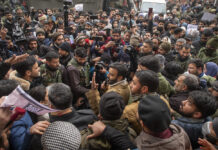
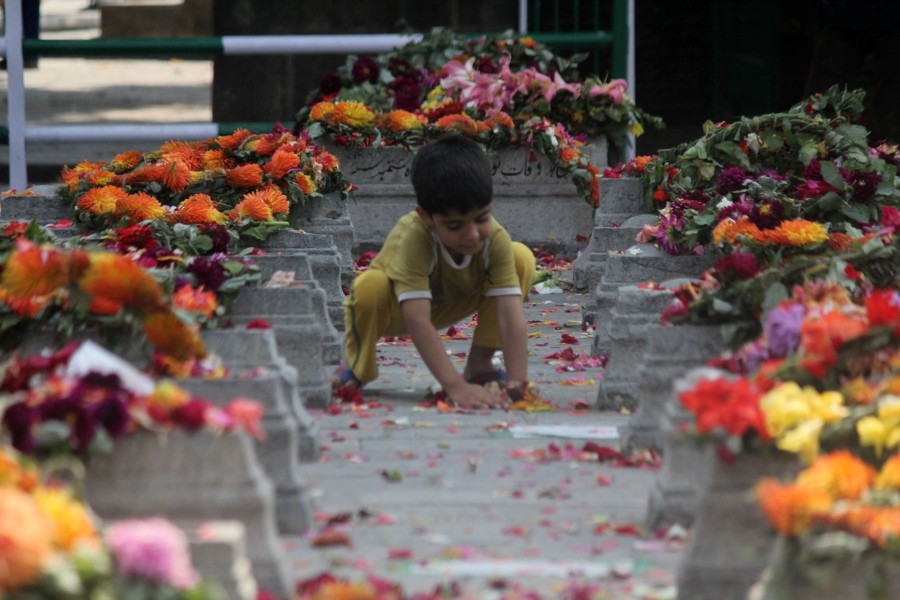
Mazar-e-Shuhada has received visits in previous years, though rarely without restrictions. In 2023, access was limited. In 2021, several political workers were detained for attempting to reach the site. Even as official recognition of the day has faded, the contest over memory persists, though the temperature in 2025 appears cooler.
After August 2019
When Article 370 was read down on August 5, 2019, Jammu and Kashmir lost its special constitutional status and was reorganised into two Union Territories. The next year, the administration led by the Lieutenant Governor released a revised holiday list. July 13 and December 5 were dropped.
In their place, the government introduced new commemorative dates, including October 26 (Accession Day) and December 1 (Tribal Invasion Day), which had not previously appeared on the official calendar.
Since then, there have been no government-led observances of July 13. Political parties, religious organisations, and families of the martyrs have continued to mark the day, though often under movement restrictions and Section 144 CrPC, especially in old Srinagar.
A Graveyard without Ceremonies
The Mazar-e-Shuhada, near Khawaja Bazar, remains important for those who see July 13 as the beginning of Kashmir’s political journey. Though no official ceremonies have taken place in recent years, civil society and political groups have continued to visit, laying flowers and reciting the names of the 22 men buried there. Their gravestones, nearly a century old, stand as a quiet marker of a historical rupture.
The silence around July 13 reflects the state’s wider stance since 2019. No formal ban has been issued on visiting the graveyard this year, but uncertainty remains. The only difference 2025 makes in the post-2019 era is that Jammu and Kashmir has an elected government, and the party has a history of celebrating Martyrs Day as a major historic milestone. It remains to be seen if Omar’s party is permitted by the LG administration to visit the site only on July 13.