A group of Kashmiri ladies were permitted to take the historic Jehlum Valley Road (JVR) to attende an intra-Kashmir conference at Muzaffarabad that an NGO organized. Qurattulain was part of the delegation. In this piece, she explains how her trip turned historic for her.
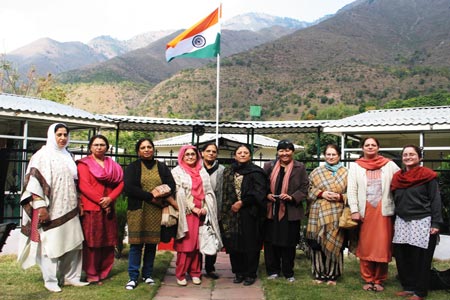
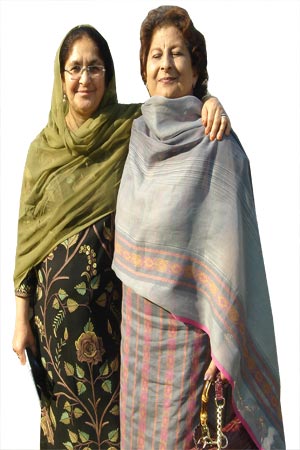
On November 5, 2012, I was introducing myself to the delegates of an intra-Kashmir conference in Muzaffarabad, not knowing that my cousin, Riffat Khan, whom I had never met, was among the audience. After the introduction session was over and we started interacting, one of the hosts, Dr Naseema Jogzai, introduced me to her sister, Zareen. We exchanged pleasantries, and suddenly she pointed towards a smart, graceful lady standing nearby.
“Do you know her,” she asked
Before I could say anything, the lady, who had a sweet and mischievous smile on her lips, hugged me tightly and sobbed: “Qurrat, I am Riffat.”
I couldn’t believe it. How could Rifat be here this time? I have her address and telephone number, and I am supposed to call her. It was beyond my imagination to expect her at this gathering. Soon, I realized that she wanted to surprise me and make our meeting an event. She had not disclosed that she was a part of the delegation from ‘Azad’ Jammu and Kashmir (AJK). It was a scene straight out of a movie. It added an emotional angle to my Muzzafarabad trip.
Four of the six sons of my grandfather, Moulvi Muhammad Abdullah Vakeel, had been exiled to Pakistan in 1947 for political reasons by the so-called popular government of our state. As per the historical records, my two uncles, Moulvi Abdul Raheem and Moulvi Bashir and several other relatives were founders of the freedom struggle of Kashmir.
I was in no way prepared for the explosion of accumulated emotion on being introduced to Riffat Khan, my separated first cousin, who was a member of the host AJK delegation. We were so excited, happy and oblivious of the rest of the women in the conference hall. Our excitement, emotional outburst and happiness were noticed by all, and they too joined us to celebrate this ‘reunion’ that came as a huge surprise. The word spread and we were approached by media. Most of them had recorded our reunion on camera,a and it became a major event.
This was my first meeting with my cousin ever since she migrated to Pakistan. Then, I was not born. Till November 5, 2012, we were strangers to each other. My sisters have been to Pakistan, and they know her. But the two of us had never met. It was a Godsend opportunist,y and I thank the almighty for this great favor. Another surprise was for Dr Iffat Gul from the University of Kashmir. During a casual conversation with Sajida Bihar, it was discovered that their mothers were first cousins.
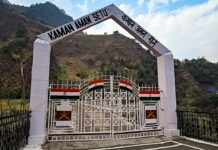
This conference was different in the sense that participants took the trans-LoC route. Compared to Wagha, it is quite close. Taking Wagha would mean taking a few days to reach Muzaffarabad. We reached near the 220-ft Kaman Bridge, which demarcates the LoC. We were stopped by security guards as per the standard operations procedure (SOP). The other side was supposed to unlock the gate first. It was an interesting experience.
When I saw the bridge that we were supposed to cross, the first thing that struck me was the cruel unnaturalness of this territorial divide between the people who have so much in common and who share each others’ aspirations.
As the security systems took its time, we kept standing, waving and acknowledging the presence of women on the other side, our hosts. As we finally crossed the bridge, we were hugged, garlanded and flower petals showered with matchless love and warmth. It was indeed an emotional reunion. It was a princely reception and every one of us felt overwhelmed. It was drizzling and the atmosphere was quite pleasant. We unanimously took drizzling as a good omen, an endorsement by nature of our initiative for peace.
The trip was not an unmixed blessing, however. Moments of utter frustration at times made me wonder if all the trouble we had to go through was really worth it. Unduly harsh pre-travel procedural checks are more a deterrent than attraction for undertaking the trip.
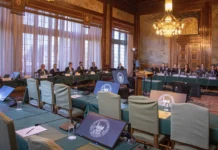
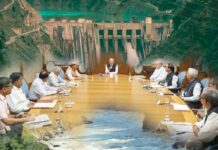
The formal session discussed issues caused by the ongoing conflict and the participants wanted early resolution. There were various working group that identified issues and finally a consensus statement was issued that almost all the newspapers carried.
The overwhelming demand was easy travel and communication between the two sides. The misconception that trans-LoC route was only to facilitate the meeting between divided families was removed and it was clarified that it is open to all Kashmiri residents on either side of the divide. The main aim of the conference was to forge a broad consensus towards strengthening the fragile peace process in J&K. We had the privilege of having late H K Khursheed’s wife, Suraya Khursheed, and historian Mohammad Din Fouq’s granddaughter, Mrs Suraya Anwar among the host dignitaries from AJK. Their presence lent grace and credibility to the conference. To me, Mrs Anwar was a class apart. She talked threadbare and made her point without triggering eyebrows from any side of her audience. By and large, the routine bashing was absent. They too participated in the deliberations and expressed concern on the problems faced by women. They were quite articulate in the demand that the travel across the LoC should be hassle-free. They wanted the inclusion of women in the peace process so that their voices are also taken note of. The exercise was over by November 7.
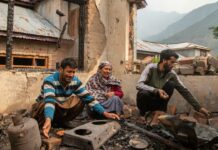
 Later, our hosts engaged us by taking us to important places and site-seeing. While going through the city of Muzaffarabad, we saw the wounds and scars left by the 2005 earthquake. At certain places, the scenes were evidently devastating and heart-rending. The devastation has changed the demography of Muzaffarbabad. Though a lot has been achieved but much remains to be done. At places, a part of the ruined city was functioning from the pre-fabricated structure.
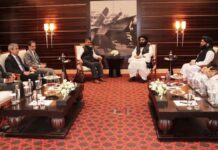
We had a detailed meeting with the vice-chancellor of Muzaffarabad University, Dr Syed Dilnawaz Ahmad. He was quite cordial, frank and positive. Both sides agreed on student exchange programmes. Exchange of cultural trips was also agreed upon. Among the political dignitaries, we met Chodhary Akbar Lateef, president, Azad Jammu & Kashmir, Sardar Yaqoob Khan and Sardar Atiqullah Khan. The residence of the AJK President in Lohaar Gali looked as if it was located in the beautiful Tangmarg in Kashmir. Talking to us at dinner, he made just one observation that ‘no camps exist here’. I did not know which camps he was referring to. Overall, the conversation held with him was quite satisfactory. Delegates on both sides urged them to strengthen the initiative of women and make CBMs strong and effective. The response was more positive.
The trip, especially the post-conference engagement, was planned in such a way that the participants could not get much time to see everything. But we could gather little that Kashmiris living in AJK are desperate to return. These include people who have been living there for a long time and form part of Muzaffarabad’s creamy layer, given their economic profile. All of them want the LoC route be opened for their movement into the valley and the procedures should be uncomplicated. Some boys working in the hotel we stayed in carried the same desperation for their return and reunion with their families.
And the generosity extended to us by the hosts was remarkable. Their coordination, promptness, dynamism and cooperation were commendable. They were well-organized, and the team spirit was praiseworthy. The arrangements on our side of the LoC for the travelling public are shameful, to say the least. No place to sit, no shelter at all, not to speak of toilets or drinking water for the passengers who have to wait long before boarding the Caravan-e-Aman, the so-called peace cavalcade. On our return, the place was pitch-dark, and we had to grope to look for our baggage. There was not a soul around to help or to guide the travelling public, which usually includes ladies, aged passengers and children. Nor is any information displayed to guide them.
(The author, an educationist, has published five volumes of Aaieena Numa, select writings by legendary journalist Shameem Ahmad Shameem, her elder brother.)