SRINAGAR: US Ambassador to India and Special Envoy for South and Central Asian Affairs Sergio Gor arrived in Srinagar today and had a meeting with Chief Minister and LG Manoj Sinha. He also spent some time on a Shikara ride in Dal lake.
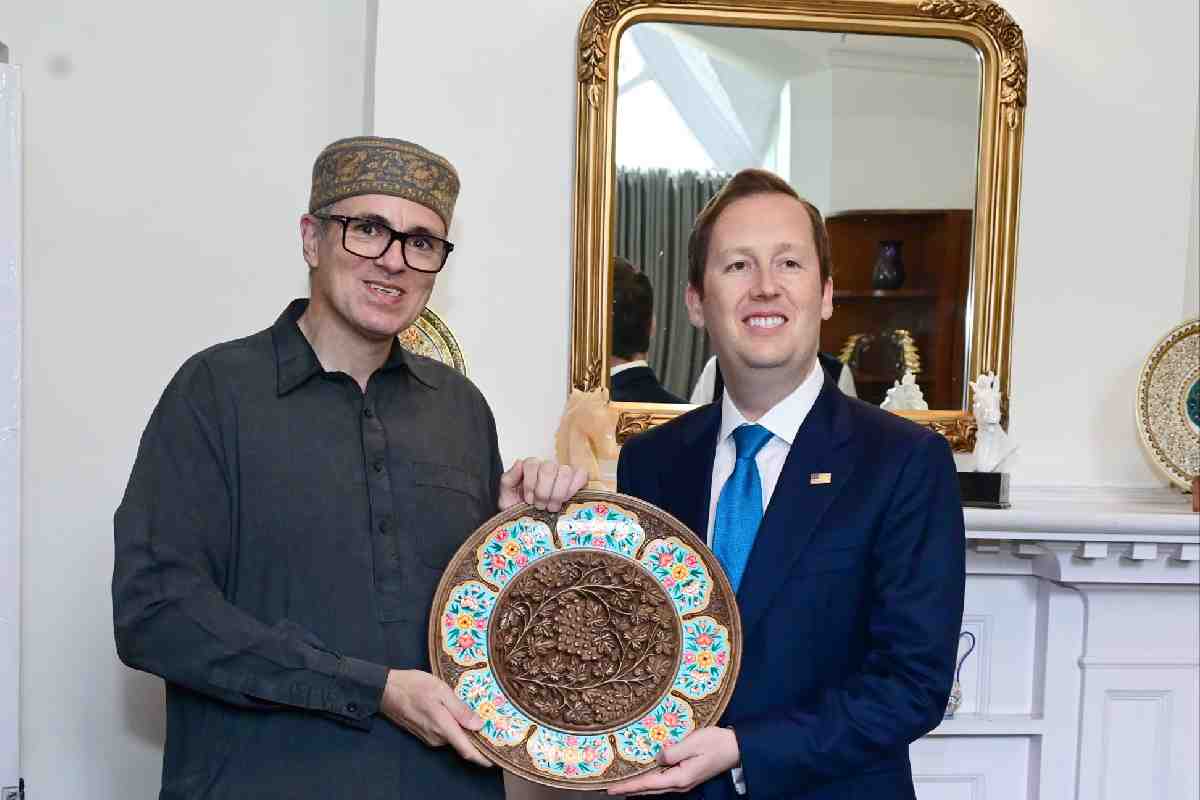
“It is a pleasure to be here. This is an important part of India,” Gor told reporters after his meeting with Omar Abdullah. “I am here visiting for the first time. It is an incredibly beautiful place, and I am thrilled to be here. It is a very good meeting, and we have some follow-ups that we hope to take back to Washington and India.”
Gor said he feels to be “proud and very fortunate” and is looking forward to “building this relationship”.
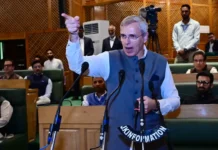
Omar Abdullah, who was flanking hi, said they had an opportunity to discuss relations between our two countries, with a specific focus on what the United States can do with Jammu and Kashmir.
“There are obviously certain legacy issues that, over time, we will be working to resolve and we look forward to continuing this conversation,” Omar said. “This is a conversation that will take place both between Ambassador Lord and Washington, and between the Government of India in New Delhi.”
Omar said they are optimistic that engagement between the United States of America and Jammu and Kashmir will both widen and deepen in the years ahead.
“The last thing I will share with you is that the United States puts out travel warnings, and every so often we re-evaluate those travel warnings,” Gor said. “I cannot make any big announcements here today, but it is something we are going to look at.”
He said the Government of India, the Chief Minister here, and the government here have made some incredible efforts to keep this area safer and make it more secure. “We will be looking at whether the travel warning imposed and recommended by the United States is something that should be downgraded. As I said earlier, this is a beautiful area. I think a lot of Americans would enjoy coming here and seeing the beauty and opportunities that exist here.”
View this post on Instagram
Gor is expected to travel to Ladakh on Thursday.
Insisting that it was after a very long time that a US ambassador is arriving to Srinagar, Omar had already made it clear about the meeting. “It has never been my habit to lodge complaints about my country to an ambassador of another country. It would be very inappropriate to complain about our country to an ambassador of another country,” he told reporters during his morning city visit.
“The resolution to our issues will not come from Washington; the resolution to our problems lies with our central government.”
The visit is significant not merely because Gor is the serving US ambassador but also because he holds the additional portfolio of Special Envoy for South and Central Asian Affairs. It was the first visit to Jammu and Kashmir by a serving US ambassador since Kenneth I Juster travelled to the region in January 2020, when he was part of a 15-country diplomatic delegation brought to J&K by New Delhi following the August 2019 constitutional changes.
Gor’s visit also comes against a substantially altered regional backdrop. Relations between India and Pakistan remain strained after their military confrontation in May 2025, when the two nuclear-armed neighbours fought for four days before agreeing to a ceasefire. Washington’s role in the cessation of hostilities has subsequently remained a subject of political disagreement between New Delhi and Islamabad.
The Kashmir visit carries significance beyond routine diplomatic engagement. Gor is travelling to a region that has undergone a fundamental constitutional and administrative transformation since the last American ambassadorial visit. In August 2019, the Lok Sabha read down Jammu and Kashmir’s special constitutional status and divided the erstwhile state into the Union Territories of Jammu and Kashmir and Ladakh.
The timing is also politically notable within J&K. The elected government headed by Omar Abdullah has been pressing for the restoration of statehood, while regional parties continue to demand the restoration of constitutional and political guarantees that were altered in 2019.
Kashmir’s chief cleric Mirwaiz Umar Farooq welcomed Gor’s visit. He had hoped the envoy would meet a broad cross-section of people rather than only government-selected invitees.
American envoys have been visiting Kashmir throughout. Though most of the visits were restricted to junior diplomatic positions, there were at least four ambassadorial visits ever since the militancy broke out.
 The first serving US ambassador to India in the recent period whose Kashmir visit can be firmly documented was Frank G Wisner, who travelled to Jammu and Kashmir from July 29 to August 3, 1996. His visit came immediately before the Assembly elections that year, the first such elections after a prolonged period of Governor’s Rule.
Wisner’s itinerary was politically broader than that of several ambassadors who followed him. He met the GOC-in-C, Northern Command, separatist leader Shabir Shah, senior mainstream politicians Molvi Iftikhar Hussain Ansari, National Conference leader Farooq Abdullah and many others.
The meeting led to the suspension of Shah from the Hurriyat Conference. This was probably because Wisner had publicly backed participation in the electoral process and argued that the 1996 elections had contributed to the political empowerment of Kashmiris.
Six years later, Robert D Blackwill arrived in Srinagar on December 2, 2002, for a three-day fact-finding or familiarisation tour. He was briefed by senior Army officers at the Army’s Kashmir headquarters and was taken by helicopter towards the Line of Control.
Blackwill’s visit marked a noticeable change from Wisner’s engagement. He did not meet any separatist leader. He also condemned militant violence.

The political context was different as well. The 2002 Assembly elections had just produced a new coalition government headed by Mufti Mohammad Sayeed, while the post-September 11 security environment had substantially altered Washington’s regional priorities. Cross-border terrorism, the Line of Control and India-Pakistan tensions consequently figured prominently in the American assessment of Kashmir.
The next documented ambassadorial visit came nearly nine years later.
Timothy J Roemer visited Kashmir in March 2011, arriving in Srinagar on March 17 for a two-day visit. He met Chief Minister Omar Abdullah and deliberately avoided meetings with separatist leaders. Asked why, Roemer said Abdullah was the elected representative of the people of Jammu and Kashmir and that his limited time did not permit him to meet everybody.
Roemer’s approach was revealing. A US diplomatic cable later released through WikiLeaks showed that he had cautioned Washington that visible American activism on Kashmir could prove counterproductive because of New Delhi’s sensitivity to third-party involvement.
His visit therefore represented another stage in Washington’s policy: engagement with Kashmir remained important, but overt American intervention in the crisis was increasingly regarded as diplomatically counterproductive.
Roemer also visited Leh in September 2010 to deliver relief supplies to families affected by the flash floods. Contemporary accounts described him as the first US ambassador in more than a decade to visit Jammu and Kashmir.
The most recent documented visit before Gor’s was by Kenneth I Juster, who arrived in Srinagar on January 9, 2020, barely five months after the August 2019 reorganisation of Jammu and Kashmir.

Juster was not travelling alone. He was part of a 15-country diplomatic delegation invited by the Government of India to obtain a first-hand account of the situation after the revocation of Jammu and Kashmir’s special status. The envoys arrived at Srinagar’s Technical Airport and were taken directly to the Army cantonment for a briefing.
The delegation subsequently met government officials, political representatives and government-invited civilians and groups before travelling to Jammu. On the second day, the diplomats also met Kashmiri Pandit representatives at Jagti.
The visit was politically contested even at the time. The government described it as an opportunity for diplomats to see first-hand the efforts to normalise the situation, while critics, including opposition politicians, characterised it as a guided tour. Most of the Kashmir politicians, including three former Chief Ministers- Dr Farooq Abdullah, Omar Abdullah and Mehbooba Mufti were in jail. While father and son were set free in March, Mehbooba came out in October 2020.
Juster’s visit was therefore fundamentally different from Wisner’s in 1996. It took place after the constitutional architecture of Jammu and Kashmir had been radically altered and was part of New Delhi’s diplomatic effort to explain the post-2019 situation to foreign governments.
Gor’s visit comes six years later, but in a substantially different political environment. His visit comes at a time when Washington is seeking to manage relationships with both nuclear-armed South Asian rivals while deepening its strategic partnership with India.