by Muhammad Nadeem
Weaving elegantly between the worlds of steppe and sown, the Tarikh-i-Rashidi recalls a lost age of great intellectual curiosity, when educated Central Asians like Mirza Haidar served with distinction in the royal ordūs of Herat, Samarkand, Bukhara, and Kashgar alike.
Mirza Haidar Dughlat’s history of the Chaghatai Khanate casts a revealing light on the intricate web of power in medieval Central Asia. Spanning Transoxiana and Moghulistan, it chronicles the turbulent rise and fall of Mongol and Turkic leaders. However, while Haidar, both participant and observer, offers unique insights, deciphering the complex dynastic politics can be daunting even for informed readers.
Central to the narrative is the legacy of Chingiz Khan and the splintering of his empire after he died in 1227. His second son, Chaghatai, inherited a vast territory stretching from the Amu Darya River to the Tian Shan mountains, encompassing both the fertile oases of Transoxiana and the nomadic steppes of Moghulistan. But unity dissolved quickly as conflicts fractured the lineage, pitting Chaghatai’s successors and their extended family against each other. A complex tapestry of alliances and wars emerged. By 1320, Isan Bugha’s eastward migration had cleaved the Chaghatai realm into distinct entities: the western khanate in Transoxiana, the eastern khanate in Moghulistan, and a third sphere encompassing Kashgar and the southeastern cities.
Haidar meticulously chronicles the shifting control of these khanates, highlighting the emergence of a fourth zone in Jungaria under Oirat and Eastern Chaghatai leadership. While dynastic ties mattered, with sons and nephews vying for ancestral thrones, tribal leadership and military prowess held equal sway. Alliances formed and dissolved based on individual charisma, gift-giving, military success, religious policies, and kinship networks. Further complicating this ethnic mosaic of Mongol, Turkic, Persian, and Chinese peoples was the fluid interplay between Islam and shamanic religions.
Beyond internal struggles, regional powers engaged in a constant tug-of-war for influence through trade, diplomacy, and even war. The Timurids and the Mings jostled for power, impacting the fortunes of both Moghulistan khans and the Chaghatai rulers of Kashgar and Yarkand, who were themselves locked in perpetual conflict. Haidar’s ancestors, the Dughlat amirs, served as clients to the Timurid successors in Samarkand while simultaneously participating in the eastern dynastic rivalries. Their dual roles embodied the interconnected nature of regional politics.
While dynasties clashed, figures like Sufis and scholars transcended these fluid borders, as documented in Haidar’s vivid descriptions of encounters between Central Asian khans and disciples of Naqshbandi sheikhs. Even as Timur’s empire fragmented, the cultural tapestry of Herat and Samarkand continued to bloom. Trade served as a bridge across war-torn landscapes, with Chinese silks and Tibetan horses exchanged for Moghulistan falcons and steel. For ordinary people, the burdens of taxation and violence might seem indistinguishable, regardless of whether their rulers claimed descent from Genghis Khan or Timur.
However, the choice of regime did impact religious policies and bureaucratic structures, influencing everything from mosque construction to the movement of scribes. Perso-Islamic literary traditions and administrative systems flourished where stability prevailed, while poems and chronicles took distinct forms depending on their nomadic or settled origins. Beneath the surface of conquest and conflict, deeper transformations in language, faith, and identity unfolded across the Eastern Islamic world and Inner Asia.
Later narratives would romanticize a unified Mughal empire encompassing all Chingizid realms, but Haidar paints a picture that defies easy categorization. Dynastic continuity and cultural coherence remained elusive goals for rulers in this borderland. Marriages and migrations linked Mongol khans like Yunus and Mahmud to the established Perso-Islamic centres, but claiming Genghisid lineage was insufficient to guarantee success in the eastern steppes without the loyalty of nomadic tribes.
While blood and betrayal permeate Haidar’s chronicle, it also hints at deeper connections of interest and affinity across the vast expanses of grasslands and mountains, bridging the divide between oasis and nomadic camp. His history reflects both the fragmentation of a once-unified Mongol world and its partial reconstruction in new forms, not just through emerging dynasties like the Mughals, Shaibanids, and Ashtarkhanids, but also in the shared language and culture that persisted among educated elites, stretching from Kazan to Kashgar.
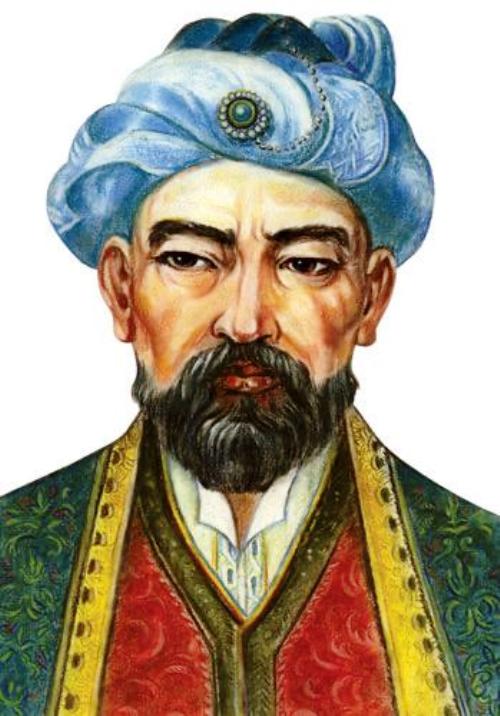
Weaving elegantly between the worlds of steppe and sown, the Tarikh-i-Rashidi recalls a lost age of great intellectual curiosity, when educated Central Asians like Mirza Haidar served with distinction in the royal ordūs of Herat, Samarkand, Bukhara, and Kashgar alike. Its value lies not only in the factual record preserved for historians of a pivotal era but also in its recreation of possibilities since foreclosed—of mutual comprehension across Inner Asia’s conquered yet persistent civilizations.
Mirza Haidar’s history offers a valuable insider’s perspective on Central Asia, but critical reading is crucial. Despite potential exaggeration, the text remains illuminating when corroborated. Mirza Haidar’s intimate knowledge of the region shines through, evident in detailed descriptions of terrain, tribes, and events. While not strictly factual, it conveys the Moghul identity and legends authentically. His pride in their past endures as a historical and cultural artefact.
Mirza Haidar reveals recurring patterns shaping Central Asia. Its crossroads position fosters cycles of invasion, cultural flourishing, decline, and renewal. Climate, resources, and human development dynamically interact. External domination was often tenuous, as seen in the rise and fall of Kara Khitai, Mongols, and Moghuls. City-dwellers also demonstrated resilience, maintaining oases and trade networks. The Moghuls themselves adapted to the arid environment, adopting a nomadic yurt-dwelling lifestyle.
Water scarcity shaped history, much as it does today. Limited rainfall constrained urban growth, hindering political consolidation. Raids fostered militarism, while syncretism masked undercurrents of religious tension. Ultimately, remoteness, terrain, and tribalism, while granting resistance to external powers, prevented Moghul’s unification. They also proved ineffective against the more mobile Uzbeks. The region’s recurring instability reflects past struggles.
While Western narratives were once filled with myth and hearsay, Mirza Haidar offers a firsthand account. Though hyperbolic at times, he evokes the steppes and oases, lost lakes, and ruins, beckoning exploration. Journeying to sites like Karakorum or Kashgar can deepen understanding of these cultures. Such knowledge can contribute to shaping solutions for contemporary issues in this complex and fascinating region.
The central focus is the tension between using these terms sociologically (nomadic vs. settled), based on status (barbarian vs. civilized), or political allegiance, versus their racial or ethnic meanings. Examples illustrate how this fluidity led to ambiguity, contestation, and deliberate manipulation of identity to navigate changing power dynamics.
Most evident is the case of the Moghul/Mongol peoples, descendants of Chingiz Khan’s vast empire. While sharing an ethno-linguistic root, the name’s connotations evolved dramatically. From a symbol of terror to a marker of prestige in Mughal India, it reflects a complex interplay between racial purity, cultural adaptation, and political expediency.
This approach sometimes creates taxonomic confusion for the modern reader when wading through Persian, Turkic, or Chinese sources, which the author skillfully analyzes. But he makes an effective case that this stems from an authentically Asiatic worldview, which prioritized familial lineages and affiliations over racial commonalities in a way that defies European scientific categories.
Refreshingly, the text avoids facile notions of clashing ‘civilizations’, instead honing in on the liminal zones where identities remain in flux. For instance, the Uighurs who adopted literacy and urban living stand in contrast to the more tribally organized Turkic pastoralists surrounding them, yet the author is careful not to portray a simplified binary. Similarly, the treatment of ‘Tajik’ as a shifting designation encompassing settled Muslims regardless of ultimate Turkic, Persian, or Arabian origin shows a sensitive reading of the sources against misguided attempts to impose later nationalisms.
This is not a triumphalist narrative of ascendant ethnicities or empires, but one chronicling the gradual dilution of once-clear categories. The Moghuls or Mongols, dwindling in number and losing ancestral lands to rivals like the Kazakhs, virtually disappear despite periodic revivals proving the “permanency of the Mongol race.” Conversions to Islam and Turkicization of language and culture inexorably erode the old Uighur Buddhist identity. But traces remain even as the terminology evolves: the telling descriptor of Moghul leader Yunus Khan, expected to fit the physical archetype yet possessing a Persianate Tajik face, or the isolated Yellow Uighur communities retaining archaic religious practices, remind us that ethnicity often outlasts the names ascribed to it.
The book delves into intriguing quandaries for scholars studying identity. While categorisation appears to be a fundamental human inclination for organising diversity across time and cultures, what occurs when lived experiences outpace the labels crafted to define them? Should we perceive the fluid and evolving classifications of medieval Asia as flawed attempts at modern ethnographic taxonomy, or regard them as representing an entirely distinct approach to constructing collective identity? Moreover, how do self-identification and external classification interact in the formation of ethnicity? Are there underlying universal principles beyond culturally specific labels that communities recognize about themselves?
Amidst an increasingly diverse and interconnected world, these inquiries carry more significance than insular debates over ancient terminologies. Reflecting contemporary controversies surrounding race and religion, they underscore the power dynamics inherent in the act of labelling others. This meticulously researched yet thought-provoking historical analysis intersects with modern theories of identity. Its insights into challenging entrenched assumptions, embracing overlapping collective identities, and critically examining our scholarly positions feel particularly pertinent. Through a scholarly exploration of Inner Asia’s past, the author illuminates dilemmas likely to intensify in the 21st century rather than diminish.