by Khan Muzamil
Night in Delhi is a fearless plunge into the fringes of urban existence. It compels readers to confront uncomfortable truths about class, queerness, power, and the human longing for connection, even in the grimmest of settings.
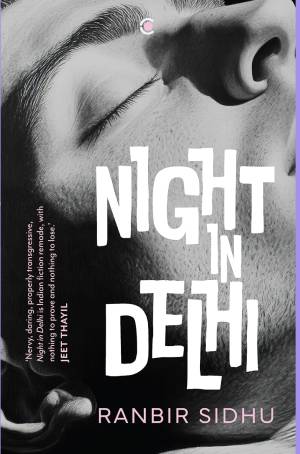
Ranbir Sidhu’s Night in Delhi is an audacious and boundary-defying odyssey through the city’s underbelly, a place where survival is a negotiation and morality rarely presents itself in stark contrasts. At its heart is an unnamed narrator—a working-class queer man—who navigates this treacherous world as a petty thief, conman, and sex worker. Through his eyes, the novel reveals a landscape where nothing comes without a price, and the vulnerable are often left to a grim fate.
His existence is a relentless hustle, a daily struggle to scrape together enough money for a simple yet elusive dream: to live by the sea with his lover, Jaggi. It is a longing for peace and permanence in a world that offers neither. Jaggi, his partner and occasional pimp is a figure of contradictions—violent one moment, effortlessly charismatic the next, and then, unpredictably, tender. His carefree bursts of song and dance feel like echoes from another world, lending him a strange, almost theatrical vibrancy. Yet, this lightness exists alongside his indifference and cruelty, making his character all the more compelling. Their relationship is a tangle of love, resentment, and the primal instinct to survive, where affection and control blur into an indistinguishable force.
Sidhu crafts a first-person account that immerses readers in the narrator’s troubled existence. Rather than moralising or explaining, Night in Delhi presents events with unflinching honesty. The narrator does not seek sympathy—he steals, deceives, and exploits. Yet amid the chaos, there are fleeting moments of joy and an aching desire for human connection, a gentle touch from a loved one. These glimpses of happiness, however, are brief and quickly extinguished by the relentless struggle for survival, which strips life of comfort and closeness.
The supporting characters embody the city’s moral ambiguity. An American woman, in her naïve search for spiritual enlightenment, becomes ensnared by a fraudulent guru whose teachings are steeped in nihilism and abuse. Her repeated return to the man who mistreats her hints at a deeper narrative of power and submission. Another central figure is a woman navigating the ranks of India’s criminal underworld, her choices shaped by the narrow pathways available to those who seek power in a system designed to exploit them.
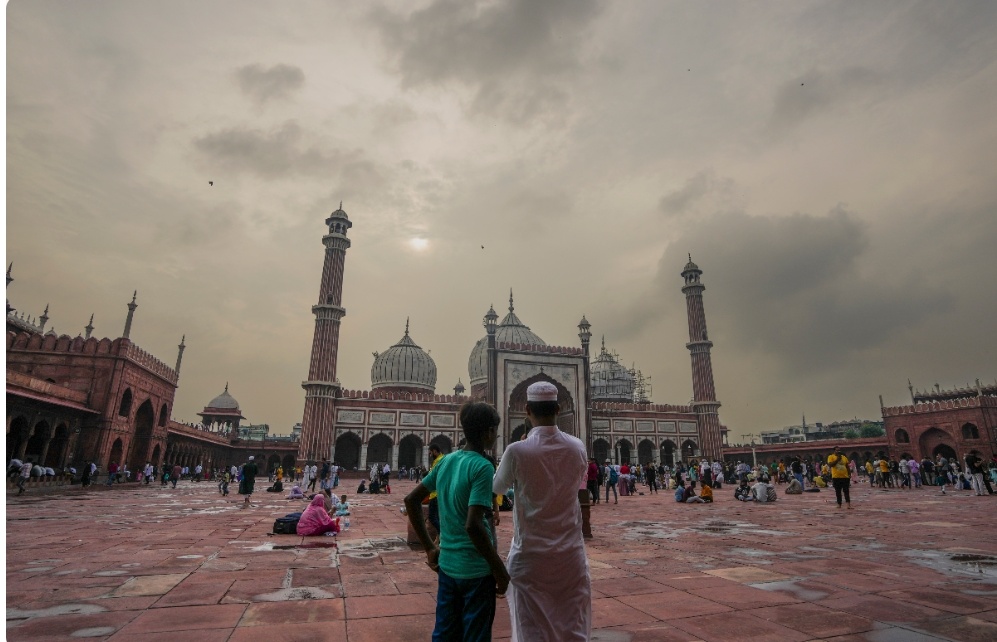
Delhi, in Sidhu’s world, is more than a setting—it is a restless, consuming force that shapes the narrative. The city’s streets are loud, grimy, and bursting with colour and cunning. Its sensory overload—the mingling scents of sweat and spice, the relentless noise, the oppressive heat—becomes a character in itself, mirroring the chaos of the lives it entraps. Within this turbulence, moments of beauty and tenderness flicker, but they are swiftly swallowed by the city’s insatiable energy.
One of the novel’s greatest strengths is its refusal to impose clear moral boundaries. Set in a world where survival hinges on difficult choices, its characters are driven by their circumstances and desires. Yet, even in this harsh environment, the narrator discovers that love and empathy endure, though they often seem like costly vulnerabilities or unattainable luxuries.
Sidhu’s writing is incisive, vivid, and darkly humorous. His sentences are raw, infused with the grit of the streets, yet the narrator’s voice carries a reflexive, almost inadvertent poetry. The oscillation between brutality and tenderness mirrors both the contradictions of the city and the narrator’s internal struggle. The novel’s exploration of queer desire is refreshingly unvarnished, resisting stereotype or spectacle. Instead, it emerges as an organic, unselfconscious facet of the protagonist’s life.

Night in Delhi is a fearless plunge into the fringes of urban existence. It compels readers to confront uncomfortable truths about class, queerness, power, and the human longing for connection, even in the grimmest of settings. Sidhu does not offer hope wrapped in sentimentality; instead, he presents fleeting glimpses of beauty amid the ruins and asks whether survival itself can be an act of defiance.
For those seeking a raw, cerebral, and unsettling narrative that refuses to sanitise the contradictions of human nature, Night in Delhi is a haunting experience—one that lingers long after the final page.
(The writer is a media student from Kashmir with a deep interest in literature, politics, and history. Ideas are personal.)