by Umair Shafiq Khanday
Despite government schemes, anaemia persists in Kashmir due to poor awareness, dietary habits, weak compliance, and social factors, demanding community education and collective responsibility
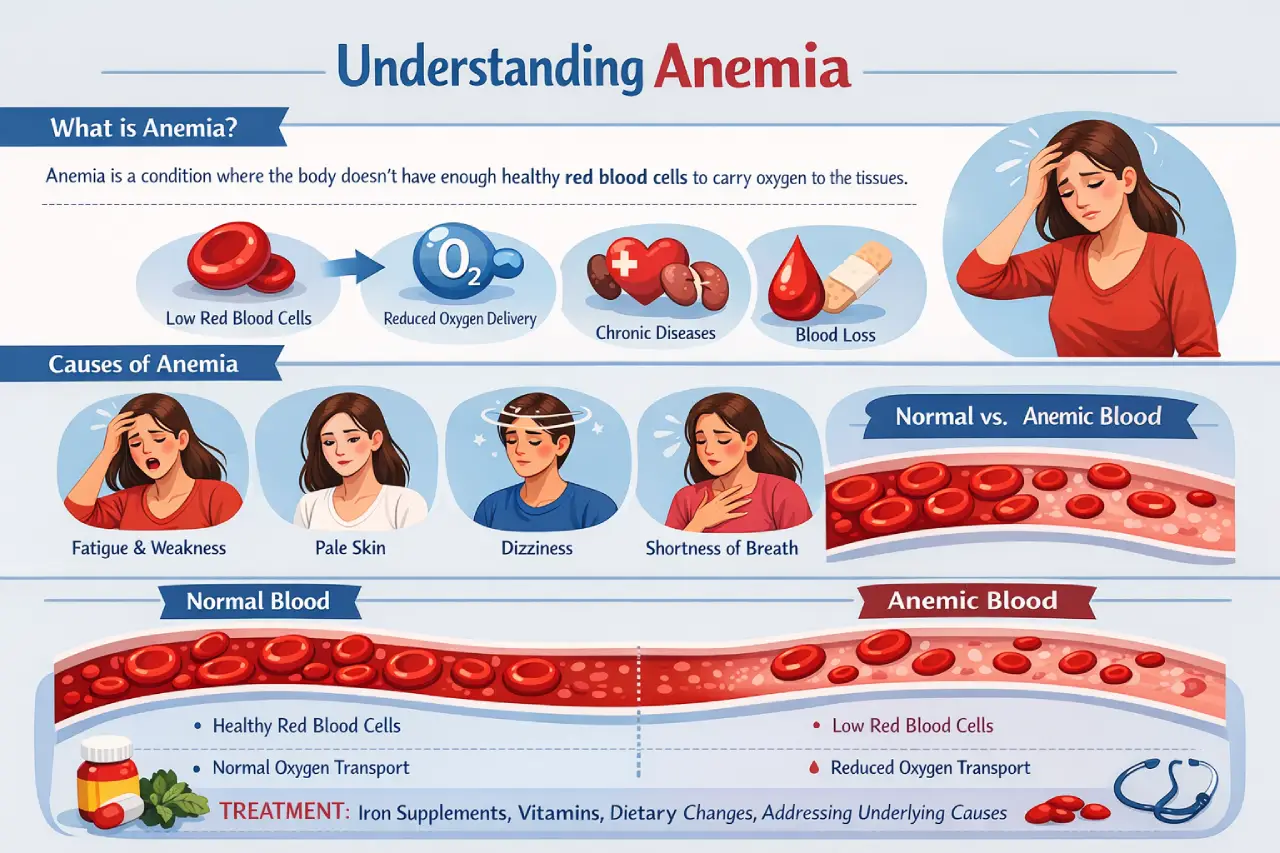
In the quiet villages and crowded towns of Kashmir, a silent health crisis continues to drain the strength of the population, anaemia. It does not command headlines like epidemics or disasters, yet it affects women, children, adolescents, and even men on a massive scale. Despite multiple government schemes and free iron supplementation programmes, anaemia remains alarmingly prevalent across the region.
An Invisible Enemy
Anaemia is not merely “low haemoglobin” recorded on a laboratory report. It manifests as chronic tiredness, breathlessness while climbing stairs, poor concentration in classrooms, complicated pregnancies, and reduced productivity. Many women accept persistent weakness as a normal part of life, while many adolescent girls consider dizziness commonplace. This normalisation of ill-health is precisely what makes anaemia so dangerous.
Recent health surveys and local studies reveal that more than half of women of reproductive age in Jammu and Kashmir are anaemic, with adolescent girls among the worst affected. Children suffer from poor growth, recurrent infections, and declining academic performance due to untreated anaemia.
Why Anaemia Persists?
India has implemented robust programmes such as iron–folic acid supplementation, mid-day meals, Anaemia Mukt Bharat, and maternal nutrition schemes. Yet Kashmir continues to struggle.
The reasons are complex and deeply rooted in social realities. Awareness remains limited, as tablets are distributed without adequate explanation of their importance. Compliance is poor, with iron supplements often skipped due to side effects, fear, or myths. Dietary patterns are dominated by carbohydrates, while iron-rich foods remain inadequate. Repeated pregnancies and early marriages among women further deplete iron reserves. Worm infestations, chronic infections, weak follow-up mechanisms, and insufficient community counselling continue to undermine outcomes.
Health-care delivery alone cannot resolve anaemia unless behavioural change and education progress alongside medical interventions.
Prevention Begins at Home
Anaemia is largely preventable through simple, affordable measures. Regular inclusion of iron-rich foods such as green leafy vegetables, lentils, beans, dates, raisins, apples, meat, and eggs can significantly improve iron intake. Iron tablets must be taken consistently, particularly during adolescence, pregnancy, and lactation. Consumption of vitamin C-rich foods like lemon and oranges enhances iron absorption, while tea or coffee immediately after meals should be avoided. Regular deworming, timely treatment of chronic illnesses, and periodic haemoglobin screening are equally essential.
These solutions are not expensive; they require awareness, motivation, and sustained practice.
The Crucial Role of Nursing
Among health professionals, nursing tutors occupy a powerful yet underutilised position in the fight against anaemia.
Nursing tutors are not merely educators but role models, mentors, and community leaders. Their influence can strengthen awareness at both institutional and grassroots levels. By educating nursing students beyond textbooks and linking anaemia to real-life suffering, they can foster a deeper understanding. Training students to conduct community awareness camps, school visits, and home counselling can extend outreach. Encouraging screening drives in villages and urban slums, addressing myths surrounding iron supplementation, and promoting nutrition education in antenatal clinics and schools can further strengthen prevention efforts. Integrating anaemia awareness into clinical postings and outreach programmes ensures sustained engagement.
When nursing tutors empower students, those students become health messengers in every ward, village, and household they serve.
Collective Responsibility
Anaemia is not merely a medical issue; it represents a broader social failure. Government schemes can succeed only when communities understand and trust them. Families must prioritise women’s health. Schools must educate adolescents. Health workers must counsel with patience and persistence. Nursing educators must lead with compassion and a commitment to excellence.
If Kashmir seeks a healthier future, it must stop accepting weakness as normal. Strong blood builds strong minds, strong mothers, and a strong society. Anaemia may be silent, but the response to it should not be.
(The author is a BSc Nursing gold medalist and currently serves as a tutor at SBGM College of Nursing. Ideas are personal.)