by Ajmal Shah
Despite abundant glacial rivers, Jammu and Kashmir faces a severe water crisis caused by infrastructure collapse, pesticide contamination, administrative apathy, and unsustainable agricultural practices
The Earth is covered mostly in water, but only a minuscule fraction constitutes the fresh water required to sustain biological life. This severe scarcity transforms fresh water into the most critical resource on the planet, a resource that has historically triggered numerous conflicts and will undoubtedly continue to dictate geopolitical stability in the future. The historical conflict between India and Pakistan over Jammu and Kashmir is fundamentally rooted in this absolute necessity of water security. Pakistan, as a profoundly water-scarce nation, relies heavily on the rivers flowing through Kashmir for its very sustenance, which explains its relentless obsession with controlling the region.
However, within Jammu and Kashmir itself, the internal mismanagement of this natural wealth is creating an unprecedented domestic catastrophe that threatens to permanently fracture the social and economic foundation of the territory. Jammu and Kashmir boasts a massive network of glacial streams and rivers that have historically nourished its rich agricultural and horticultural landscapes. This abundance of water serves as the absolute backbone of the regional economy and is not merely a sector of commerce but the very lifeblood of the rural populace.
The primary sector, encompassing agriculture and allied activities, contributes a substantial twenty per cent to the Gross State Domestic Product of the region. Horticulture alone stands as a monumental economic pillar, generating nearly Rs 10,000 crore annually and supporting lakhs of livelihoods. However, a deeper examination of the agrarian landscape reveals an existential threat to this prosperity, driven primarily by the relentless destruction of the intricate hydrological infrastructure that sustains it.
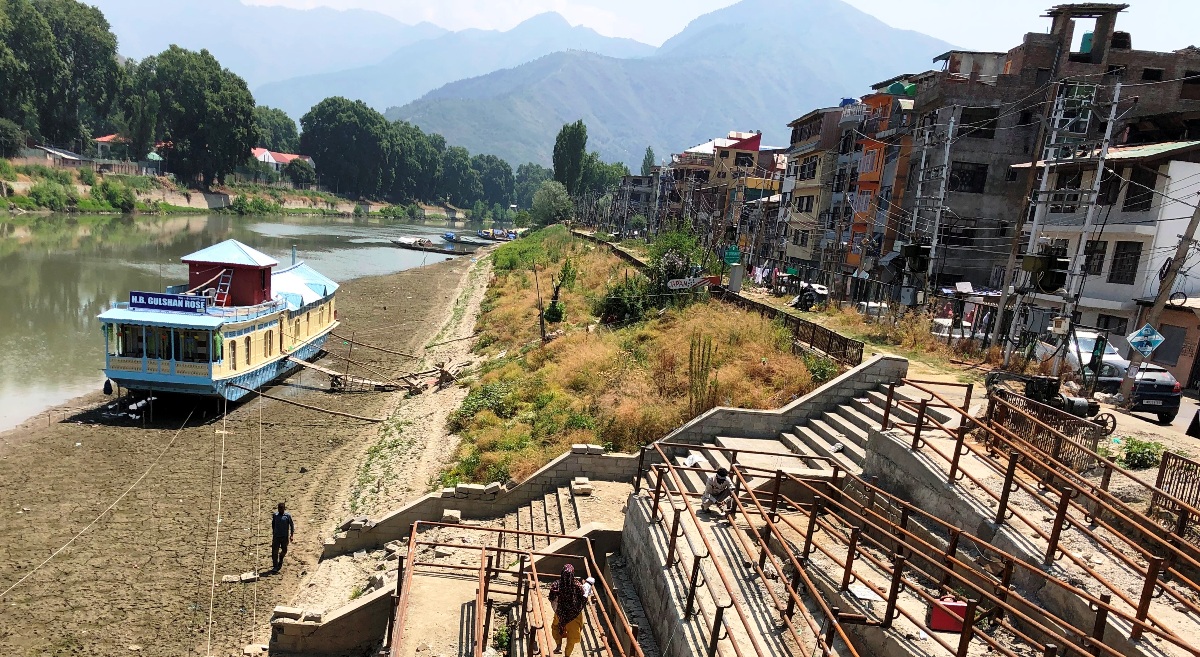
Beyond the major rivers, Kashmir relies on a complex, traditional network of irrigation systems that includes small rivers, conventional irrigation channels, and ancient community-managed streams known locally as Kols (khuls). These ancient Kols were not just physical water channels but represented a profound ecological wisdom, designed over centuries to optimally distribute glacial meltwater across terraced landscapes without depleting the primary source. Tragically, these vital arteries have fallen victim to rampant human encroachment and administrative apathy.
Individuals have illegally encroached on the small distributaries and conventional irrigation channels, severely restricting the natural flow of water to agricultural lands. During recent budget sessions of the legislative assembly, lawmakers highlighted this profound infrastructure collapse, pointing out that expensive lift irrigation schemes have become monumental failures because the source water bodies from which they were designed to pump have shrunk drastically due to illegal encroachments, leaving the expensive mechanical infrastructure completely useless.
The death of conventional irrigation has forced farmers into desperate and highly destructive practices to save their lucrative crops. Facing completely empty canals during crucial agricultural seasons, agriculturists frequently resort to bursting open drinking water pipes laid across rural landscapes to extract water for mixing their agricultural pesticides. This illegal extraction creates a direct and immediate conduit for a biological disaster of monumental proportions.
When these public utility pipes are breached and utilised as makeshift chemical mixing stations, highly toxic synthetic pesticides leach directly into the main drinking water supply lines that serve countless households downstream. This severe contamination has catalysed a horrifying public health emergency, transforming a localised agricultural desperation into a widespread medical catastrophe that the state apparatus seems entirely unequipped to handle.
The region is currently witnessing an explosive growth in cancer rates that demands immediate introspection and profound legislative intervention. Official health data reveal that over 51,000 new cancer cases were registered in the territory over a brief period of four years. More alarmingly, landmark epidemiological studies conducted by premier medical institutes like the Sher-e-Kashmir Institute of Medical Sciences have established a direct and undeniable link between the inhalation of toxic pesticide mists and a disproportionately high incidence of primary malignant brain tumours among the farming communities of the valley.
Furthermore, the tragedy extends beyond inhalation, as the direct consumption of water contaminated by these leached agrochemicals has precipitated a corresponding surge in gastric and other systemic cancers across the population. The biological mechanics of this crisis are truly devastating. When these complex synthetic pesticide molecules enter the human digestive tract through untreated drinking water, they do not merely pass through harmlessly. They accumulate and interact with the biological system, creating a sustained inflammatory environment within the cellular lining of the stomach. Over time, this chronic toxicity fundamentally alters the cellular architecture, accelerating malignant transformations that lead to aggressive gastric carcinomas.
The situation is further compounded by the pervasive and deeply ignorant practice of farmers discarding empty, highly toxic pesticide packaging directly into streams and drinking sources. These plastic containers do not biodegrade but instead break down into microplastics and continuously leach carcinogenic residues into the aquatic ecosystem, ensuring that the poison flows directly to unsuspecting populations who rely on these water bodies for their daily sustenance.
Consuming this water is a lethal gamble because a significant portion of the rural population receives completely unfiltered water. While the administration aggressively promotes the Jal Jeevan Mission, the reality on the ground exposes a severe institutional hollowness. The scheme claims massive statistical success in laying pipes and connecting over 81% of rural households to a piped water grid. However, the foundational flaw in this bureaucratic triumph is the assumption that simply laying a pipe miraculously purifies the water flowing through it.
Official statistics indicate that nearly 30 per cent of the population still relies on entirely untreated and unfiltered water sources. Furthermore, even in areas where basic rapid sand filtration plants exist, the drawing sources themselves are heavily contaminated with the remnants of pesticide packaging. These basic filtration facilities are completely unequipped to remove dissolved heavy metals and complex synthetic pesticide compounds, leaving the connected households intimately exposed to hazardous chemical runoff daily.
The Jal Shakti Department, or the Public Health Engineering Department, is legally mandated to ensure the provision of safe and potable drinking water, yet it operates with a troubling lack of depth and accountability. Damaging public water pipes and negligently poisoning a public water supply are serious criminal offences that demand rigorous prosecution. Both the Penal Codes and the Jammu and Kashmir Water Resources Regulation and Management Act strictly prohibit the demolition, alteration, or obstruction of water channels and impose severe penalties for depositing waste in or near irrigation works. Despite these robust statutory provisions, the authorities turn a blind eye to the rampant puncturing of pipes and the subsequent poisoning of the water grid.
The department diligently charges consumers monthly tariffs for providing drinking water, thereby assuming a binding legal and moral duty to ensure that the water is actually drinkable. Their complete failure to monitor water purity at the source and in the pipelines, and their inability to penalise offenders, make them fundamentally complicit in this widespread negligence.
What we are witnessing is a deeply hidden crisis that threatens both the physical health and the economic livelihood of the entire region. The captivating mirage of abundance must be shattered by the stark reality of chemical contamination and administrative paralysis. To avert a total ecological and biological collapse, the state apparatus must discard its profound apathy and reclaim its constitutional mandate as the vigilant guardian of public health and ecological integrity.
The absolute restoration of traditional irrigation canals and the uncompromising eviction of encroachers must become the immediate and central focus of the government. Opening up these vital water channels and ensuring their natural and unobstructed flow to the agricultural fields is an existential necessity required to revive the dying agrarian economy and halt the desperate puncturing of public drinking water lines. Furthermore, the mandatory deployment of advanced chemical filtration technologies across all rural water supply schemes is a fundamental prerequisite for survival in a highly toxic agrarian landscape.
The integrity of public health rests entirely on the moral courage of the administration to enforce strict criminal liability against those who wilfully damage water infrastructure and systematically poison the community grid. However, the preservation of our hydrological network cannot be achieved through administrative coercion and punitive measures alone. It demands a profound sense of collective responsibility, where an awakened community recognises these water bodies as its most sacred inheritance.

Citizens and civil society must actively partner with the state apparatus to protect the ancient water channels from usurpation and to foster an environment where the desperate sabotage of public resources is socially unacceptable. If the foundation of environmental governance remains weak and mechanical, the entire social and economic edifice of the territory will inevitably crumble under the weight of this silent epidemic. The state must stand firm and unapologetic in its defence of these vital resources through the rigorous application of the law, while the community must rise to share the moral duty of environmental stewardship, ensuring together that a healthy future is secured for the generations to come.
(The author is an advocate practising before the High Court of Jammu and Kashmir and Ladakh, at Srinagar. Ideas are personal.)