by Asad Mirza
Fears of a regional war in the Middle East spiked after Hezbollah launched a barrage of rockets towards Israel. This was in retaliation to the Israeli covert operations, which killed a senior Hezbollah commander and a top Hamas leader Ismail Haniyeh.
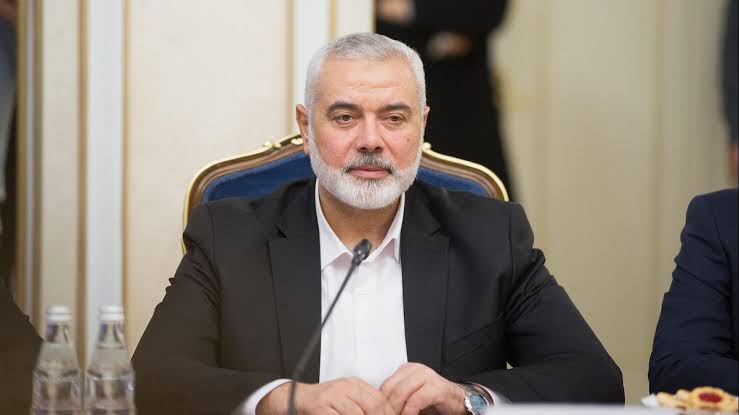
The killing of Hamas Polit Bureau Head Ismail Haniyeh in Tehran on July 31, apparently by a covert IED hidden two months ago and remotely detonated, does not portend well for peace in the region and Gaza.
Haniyeh was on top of the elimination list of Mossad and other agencies as Benjamin Netanyahu vowed to destroy Hamas in the wake of October 7, 2023, attacks, which had unprecedented success for Hamas—when not only nearly 1,200 Israelis were killed but 250 of them were taken hostage. These hostages became the key going forward, as their release remains a priority for Bibi’s administration in Israel, due to months-long domestic protests by distraught families and friends.
The international community has been besieged with the fear that the Israel-Hamas War should not escalate beyond its immediate periphery. Half-baked efforts have been made by several countries including Qatar and China, to rein in the warring parties. Meanwhile, Hamas mustered moral and material support from Hezbollah (Lebanon, Syria) and Houthis (Yemen and the Red Sea), Kataib Hezbollah, and other Shia militias (Iraq) even as other non-state actors kept the escalation under the threshold, presumably with the alleged connivance of Iran.

On the other hand, Netanyahu continued to exploit the strategic weakness of his ironclad support from Washington. His last week’s oration and address to the US Congress and repeated standing ovations could only confirm that Palestinians were expendable. The financial assistance, weapons, and political support were once again assured to Bibi by Biden, Harris, and Trump, even as they urged him to close the ceasefire deal quickly. Some say, hoping for Trump’s victory, Netanyahu is free to do as he pleases until November.
Meanwhile, according to a Channel 12 News report, US President Joe Biden told Netanyahu ‘Stop bullshitting me!’ during their conversation on Thursday, last. His remarks came in the context of Israeli-US collaboration in preparation for a potential full-scale conflict with Iran and its allies. Concluding the conversation, President Biden said, “Don’t take the president for granted”. It is pertinent to note that the Biden-Nentayahu conversation took place days after the Haniyeh’s assassination in Iran, but such American exclamations are usually not taken seriously by the Israelis.
Iran and Israel suffer from Mutually Assured Destruction Syndrome (MAD) and consider one another as an existential threat, knowing too well that an open war between them would be disastrous for the region and the world, and the international community will do whatever it takes to stop that. Hence, although worried, US White House spokesman John Kirby reiterated that Washington did not see an all-out conflict in the region as imminent or inevitable and that it was working to prevent that from happening.
But this time the killing of Haniyeh in Tehran is a typical redline, crossed by Israelis, that will force Iranians to respond visibly in kind, as it implies an Iranian ‘humiliation’ in the international comity. Iran may not take the risk of expanding the war directly, but through its proxies such as Hamas, Hezbollah, and Houthis it can carry out the task with plausible deniability.

But a direct action only could reduce the intensity of ‘humiliation’ since it happened within a few hours of the new Iranian President Masoud Pezeshkian’s swearing-in ceremony in the presence of many leaders from the region and beyond. Khamenei and Pezeshkian have both vowed an avenging response and punishment, but what costs they are willing to absorb will decide the quantum, time, and manner of the Iranian response. Hopefully, the chain reaction will be avoided and pragmatism will prevail. Israel’s killing of several top leaders of Hamas and Hezbollah has redeemed Netanyahu’s credibility with his people, to some extent.
Iran and regional armed groups aligned with the country are preparing to respond to Israel over the assassinations of Haniyeh and Hezbollah commander Fuad Shukr earlier this week.
Meanwhile, an Al Jazeera report describing Iran, Lebanon, and Jordan as self-styled ‘axis-of-resistance’ for being at odds with United States-Israeli hegemony in the region, says that Iran and its allies will seek to restore deterrence against Israel without provoking a full-blown regional war, while warning that the space for miscalculation is razor-thin.
“One of the lines of argument in Iran right now is that they need to show a firm response and show their readiness to enter into a war to de-escalate,” Hamidreza Azizi, an expert on Iran and a non-resident fellow with the Middle East Council on Global Affairs think tank in Doha, Qatar, told Al Jazeera.
Nicholas Blanford, an expert on Hezbollah with the Atlantic Council, a Washington, DC-based think tank told Al Jazeera that he thinks the overall strategic outlook remains the same in the sense that Hezbollah does not want to escalate this into a massive war.
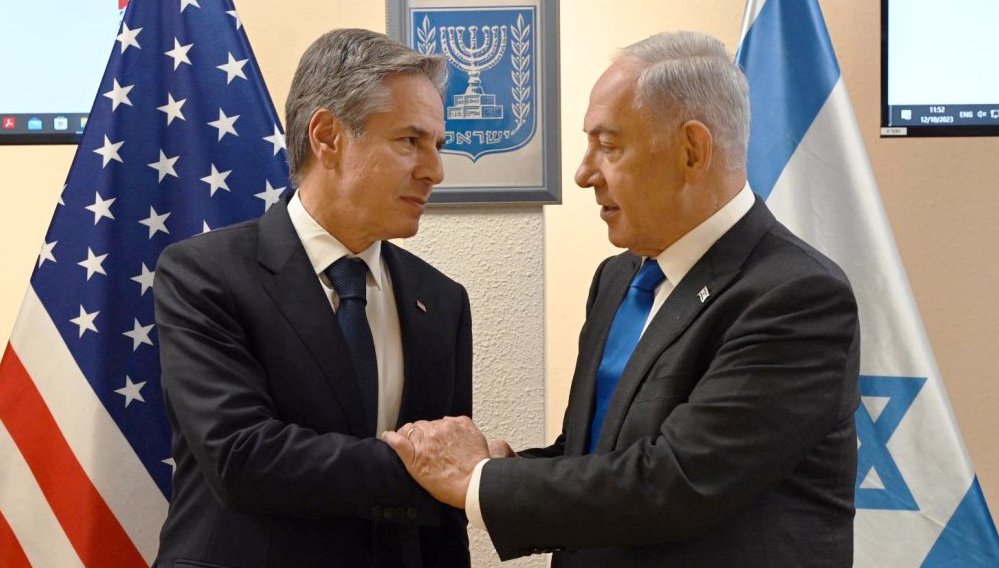
Some analysts warn that a substantial attack by the ‘axis-of-resistance’ risks killing Israeli military personnel or civilians, thereby raising the spectre of a major regional conflict.
Mohanad Hage Ali, an expert on Lebanon and a senior fellow with Carnegie Middle East Centre in Beirut, told Al Jazeera that Hezbollah has announced it will retaliate against Israel for killing Shukr and that it is likely to participate in a joint attack with Iran.
But the bigger question is whether the US under a Democratic administration will try to quell the regional war from escalating or try to end the Iranian hegemony in the region, once and for all. Going by the Democratic Party’s track record, President Biden, might not give the go-ahead for a full-out war supporting Israel, with the American presidential elections just a few months away, also he would not like to leave behind a legacy, which would make him the first Democratic President to order a war. Just a reminder that most of the wars led by America like the Korean War, Vietnam War and Iraq War were spearheaded when the Republicans were at the helm of affairs.
(Asad Mirza is a senior journalist based in New Delhi. In his career spanning more than 20 years, he was also associated with BBC Urdu Service and Khaleej Times of Dubai. Views are personal.)