SRINAGAR: The strategically important Zojila Tunnel project achieved a major breakthrough on Tuesday with the successful connection of both ends of the main tunnel near Minamarg in Ladakh, bringing India closer to establishing all-weather surface connectivity between Kashmir and Ladakh for the first time.
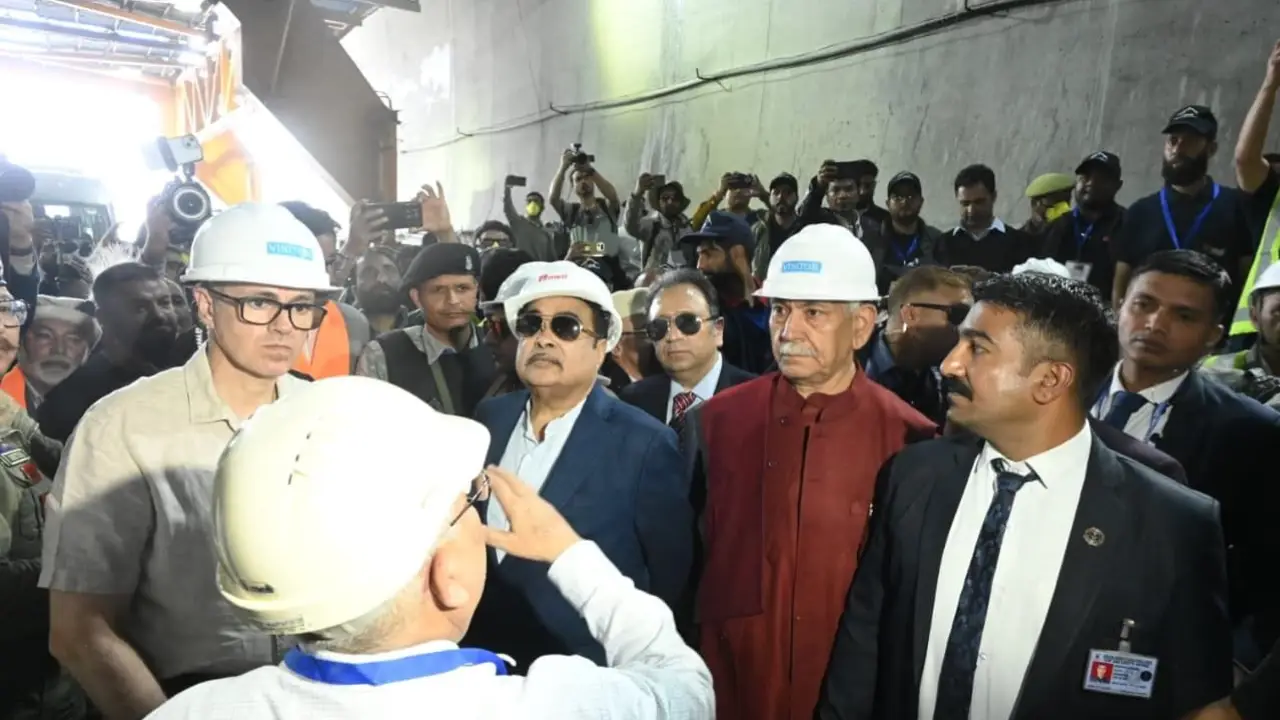
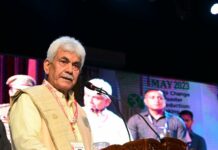
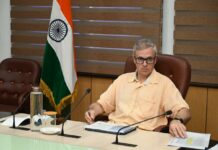
Union Minister for Road Transport and Highways Nitin Gadkari witnessed the breakthrough ceremony at the eastern portal of the tunnel along the Srinagar–Leh National Highway in the presence of Jammu and Kashmir Lieutenant Governor Manoj Sinha, Chief Minister Omar Abdullah, Members of Parliament, senior civil and military officials and representatives of the executing agencies. Ladakh Lieutenant Governor Vinai Kumar Saxena joined the event virtually.
The breakthrough was achieved through a controlled blast remotely triggered by the Union Minister, marking a key engineering milestone in one of the country’s most challenging mountain infrastructure projects.
The Zojila Tunnel, being developed between Baltal and Minamarg on National Highway-1, is a nearly 14-kilometre-long bi-directional tunnel being constructed at a cost of around Rs 6,800 crore. Built at elevations ranging between 2,900 and 3,310 metres, the project is designed to provide uninterrupted year-round connectivity across the Zojila Pass, which remains cut off for several months during winter due to heavy snowfall and avalanches.
Officials said the tunnel, measuring 13.153 kilometres in its main stretch, has been designed as a horseshoe-shaped, single-tube, two-lane structure with modern safety systems, including advanced ventilation, automatic fire detection systems, CCTV surveillance and pedestrian cross-passages. The project also includes snow galleries, avalanche protection structures, catch dams, four bridges, 40 culverts and approach roads.
Addressing the gathering, Gadkari described the project as a transformative infrastructure initiative for the Himalayan region.
“This is not merely a transportation project but a gateway to development. Upon completion, travel time between Sonamarg and Minamarg will reduce from nearly two hours to around 30 minutes,” he said.
The Union Minister said the tunnel would strengthen tourism, trade, employment generation and strategic mobility while ensuring safer travel by reducing disruptions caused by adverse weather and avalanches.
Highlighting broader infrastructure expansion in the region, Gadkari said highway projects worth nearly Rs 1.35 lakh crore are currently completed, under construction or planned across Jammu and Kashmir, while projects worth around Rs 18,000 crore are underway in Ladakh.
Lieutenant Governor Manoj Sinha termed the tunnel a “lifeline” for Jammu and Kashmir and Ladakh and credited Prime Minister Narendra Modi and Union Minister Gadkari for accelerating infrastructure development in border regions.
“The Zojila Tunnel will strengthen supply chains, boost tourism and provide vital strategic support to our Armed Forces,” Sinha said.
He added that improved road connectivity would also benefit pilgrims visiting the annual Amarnath Yatra.
Chief Minister Omar Abdullah said the project would transform daily life in the region by improving access to healthcare, education and markets.
“It will bring improvements in people’s lives that we may not fully realise today,” he said, while urging early completion of the remaining works.
The Chief Minister also raised the issue of air connectivity for Kargil and called for regular flight services to the region.
The tunnel project is being executed by the National Highways and Infrastructure Development Corporation Limited (NHIDCL), which said work had continued despite difficult terrain, severe winters and complex geological conditions.
Once operational, the Zojila Tunnel is expected to become one of the most critical strategic and civilian transport links in the Himalayan region, ensuring reliable year-round access between Kashmir and Ladakh.