SRINAGAR: The Zojila Tunnel project is set to achieve a major milestone on Tuesday with the breakthrough of its main tunnel, bringing year-round road connectivity between Srinagar and Ladakh a step closer to reality.
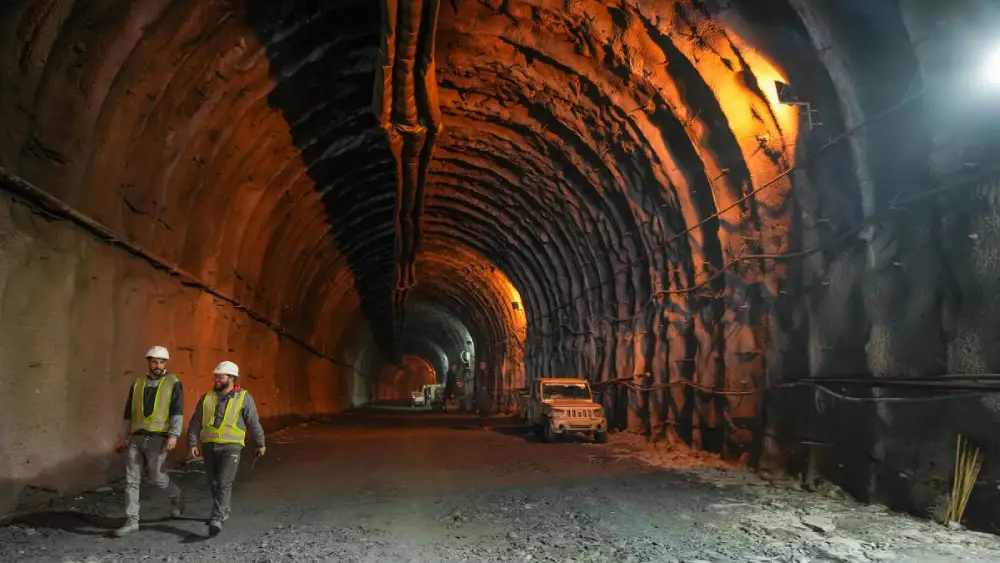
The breakthrough ceremony will mark the completion of more than 13 kilometres of excavation on the strategically significant tunnel, which is regarded as Asia’s longest bi-directional road tunnel project. Being constructed at an estimated cost of Rs 6,500 crore, the project is expected to revolutionise travel and logistics by ensuring uninterrupted connectivity through the challenging Zojila Pass.
Union Minister for Road Transport and Highways Nitin Gadkari is scheduled to attend the ceremony and witness the breakthrough blast, a landmark moment in one of India’s most important infrastructure projects.
Once operational, the tunnel is expected to significantly reduce travel disruptions caused by heavy snowfall and adverse weather conditions. It is also anticipated to improve mobility, promote tourism, strengthen defence logistics and support economic growth in the Union Territories of Jammu and Kashmir and Ladakh.
The breakthrough is being hailed as a major engineering accomplishment and a significant step towards achieving seamless all-weather connectivity across the Himalayan region.
Long considered a strategic and developmental necessity, the project is expected to provide dependable road access between Kashmir and Ladakh throughout the year.
Stretching 13.153 kilometres, the Zojila Tunnel is designed to be the world’s longest single-tube, bi-directional road tunnel at such a high altitude, located approximately 11,578 feet above sea level. The tunnel is being constructed by Megha Engineering and Infrastructures Limited (MEIL) using the New Austrian Tunnelling Method (NATM).
The project will bypass the avalanche-prone Zojila Pass on National Highway-1, which remains closed for several months each year due to heavy snowfall. The final structural excavation breakthrough on June 9, 2026, marks a historic stage in the project’s development.
Upon completion, travel time through the sector is expected to be reduced from more than three hours to around 15 minutes. The tunnel is also expected to ensure reliable supply lines, boost tourism, improve regional connectivity and provide enhanced logistical support to the Indian Armed Forces in strategically important border areas.