by Sadia Raashid
Every girl deserves a future where her potential is nurtured, her aspirations are supported, and her rights are safeguarded—every day.
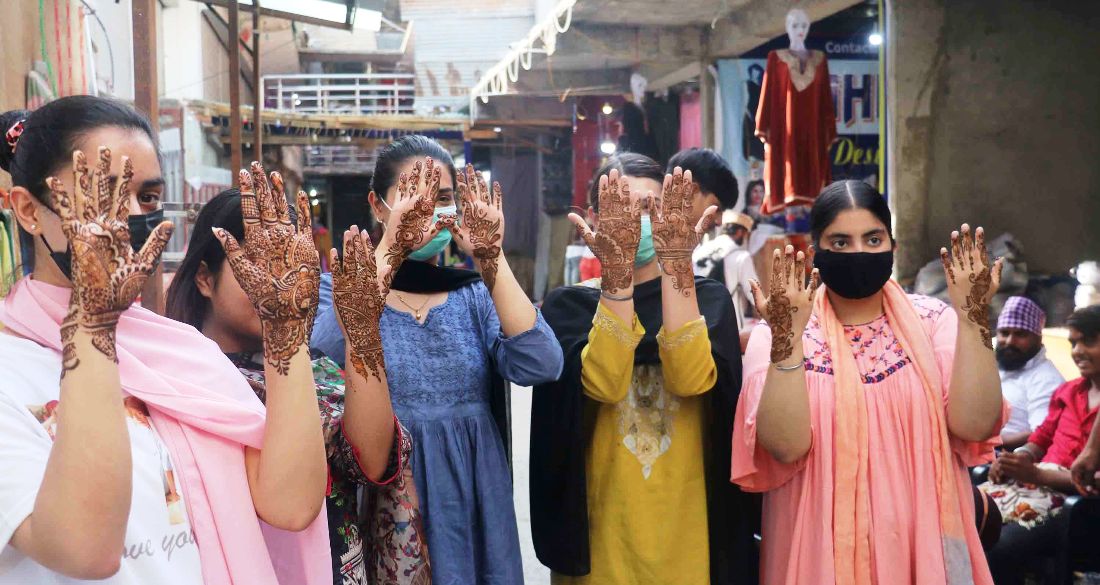
In a world where women have scaled the heights of space exploration and governance, it remains paradoxical that millions of young girls still struggle for fundamental rights such as education, opportunity, equality, and more. As India celebrates National Girl Child Day every year on January 24th, this year’s theme, Empowering Girls for a Bright Future, prompts a pressing question: are we truly fostering an environment where every girl can dream without boundaries?
Despite decades of progress, deep-rooted societal norms continue to hinder the full potential of girls, transforming this day from mere celebration into a call for collective action. This article explores the challenges, policies, and the path forward to ensure that every girl in India is not only seen but genuinely empowered.
Annually observed on January 24th, National Girl Child Day seeks to raise awareness about young girls’ rights, challenges, and aspirations nationwide. Launched in 2008 by the Ministry of Women and Child Development, this initiative aims to address gender inequalities and create opportunities for girls in education, healthcare, and leadership. The theme for 2025 underscores society’s shared responsibility to ensure that every girl can realize her dreams and live life to its fullest potential.
The question arises: does this initiative truly matter, and does it bring about meaningful change? Despite social advancements, gender disparities persist across nearly every sector—education, economics, social structures, and governance.
These inequalities are not confined to the public sphere but seep into the private lives of girls, where they are often reduced to mere assets within their own homes. Yet, the initiative taken by the Government of India represents a significant stride towards a brighter, freer future, not only for young girls but for all women across the nation. National Girl Child Day aims to raise awareness, celebrate achievements, and promote the value of girls in society.
Its primary focus is to educate the public, particularly those in rural and underserved areas, about gender equality, financial independence, and the social upliftment of girls.
However, a pressing question lingers: is one day enough? While National Girl Child Day serves as a crucial platform to highlight the challenges girls face and to honour their accomplishments, empowerment cannot be confined to a single day. A day may spark awareness, but genuine transformation demands a shift in mindset, sustained policy efforts, and consistent everyday practices.
Every girl deserves not just fleeting recognition but an enduring commitment from society—be it from her parents, educators, policymakers, or her community. Only then can she pursue her dreams without fear, equipped with the strength to dismantle the barriers that stand in her way.
At times, we forget that we inhabit a patriarchal society where favouring male children takes precedence in nearly every aspect of life. It is not merely a matter of prioritising sons; gender-based violence and discrimination persist within households and communities. Even today, women are not safe in their so-called sanctuaries—their homes.
History bears witness to the oppression women have endured under patriarchal systems, and to this day, many families still regard daughters as burdens, some even contemplating the abandonment of girl children. The scourge of child marriage remains a pervasive issue, often justified by the infamous parental refrain: “The weight will lift from our shoulders.” A recent UNICEF article revealed that nearly 1.5 million girls under the age of 18 are married in India each year.
Yet, there is hope. The Government of India has introduced several schemes to support the girl child, achieving some success. Initiatives such as Beti Bachao, Beti Padhao, Sukanya Samriddhi Yojana, and Kanya Shiksha Pravesh Utsav have made strides in addressing these issues.
However, challenges in outreach, implementation, and societal acceptance persist. Despite these efforts, the status of girls in India remains troubling. According to the 2011 Census, the child sex ratio stood at 914 girls per 1,000 boys in the 0-6 age group. Furthermore, the female literacy rate in India is approximately 68 per cent, compared to 84.7 per cent for men. These figures underscore the enduring struggle for gender equality and the need for sustained action.

Through the remarkable efforts of women social reformers across various spheres of society, we have begun to recognize the importance of women and raise awareness about their inherent rights. National Girl Child Day is not merely a celebration but a poignant reminder of the ongoing struggle for equality and opportunity.
True empowerment cannot be confined to a single day; it demands relentless effort from every corner of the nation. Every girl deserves a future where her potential is nurtured, her aspirations are supported, and her rights are safeguarded—every day. Let us transform awareness into action and make empowerment a way of life, not just an event.
(The author is a recent graduate from Government Degree College, Anantnag – an emerging writer, passionate about shedding light on meaningful topics through compelling storytelling. Ideas are personal.)