by Javaid Ahmad Lone
A meditation on burnout, conformity, and quiet withdrawal, using a lone penguin to mirror humanity’s exhaustion with performance, repetition, and lives that survive but do not truly live

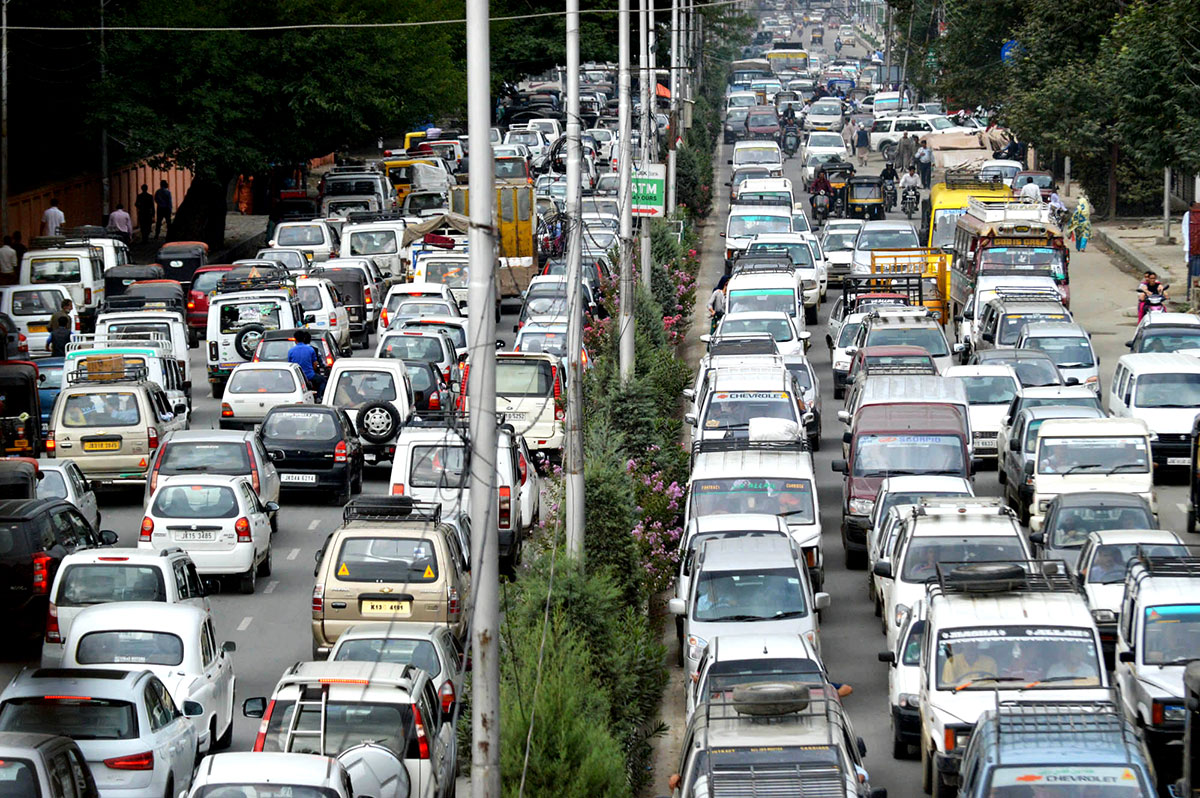
Every morning, millions of people wake up before they are ready, not because their bodies have rested, not because their minds feel renewed, but because life demands their presence. The alarm rings, and for a brief second, there is confusion: a fragile gap between sleep and obligation where one almost forgets who they are and what they owe. Then memory returns, not gently, but with weight. The body moves out of habit, not desire. The eyes open, not with hope, but with responsibility. Life begins not as a choice, but as a duty shaped by schedules, expectations, and quiet fears of falling behind.
Tea is made, messages are checked, clothes are chosen, and identities are worn like uniforms. We rush through tea that we barely taste, through streets we no longer notice, through conversations we half-hear, through meetings that blur into one another. Time is no longer something we live inside; it is something we chase.
Emotions are postponed, exhaustion is accepted as normal, and silence feels uncomfortable. By the time we step outside, we are already living a life that began long before we had the chance to ask if we wanted it. The streets are full, the buses are crowded, the offices are alive with motion, yet something essential feels missing. We are moving constantly, but we are not arriving anywhere meaningful.
We become experts at playing our parts: student, worker, teacher, parent, provider, responsible adult, etc. Each role carries invisible pressures, silent rules, and unspoken expectations. We are praised for being “strong,” “consistent,” and “hardworking.” No one asks what it costs us to remain so consistent. No one asks what parts of ourselves we had to silence to fit into these roles. We function. We survive. And somewhere between one obligation and another, between a bus stop and an office desk, between a classroom and a salary slip, between caring for others and forgetting ourselves, a quiet question appears, almost like a whisper from within: Is this all there is?
I often wonder if others feel this too, this strange heaviness that comes not from suffering, but from repetition. Not dramatic sadness, not visible pain, but a tiredness that sleep cannot heal. A tiredness that lives deeper than the body, in the place where dreams once lived. We go to bed exhausted and wake up tired again, not because we didn’t rest enough, but because we didn’t live enough. We survive each day, but rarely inhabit it. We exist efficiently, but not fully. And slowly, without noticing, we begin to believe that this emptiness is simply what adulthood feels like.
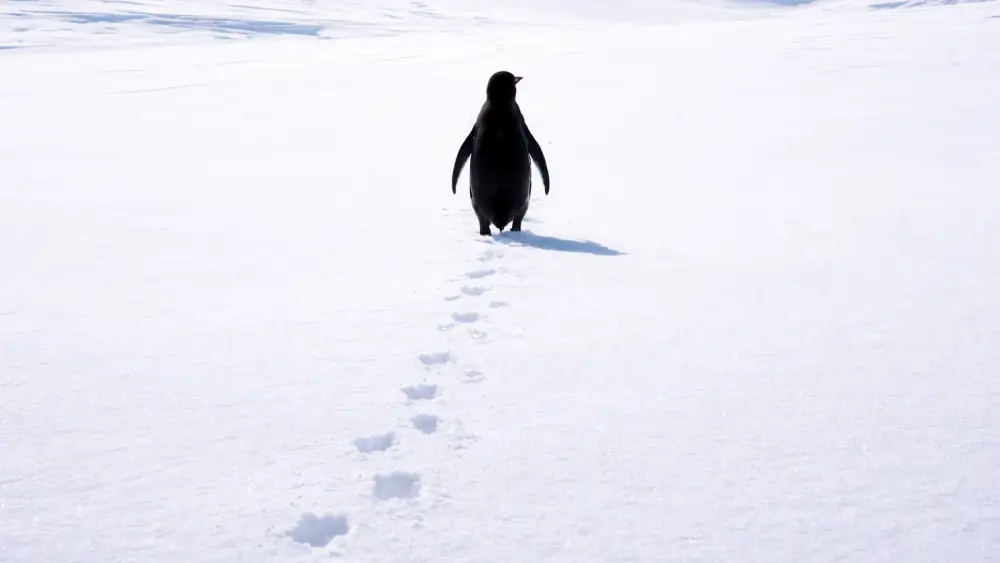
It was in this emotional climate that a short video of a penguin walking away from its colony quietly shook the world. There was nothing special about the clip. No dramatic music. No explanation. No message. Just a lone penguin in Antarctica, slowly walking away from warmth, from voices, from safety. And yet, millions of people felt something break open inside them. The comments were not about animals. They were about burnout, loneliness, suffocation, and escape. People did not see a penguin; they saw themselves walking out of a life that no longer felt like home.
The other penguins stayed. They followed the group. They survived. This one walked away. Not loudly. Not heroically. Just quietly, steadily, as if something inside it could no longer pretend. Survival keeps the body alive, but living asks a different question: What kind of life am I inside this body? The group offers safety. The walk offers honesty. One protects existence. The other searches for meaning. One stays warm. The other chooses truth over comfort.
And slowly, this same movement begins to happen in our own lives, not always by walking into snow, but by quietly withdrawing from gatherings, from conversations, from spaces where we can no longer express our true selves. We leave rooms where every discussion feels rehearsed, where every opinion sounds borrowed, where nothing comes from the heart. We begin to feel that even our conversations have been turned into performances—predictable, repeated, empty.
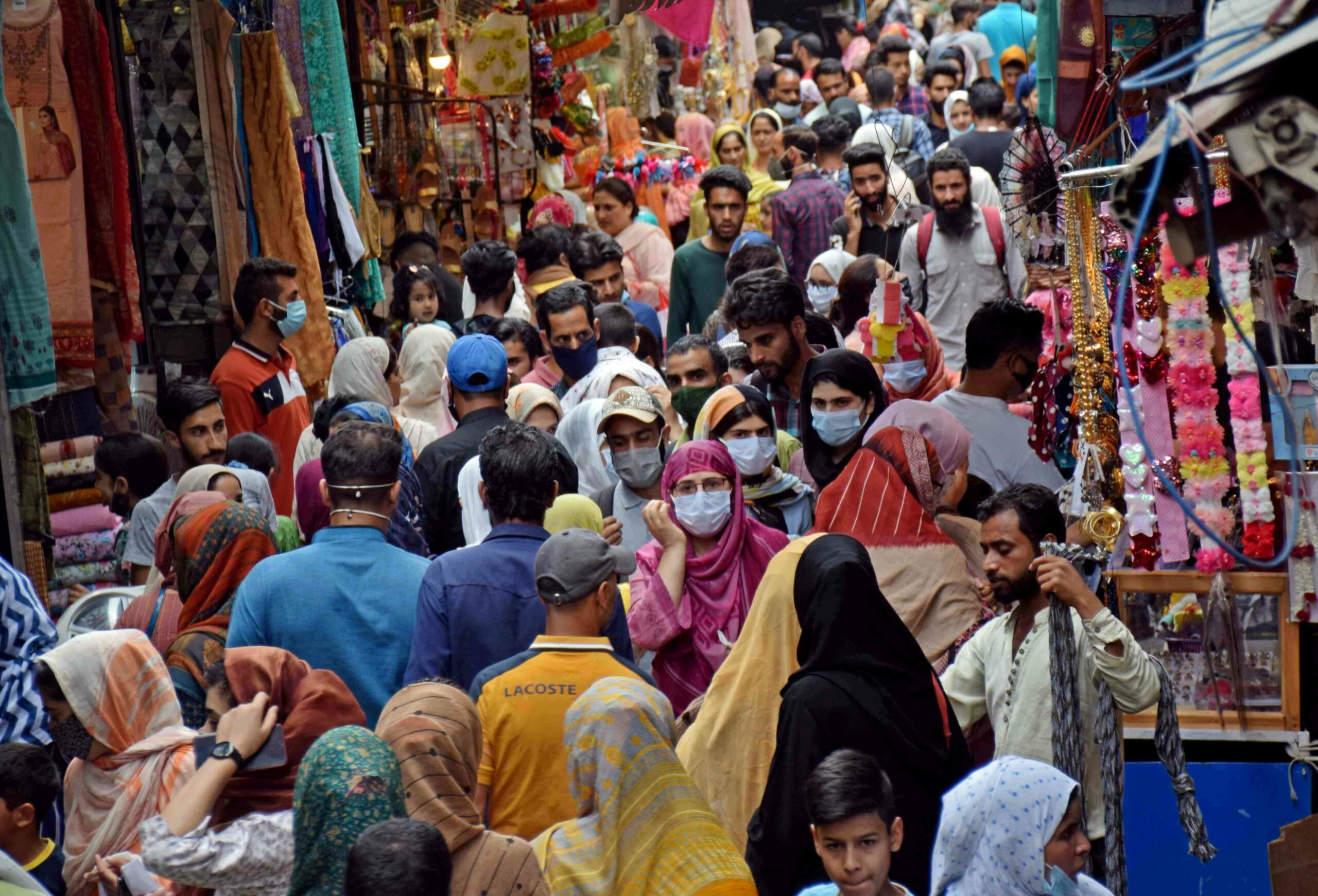
We sit among people, yet feel invisible. Everyone is talking, but no one is listening. The same topics return again and again. The same fears. The same ambitions. The same noise. Nothing touches the inner world. Nothing asks who we are becoming. Gatherings begin to feel heavy instead of nourishing, stressful instead of healing. We leave not because we hate people, but because we cannot find ourselves among them.
And then one day, these lines begin to feel less like poetry and more like a mirror:
Hum kyun chalein us raah par
Jis raah par sab hi chale
Kyun na chunein woh raasta
Jis par nahi koi gaya
(Why should we walk the same road everyone walks? Why not choose the path no one has taken?)
When I read these lines, I do not hear rebellion. I hear exhaustion. I hear the voice of someone who has lived too long on borrowed routes. I think of how many choices in my own life were not really choices; they were inherited, suggested, expected, and normalised. Education, career, lifestyle, even ways of thinking. At some point, I stopped asking what I wanted and started asking what was acceptable. These lines remind me that walking the same road is easy because it requires no courage, only obedience. But the unknown road demands something far more difficult: responsibility for one’s own life.
Choosing a different path is not about being special. It is about wanting to feel alive again. It is about wanting even one part of one’s life to feel truly authored, not copied.
Then Ghalib enters, not as a poet, but as someone who seems to understand the deepest fatigue of being human:
Rahiye ab aisi jagah chal kar jahan koi na ho
Hum-sukhan koi na ho aur hum-zabaan koi na ho
(Let us go to a place where no one exists,
Where there is no one to speak to, no one even to share a language with.)
To me, this is not about loneliness. It is about wanting relief from performance. It feels like the voice of someone who has spoken too much without being heard. Someone who has explained themselves too often. Someone is tired of translating feelings into socially acceptable sentences. I see myself in this line whenever I sit in a room full of people and still feel the urge to disappear, not because I hate them, but because I no longer recognise myself in that version of me. This line feels like the desire to exist without being interpreted.
Be-dar-o-deewar sa ek ghar banaya chahiye
Koi humsaaya na ho aur paasbaan koi na ho
(We should build a house without doors and walls,
Where there is no neighbour and no guard.)
This house feels to me like an inner refuge, a place inside the self where no one enters without permission. No expectations. No comparisons. No judgments. Doors and walls here are not physical; they are emotional borders created by society: how we should behave, how we should succeed, how we should love, how we should suffer. This line feels like the longing to step outside all that and finally breathe without being watched. A life without guards means a life without fear of being measured.
Padiye gar beemar to koi na ho teemardaar
Agar mar jaaiye to nauha-khwaan koi na ho
(If I fall ill, let there be no one to nurse me,
And if I die, let there be no one left to mourn.)

These lines hurt the most. And they make the most sense. They do not come from hatred of love, but from exhaustion with being needed. Sometimes, even care feels heavy, not because it is bad, but because it demands emotional energy when none is left. I read this as the voice of someone tired of being a responsibility, tired of being held together, tired of being someone else’s emotional duty. It feels like the final stage of fatigue, when even love becomes another role.
Together, these verses feel like a diagnosis of our time. Not of isolation, but of overstimulation. Not of loneliness, but of false connection. They describe a world where people are constantly surrounded, yet rarely seen; where everyone is busy, yet no one feels fulfilled; where success is visible, but meaning is absent. We talk more than ever, but listen less than ever. We connect endlessly, but touch nothing deeply. We fill every silence with noise, every emptiness with activity, every doubt with distraction, until we no longer remember what it feels like to sit with ourselves without fear.
The penguin does not walk because it hates the world.
It walks because the world has become too loud to hear itself.
Too demanding to breathe.
Too crowded to feel.
It walks because everything around it is moving, yet nothing is arriving. Because warmth has become routine, not comfort. Because belonging has turned into repetition. Because staying no longer feels like living, only like continuing. The penguin does not rebel; it withdraws. It does not protest; it listens to a quiet inner voice that says, something here is no longer mine.
It does not reject people.
It rejects a life where it must constantly perform to deserve existence.
A life where one must explain every silence, justify every slowness, prove every worth.
A life where being is never enough, one must always be more, faster, better, louder.

Perhaps that is why this story hurts so deeply. Because it is not really about a penguin. It is about us. About how we stay in lives that drain us because they look safe. About how we accept routines that empty us because they look respectable. About how we silence our questions because they threaten comfort, stability, and belonging. About how we learn to survive beautifully, efficiently, politely, and productively, while slowly forgetting how to live honestly.
We wake up tired.
We go to bed exhausted.
We repeat days until they blur.
We achieve things that do not satisfy us.
We smile in places where we feel invisible.
We speak in voices that no longer feel like our own.
And we call this normal.
So the real question is not whether the penguin survived. The real question is whether we ever truly lived, or merely learned how to endure existence without collapsing.
And perhaps the most painful truth of all is this: That somewhere within each of us, there is already a silent penguin walking, not towards escape, not towards death, but towards a life that feels real again. Walking away from noise. From performance. From borrowed identities. From lives that look right on the outside but feel empty within.
It is walking slowly.
Patiently.
Without drama.
Without witnesses.
Carrying a life we recognise, but are still too afraid to choose.
(The author is a PhD Scholar, Department of Social Work. Ideas are personal.)