by Junaid Rashid Lone
A Kashmiri traveller’s routine journey turns cautious amid heightened security, revealing how silence, self-restraint, and invisibility become unwritten requirements for safe passage across cities.
Travel teaches you many things: how to pack light, how to wait, how to read signs that are never written down. Some lessons begin only after the ticket is bought, when the journey is already underway.
They come from Kashmir to Jammu by road.
The taxi moves the way it always has, steady, familiar. The driver knows when to slow, when to overtake, and when to speak. Passengers share biscuits, comment on the cold, and complain about fuel prices. Phones ring freely. Languages move without calculation. Nothing feels guarded.
It is only at the Jammu railway station that the day begins to shift.
The date is the twenty-second of January. Republic Day is four days away. The station is brighter than necessary, louder than usual. Announcements repeat themselves. Uniforms appear in clusters rather than singly. The air feels alert, not hostile, just watchful.
Conversations shorten. A man who was laughing in the taxi now scrolls through his phone in silence. Another lowers his voice mid-sentence, without quite knowing why.
Muhammad does not remember deciding to adjust. He only realises that he has.
When his mother calls, he answers and listens more than he speaks. She does not explain herself. She does not warn.
“Train mein Kashmiri mat bolna,” she says gently, as if reminding him to keep a document safe.
Later, his father calls: “Zyada baat mat karna. Kisi se behas nahi. Apne kaam se kaam.”
Muhammad agrees without words. Agreement, he has learned, does not require sound.
The train leaves Jammu on time.
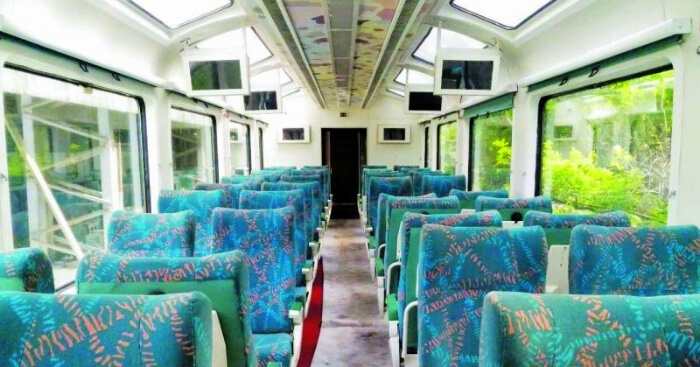
Inside the coach, bags are placed carefully. Bodies sit properly. The ease of the road does not return. Muhammad texts his wife that he is fine and asks her not to call. Messages are easier to manage. Messages do not carry accents.
Delhi arrives loudly, confidently. The city argues with itself at full volume. Autos negotiate. Tea boils. People complain freely about things that feel safe to complain about. Nothing appears wrong.
That, Muhammad realises, is what unsettles him.
That evening, there is an India–New Zealand T20 match. Screens glow in shops and cafés. Cheers rise and fall predictably. Muhammad does not watch.
It is not the game he fears, but the moments around it, the sudden roar, the shared reactions, the expectation of visible belonging. He chooses silence instead. The score updates him quietly on his phone, stripped of noise.
At the hotel, he meets a boy who looks at him the way one looks at a familiar face in an unfamiliar crowd. The boy does not ask his name first. He asks where he is from.
When Muhammad answers, the boy exhales.
He arrived the previous night. He had booked the room online, paid in advance, and followed every rule. At the reception desk, he was told that Kashmiris were not being allowed till the twenty-seventh of January. Bangladeshis too.
He argued. He spoke of confirmations, of payments already made. He said he would post online that denying him entry was a violation of his rights.
That is how he was finally given a room.
But the bed did not bring sleep.
His eyes are red. His shoulders remain tense, as if bracing for interruption. The argument, he says, ended, but it did not dissolve. It stayed with him through the night, rearranging every sound into a possibility.
“What if someone takes it personally?” he asks, not accusing anyone in particular.
By morning, he decides to leave Delhi.
Not because he is told to. Because fear suggests that staying visible is a gamble.
They do not exchange numbers. Some recognitions are complete without continuation.
The next evening, Muhammad returns to transit, this time to a bus stand.
His train ticket is folded in his pocket: Waiting List 2. On ordinary days, this would be close enough to certainty. A TT would adjust. A seat would appear. Today, the refusal arrives quickly and politely.
“Security reasons. Not possible this time.”
The sentence is rehearsed. Finished.
Nearby, an old man waits with a bag and a ringing phone. His family keeps calling. “Republic Day hai,” they remind him. “Zyada der mat rukna.” When the bus is scheduled for eight shifts to ten, and then disappears, reassurance begins to thin.
After sunset, delays stop being logistical.
They begin to feel exposed.
The bus stand empties and fills again. Vendors pack up. Announcements repeat without meaning. Time stretches.
Then a doctor arrives with his wife. They are waiting too, though, for another bus. The doctor notices Muhammad checking his watch too often, pacing without a destination. He asks what is wrong, not suspiciously, but professionally.
Muhammad explains. The doctor listens without interruption. He does not offer philosophy. He takes out his phone and begins calling numbers that are not his responsibility.
“Aisa usually nahi hota,” he says, mildly offended, not with Muhammad, but with disorder.
He finds the bus. There is traffic. It will come. He stays until it does. Before leaving, he takes Muhammad’s number.
“Message kar dena pahunch gaye ho,” he says, as if arrival should be confirmed.
The bus finally arrives after midnight.

As Muhammad climbs aboard, he feels the metal step under his foot, the cold rail in his hand. The engine hums. The doors close. The bus pulls away.
Delhi recedes, still vast, still functioning, still capable of quiet care.
Muhammad leans back and exhales for the first time that day. Outside, barricades flash past in the dark. Inside, no one speaks. The road unfolds steadily under the wheels.
Somewhere between Jammu and Delhi, Muhammad understands that the country does not ask for loyalty first.
It asks for quiet.
And once the journey is silent enough, it allows the wheels to move.
(The author is a consultant in CSR, strategic liaison, and digital growth with over 12 years of experience across government, PSUs, and corporates. Ideas are personal.)