by Sheikh Umar Ahmad
Once a transformative vision for Pir Panjal, BGSBU now struggles with vacancies, financial crisis, and administrative decay, demanding urgent government intervention.

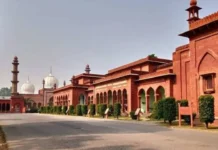
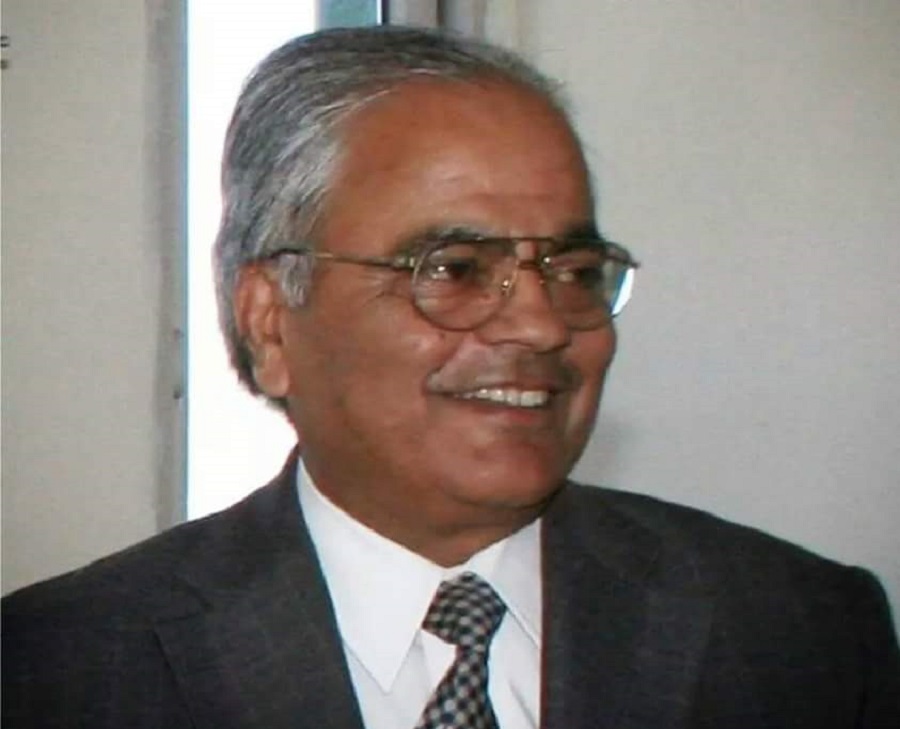
When Baba Ghulam Shah Badshah University (BGSBU) was founded in 2002 under the visionary leadership of the late Prof Masud Choudhary, it carried more than an academic mission; it carried a dream. A dream that the hills of Pir Panjal, long distant from mainstream educational opportunities, could nurture a world-class centre for learning, research, and innovation.
Choudhary, a scholar-administrator of remarkable foresight, believed education could be the strongest bridge between isolation and opportunity. Under his guidance, the university rose from bare slopes in Rajouri to a vibrant, purpose-driven campus. He laid its foundation on values of inclusivity, quality, and regional empowerment, making BGSBU not just a university but a symbol of hope for Jammu and Kashmir’s border belt.
Two decades later, that vision stands in jeopardy. The institution that once embodied aspiration and self-reliance now struggles under layers of neglect, poor governance, and systemic decay. The beacon that once lit the mountains is flickering.
Faculty Crisis
An RTI reply revealed that 60.4 per cent of sanctioned teaching posts are vacant, including all 22 professor positions. Out of 235 sanctioned posts, 142 remain unfilled. Even the ranks of Associate Professors (48 of 50 vacant) and Assistant Professors (72 of 82 vacant) lie empty. The university is sustained by just 80 Assistant Professors and 17 lecturers, many on temporary contracts. When senior academic leadership collapses, the very fabric of higher education unravels, research slows, mentorship weakens, and mediocrity takes root.
Administrative Paralysis
The leadership vacuum goes beyond teaching. Key posts, including Controller of Examinations, Principals, and Assistant Registrars, remain vacant. In an extraordinary move, the Deputy Commissioner of Rajouri currently holds additional charge as Registrar, the first IAS officer to do so. While projected as reform, it exposes a deeper problem: the government’s failure to appoint a full-time academic administrator, eroding both autonomy and accountability.
Leadership under Scrutiny
For years, BGSBU’s top echelons have been dominated by academicians from Aligarh Muslim University (AMU). The current Vice-Chancellor, Prof Jawaid Iqbal, and Dean of Academic Affairs, Prof MJ Warsi, both hail from AMU. Yet despite impressive credentials, research output, international collaborations, and industry linkages remain negligible. Departments in Artificial Intelligence, Data Science, and Tourism have been launched, but enrolment is dismal, signalling that curriculum reform without market relevance is mere optics.
Convocation Farce
For a university, the convocation is sacred, a celebration of knowledge and perseverance. Yet BGSBU has held only one convocation way back in December 2012. Since then, despite repeated announcements and the collection of registration fees, the event has never materialised. A “special convocation” promised in 2023 also failed to occur. What appears as bureaucratic delay is, in truth, a breach of trust with thousands of graduates still awaiting formal recognition of their degrees.
Financial Meltdown
A recent Jammu and Kashmir Assembly reply revealed that although government grants rose to Rs 34.95 crore (2024–25), salary expenditure surged to Rs 48.48 crore, leaving a Rs 13.48-crore deficit. Internal revenue has collapsed from Rs 79.33 crore in 2022–23 to just Rs 7.06 crore in 2024–25. The university’s total income (Rs 28.87 crore) now falls far short of its expenditure (Rs 51.99 crore). To compound matters, the Wakf Board’s annual Rs 2 crore grant has not been released since 2019. What began as a budget shortfall has spiralled into a financial emergency.
Audit Red Flags
A special audit ordered by the Jammu and Kashmir Government uncovered glaring irregularities, procurement violations, misuse of welfare funds, and re-employment of retired officials in posts carrying financial powers, all violating UGC norms. From furniture tenders delivered in the wrong material to payments without proper sanction, the audit reads like a ledger of systemic failure.
Campus in Crisis
Faculty protests, hunger strikes, and arbitrary suspensions have become disturbingly common. Students complain of outdated laboratories, crumbling hostels, and absent placement opportunities. The disillusionment is palpable. The silence from those in charge is louder still. How did a university that once received Rs 20 crore under RUSA and Rs 2 crore for smart classrooms fall into such decay? Why does a border district that needs skilled graduates have a university that cannot even hold convocations or pay its staff? The answer lies in governance failure, a toxic blend of political apathy, bureaucratic interference, and leadership inertia.
What Next?
The revival of Baba Ghulam Shah Badshah University demands nothing less than immediate, decisive action. The government must appoint a full-time Registrar and strengthen senior academic leadership without further delay. Temporary or dual charges can no longer sustain an institution of this scale.
A transparent, merit-based recruitment drive is essential to fill the 142 vacant teaching posts that have crippled the university’s academic core. Simultaneously, an independent financial and performance audit must be undertaken, with its findings made public to restore faith in institutional integrity.

Beyond administrative reforms, curricula must be realigned with employability and industry needs, ensuring that graduates are prepared for the real world rather than left stranded with obsolete degrees. Finally, reviving alumni engagement and restoring regular convocations are crucial steps to rebuilding credibility, community, and confidence in the university’s future. Without these urgent interventions, BGSBU risks sliding from decline to disappearance, another tragic casualty of neglect and inertia.
Rekindling the Flame
BGSBU was never meant to be just another campus; it was conceived as a movement for transformation. The late Prof Masud Choudhary’s vision gave Rajouri its first true seat of higher learning, a symbol of progress, pride, and peace. Allowing that dream to wither is not merely administrative neglect; it is a betrayal of the region’s future. Reviving BGSBU demands urgency, honesty, and courage from both government and academia. If left to drift, the university will stand as a locked campus, a monument to broken promises in the mountains of Rajouri. Reignite the vision, and it can once again become what Prof Choudhary intended, a beacon of hope for the Pir Panjal.
(Author is a Research Scientist based in the USA and an alumnus of BGSB University. Views are personal.)