by Dr Raja Muzaffar Bhat
Bandipora takes the lead by issuing a landmark notification. Other DCs must come up with similar orders to streamline the waste management programme across Jammu and Kashmir. Let us make home composting of waste a social movement
I am a great proponent of making in-house composting of biodegradable waste mandatory. For the last 10 years, I have been stressing authorities to issue formal orders in this direction. We have taken up this matter at the highest level.
A PIL was filed by Environmental Policy Group-EPG on ensuring scientific solid waste management in 2018. We presented the case before the then Chief Justice, Geeta Mittal, and in her order, she directed us to give a presentation to the Chief Secretary.
I, along with some environmental activists from EPG, gave a presentation to the then Chief Secretary, B V R Subramanium, in December 2018 at Civil Secretariat, Jammu. We stressed upon him and his administrative secretaries to make in-house composting of kitchen waste and household biodegradable waste mandatory in Srinagar and Jammu cities at least. He gave assurances, but then things changed in J&K. There was the abrogation of Article 370, followed by the COVID-19 pandemic and so on. By that time, Subramanium had been transferred and Chief Justice Ms Geeta Mittal had retired.
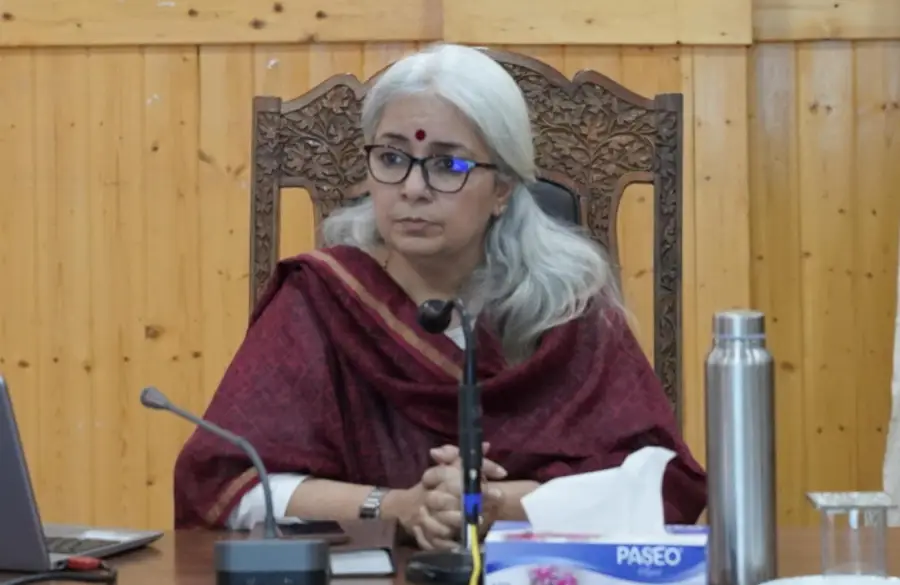
My idea again got stalled and there were no takers. But thanks to the 2026 MSW Rules, which have such a provision, I was so happy to see a notice issued by Deputy Commissioner Bandipora, Ms Indu Kanwal, wherein she has advised all the households in Bandipora town with adequate space to start processing household waste within the premises of the house.
DC’s Notice
The Notification No 7 dated 7.08.2026 issued by Deputy Commissioner Bandipora reads:
“Where as the Solid Waste Management Rules, 2026 mandates source segregation of waste and promotes decentralized processing of biodegradable waste at or near the source of its generation and whereas transportation of biodegradable waste to municipal processing facilities is resource-intensive, environmentally undesirable, and can be substantially reduced through household-level composting, now, therefore, in exercise of the powers vested in the District Administration for ensuring effective implementation of the Solid Waste Management Rules, 2026, it is hereby ordered that every household having adequate space shall process its biodegradable (wet) waste within its own premises through home composting or any other approved mechanical composting method also. With effect from 1st September, 2026, the Municipal Council Bandipora shall discontinue routine door-to-door collection of wet waste from such households. Municipal collection shall primarily be restricted to dry/recyclable waste and residual domestic waste”
The order also mentions that households unable to undertake home composting due to genuine space constraints may submit a self-declaration to the Municipal Council Bandipora, which will assess the case and make suitable arrangements, wherever feasible. Source segregation into wet, dry, sanitary and hazardous waste is now mandatory in Bandipora town for all households, institutions, commercial establishments and other waste generators. Bulk Waste Generators-BWGs are supposed to establish and operate in-situ biodegradable waste processing facilities strictly in accordance with the provisions of the Solid Waste Management Rules, 2026. The District Administration has already held a meeting with BWGs, and they were sensitised about this entire process through a detailed workshop, which was attended by this author as well at the DC office, Bandipora, on June 30th, 2026.
Rs 64 lakh Penalty on MC Bandipora
In 2021, the J&K Pollution Control Committee-JKPCC had imposed a whopping penalty of more than Rs 64 lakh on Municipal Council Bandipora for the open violation of Municipal Solid Waste Rules 2016 by dumping its waste near Zalwan, which is a Wullar catchment area. MC Bandipora went to the NGT to challenge the said order of JKPCC, but it was upheld and they were directed to pay this amount. The MC Bandipora then went to the Supreme Court, which not only upheld the order but castigated and lambasted Bandipora municipality. The Supreme Court bench of Justices Ajay Rastogi and C T Ravi Kumar, in its October 2022 order, dismissed the MC Bandipora’s plea and ordered them to pay the Rs 64 lakh penalty amount. The court in its order said:
“Is it the way you deal with matters? Is it the consciousness of your state? You cannot play with the lives of people. Deposit the fine.”
Four years later, when this author sought details of the fine deposited, I was shocked to know that MC Bandipora had not deposited this penalty money with the J&K Pollution Control Committee. This was revealed to me in writing by the CEO of the Municipal Council Bandipora in an RTI reply dated 18.03.2026. The MC Bandipora has not only violated the Supreme Court orders but, ironically, the waste is still being dumped at Zalwan wetland area by the MC Bandipora.
Other Districts Must Follow
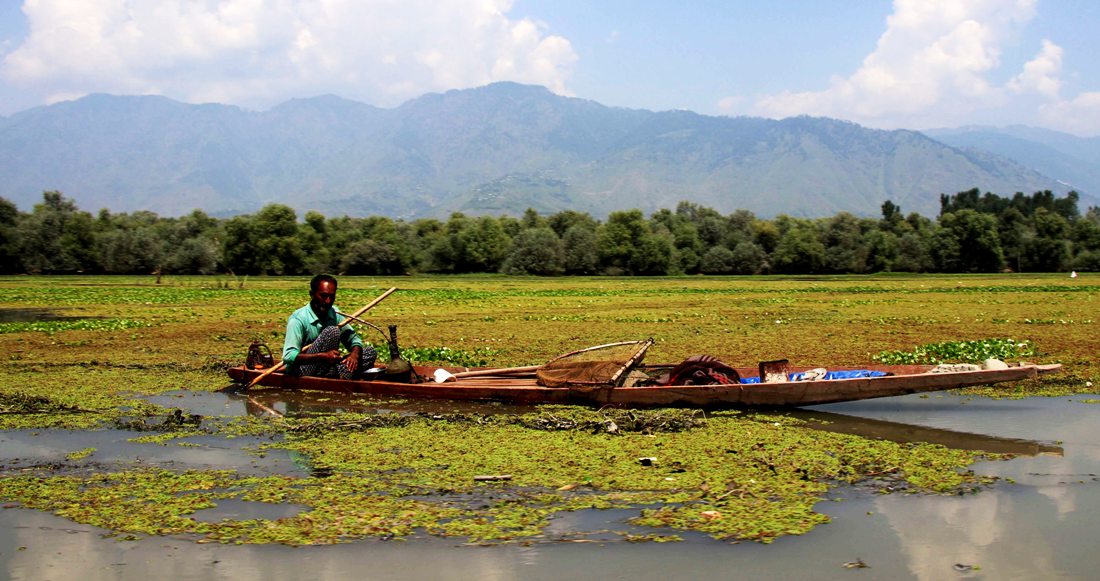
Bandipora needs a sustainable waste management system in place as it is surrounded by the massive Wullar wetland, and on its east are mountains. Authorities like MC Bandipora cannot violate MSW Rules themselves. Enough is enough now, and this is the time home composting of waste is made compulsory. Let this be initiated in Bandipora town and then it can be enforced in other towns and rural areas of Bandipora district.
I appreciate the way DC Bandipora is working on waste management. I hope Deputy Commissioners of other districts must also issue similar notifications and make sure home composting of waste is made mandatory. I myself have been treating my kitchen and garden waste in a compost pit for the last 12 years, and I am used to it now.
Stop Choking Wullar
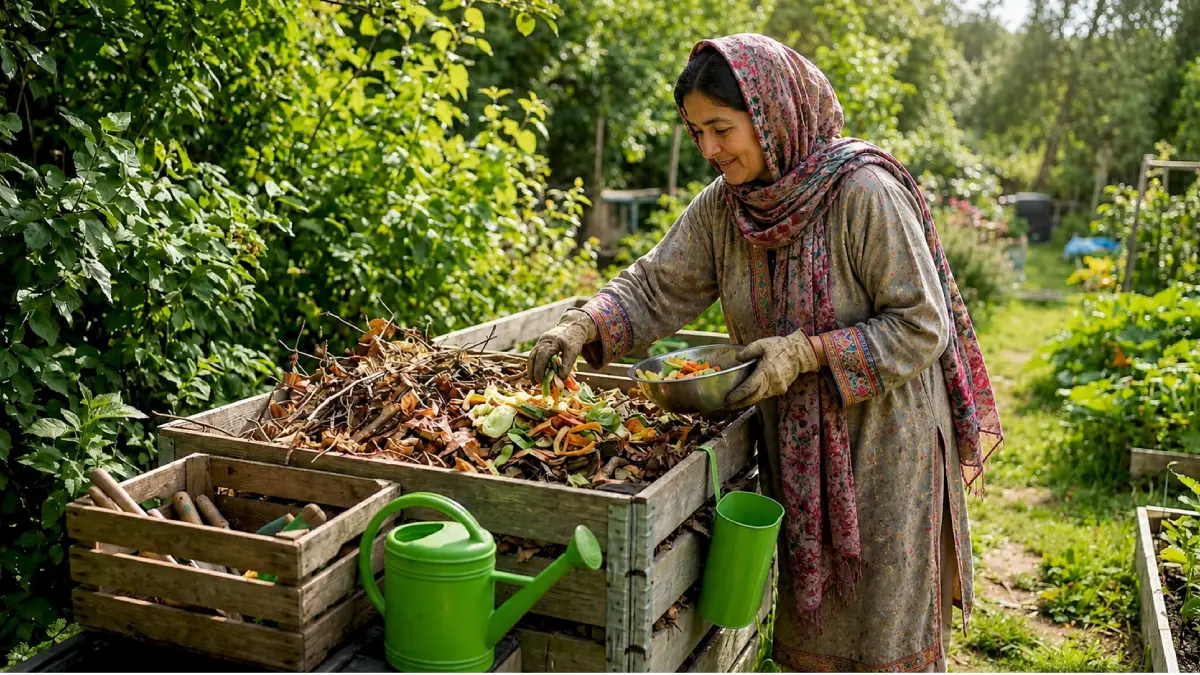
Food waste or organic waste or biodegradable waste consists of 80 per cent of the total waste generated in Bandipora town. Biodegradable waste management within the premises of our houses is not rocket science at all. We need to ensure we collect all the food waste in a separate bin that can be kept in the kitchen. Food waste like eggshells, bones, tea waste, fruit and vegetable waste, leftover rice and bread crumbs should not at all be mixed with plastic waste like chips packets, biscuit packets, milk pouches or diapers. This is the only challenge, and within one or two weeks, we can learn the art of waste segregation. The segregated kitchen waste is to be put into a small pit outside, around our house, or to be thrown into a 70- to 80-litre plastic drum. Within a month or two, the waste will get decomposed into compost, and we can use the same in our kitchen garden.

If there is enough water in the pit, one can use sawdust to reduce the same. As the days are warmer now, managing kitchen waste, garden waste and kitchen garden waste is easier. We also need to keep turning the waste after every week. Adding jaggery (gudd) with some hot water can stimulate the process of composting. Don’t burn your dry leaves in autumn; push them into this pit as well. This will reduce air pollution as well.
Lastly, don’t forget to put a lid on the compost pit or bin in order to protect it from rain. If only 50 per cent of the households do this activity in Bandipora town, I guarantee that the Zalwan site will not get further choked.
Conclusion
Let us allow Wullar to breathe and make Bandipora liveable for the generations to come. Wullar is infected with pollution; leachate from the Zalwan waste dumping site is destroying this great wetland. Home composting will show you great results, and the people of Bandipora must make this activity a social movement. The social, political and religious institutions must support Deputy Commissioner Bandipora for this wonderful initiative. Government officers must be asked to comply with this work first, followed by other people.
(The author is an Acumen Fellow. He has been writing and researching on Climate, Environment and Waste Management for the last 15 years and is Chairman of J&K Climate Action Group-JKCAG. Ideas are personal.)