by Dr Rameez Ahmad
Jammu and Kashmir’s higher education system faces recurring contractual appointments, delayed recruitment and institutional inequality, raising concerns over merit, teacher dignity, student learning and public trust
Every autumn, thousands of young men and women walk through the gates of government colleges across Jammu and Kashmir (J&K), carrying dreams that extend far beyond obtaining a degree. They arrive with aspirations shaped by years of hard work and family sacrifice, believing that higher education will broaden their horizons and prepare them for meaningful lives. Yet, for many students, the first lesson they encounter is not delivered from a textbook. It is taught silently through empty classrooms, delayed faculty appointments, and an academic calendar that struggles to begin on time.
While students wait for teachers, another generation waits alongside them.
Across the Valley, hundreds of highly qualified scholars, including NET, SET, JRF and PhD holders, wait each academic session to discover whether they will once again receive temporary appointments in government colleges. Some eventually enter classrooms under contractual arrangements; many others remain at home despite years of scholarship and research. These two forms of waiting are rarely discussed together. Yet they are deeply connected. One reflects the uncertainty experienced by students, the other the uncertainty experienced by those entrusted with educating them. Together, they reveal a deeper crisis confronting higher education in Kashmir.
This essay is therefore not simply about contractual lecturers, nor is it merely about salaries. It is about the relationship between merit, dignity, and institutional trust. It asks a broader question: What happens to a society when its educational institutions increasingly depend upon highly qualified scholars while offering many of them neither stability nor the recognition that their work deserves?
I write these reflections as someone who has spent several years teaching under temporary appointments while simultaneously pursuing research and engaging with students across different colleges. My perspective is that of a participant-observer, a sociologist attempting to understand the institutions within which he has lived and worked. The experiences described here are therefore neither those of a detached academic nor those of an embittered employee. They are observations drawn from lived experience, conversations with colleagues, and a continuing concern for the future of public higher education in J&K.
Universities occupy a unique place in every society. They are expected to nurture critical thinking, reward merit, preserve intellectual freedom, and prepare future generations for responsible citizenship. Their success depends not only upon infrastructure or financial investment but also upon the academic culture they cultivate. When teachers begin to feel invisible, insecure, or professionally undervalued, the consequences extend far beyond employment. They gradually shape the quality of teaching, the confidence of students, and the credibility of institutions themselves.
The recent student movements witnessed in different parts of India have once again reminded us that education is not merely about classrooms and examinations. Students have demanded adequate teaching staff, better infrastructure, transparency, accountability, and an educational environment worthy of their aspirations. These concerns deserve equal attention in Kashmir, where another educational challenge has quietly unfolded over many years.
Every academic session, government colleges depend upon hundreds of contractual lecturers to sustain teaching. Their recurring engagement demonstrates a simple but important reality: the system needs them. Yet, despite this continuing dependence, permanent recruitment has often failed to keep pace with institutional requirements. Consequently, valuable teaching weeks are frequently lost while appointments are processed, affecting both academic continuity and student learning.
This contradiction deserves serious reflection.
If colleges repeatedly require contractual faculty every year to keep classrooms functioning, why has temporary employment gradually become a recurring administrative practice rather than a transitional arrangement?

Behind this administrative reality stands an entire generation of scholars whose stories seldom become part of public debate. Jammu and Kashmir has produced hundreds of highly qualified young academics who have invested years in libraries, research, fieldwork, and doctoral scholarship with the hope that merit would eventually open the doors of opportunity. Some have published in national and international journals, contributed to academic conferences, and devoted years to specialised research. Yet many remain unemployed, while others continue teaching under uncertain contractual arrangements despite possessing qualifications that would command greater institutional recognition elsewhere.
Perhaps the greatest tragedy is not merely that many meritorious scholars remain unemployed.
It is that merit itself increasingly risks becoming a source of disappointment rather than hope.
When young people begin to believe that excellence no longer guarantees opportunity, the damage extends beyond individual careers. Society itself gradually begins to lose faith in one of its most important moral principles, that talent, hard work, and scholarship deserve recognition.
The structural challenges facing higher education in J&K, however, cannot be understood solely through the lens of delayed recruitment or contractual appointments. Equally important is the institutional culture within which teachers and students interact every day. Educational systems are shaped not only by policies and budgets but also by the everyday practices through which institutions communicate respect, authority, and belonging. It is often through these seemingly ordinary interactions that dignity is either affirmed or quietly diminished.
During my years of teaching in Higher Education, I gradually realised that one of the deepest challenges confronting higher education is not always visible in official reports or policy documents. It lies in the subtle ways institutions recognise, or fail to recognise, the people who sustain them. Although experiences naturally differ across colleges, conversations with fellow contractual lecturers revealed strikingly similar concerns regarding professional dignity, participation, and institutional belonging.
The gap between society’s reverence for teachers and the everyday realities experienced by many contractual faculty has remained one of the most enduring paradoxes of my years in higher education. I was often referred to simply as a need-based teacher, as though years of research, a PhD, and academic scholarship were themselves temporary. At staff meetings, my presence was tolerated but seldom acknowledged. On several occasions, I learned about seminars and academic programmes through my students after the seminars had already concluded rather than through official communication. These may appear to be small incidents. Sociologically, they are not. They reveal how institutions silently communicate who belongs, who is recognised, and whose contribution remains peripheral.
My experiences were not unique. Conversations with contractual colleagues across different colleges revealed remarkably similar feelings of professional invisibility and symbolic exclusion. One contractual lecturer who had served in Sopore and Bemina recalled learning about college seminars only through his students, some of whom quietly wondered whether he had been permitted to attend. Another colleague from Baramulla described being discouraged from using the college library after completing his classes and, at times, being expected to remain idle within the department instead. He reflected that, for a teacher and researcher, a library is not merely a room filled with books but the intellectual heart of academic life.
One colleague put it more bluntly: “Sometimes we have to keep requesting even basic internet access for academic work.” Other colleagues who had worked in Sopore during 2021–22, Bemina during 2022–23, and more recently in Kreeri shared similar experiences. They recalled instances in which principals discouraged permanent faculty from maintaining friendly interactions with contractual colleagues or visiting their rooms, creating a perception that academic positions were being treated as a personal fiefdom rather than a public trust. Experiences such as these, while varying across institutions and therefore not representative of every college, illustrate how seemingly ordinary administrative practices can sometimes communicate symbolic exclusion rather than academic belonging.
Others similarly felt that their contribution was acknowledged primarily through workload rather than through participation in the wider intellectual life of the institution. These conversations were not expressions of hostility towards permanent colleagues. Rather, they reflected a simple aspiration, to be recognised as members of the same academic community, united by a shared commitment to teaching, scholarship, and the education of students.
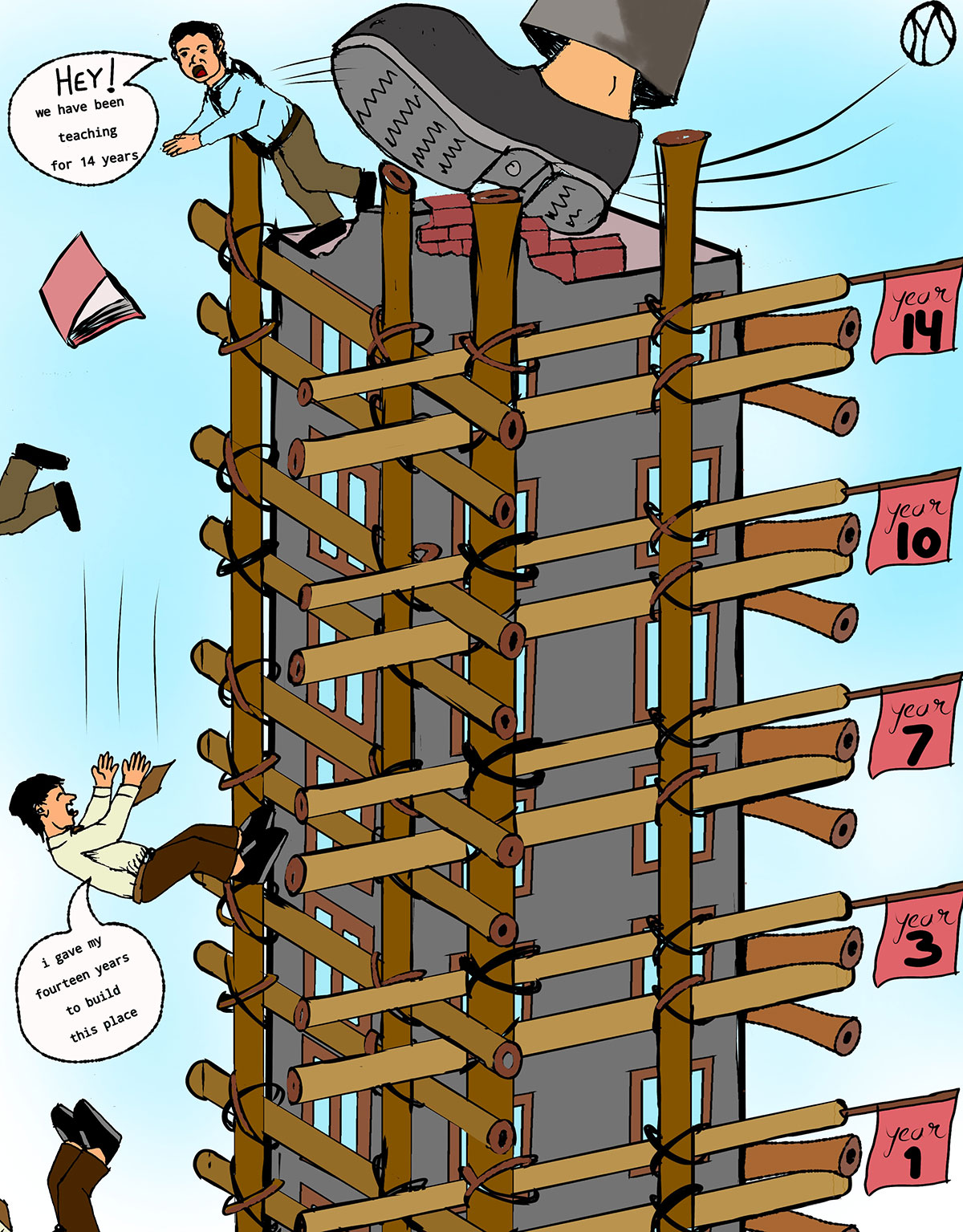
Perhaps the most revealing example emerged during conversations with two contractual colleagues who described a recent induction programme for newly admitted students. According to them, the Principal warmly introduced each of the three permanent faculty members, highlighting their achievements and welcoming them before the students. The five contractual lecturers seated alongside them, despite collectively carrying a substantial share of the teaching responsibility, were not introduced. The omission became sufficiently noticeable that students themselves quietly wondered why some of their teachers had remained unnamed.
Whether intentional or otherwise, such moments communicate powerful symbolic messages. Universities do not merely transmit knowledge; they also communicate values. Students observe who is acknowledged, who remains invisible, whose voice carries institutional authority, and whose contribution is overlooked. Long before they encounter theories of equality or democracy in textbooks, they begin learning these lessons through the everyday life of their own institutions. Sociologists describe such subtle processes as part of the hidden curriculum, the unwritten lessons that shape attitudes towards authority, hierarchy, and belonging alongside formal education.
Likewise, Pierre Bourdieu reminds us that educational institutions distribute not only knowledge but also symbolic recognition. When some teachers are consistently made visible while others remain invisible, hierarchy is reproduced not only administratively but also symbolically.
Hierarchy is not unique to universities. Every organisation requires administrative structures and clearly defined responsibilities. The challenge arises when administrative hierarchy gradually transforms into social hierarchy, where professional status begins to determine the degree of respect extended to individuals. A healthy university distinguishes between organisational authority and human dignity. Designation may define administrative responsibility, but it should never determine the value of a teacher’s scholarship or humanity.
It is important to acknowledge that there are also some principals, senior faculty members, and administrators across J&K who remain deeply committed to academic excellence and extend genuine encouragement to contractual colleagues. Their efforts deserve appreciation. My purpose is therefore not to portray every institution through a single lens, but to draw attention to recurring patterns that many educators have quietly discussed for years. Honest institutional self-reflection should never be mistaken for hostility; it is often the first step towards meaningful reform.
Ultimately, universities flourish not because everyone holds the same designation, but because every member of the academic community feels respected enough to contribute fully. A culture of inclusion does not diminish institutional authority; it strengthens it. When scholarship is valued above hierarchy, collaboration replaces suspicion, teachers become partners rather than categories, and students inherit an academic environment worthy of the ideals that universities claim to uphold.
If institutional culture shapes the everyday life of universities, governance determines the direction in which those institutions evolve. The crisis confronting higher education in J&K is therefore not merely administrative; it is also a question of public policy, institutional foresight, and the relationship between merit and opportunity.
Perhaps the most fundamental question is also the simplest.
If government colleges continue to require hundreds of contractual lecturers every academic session, why has permanent recruitment not kept pace with this recurring demand?
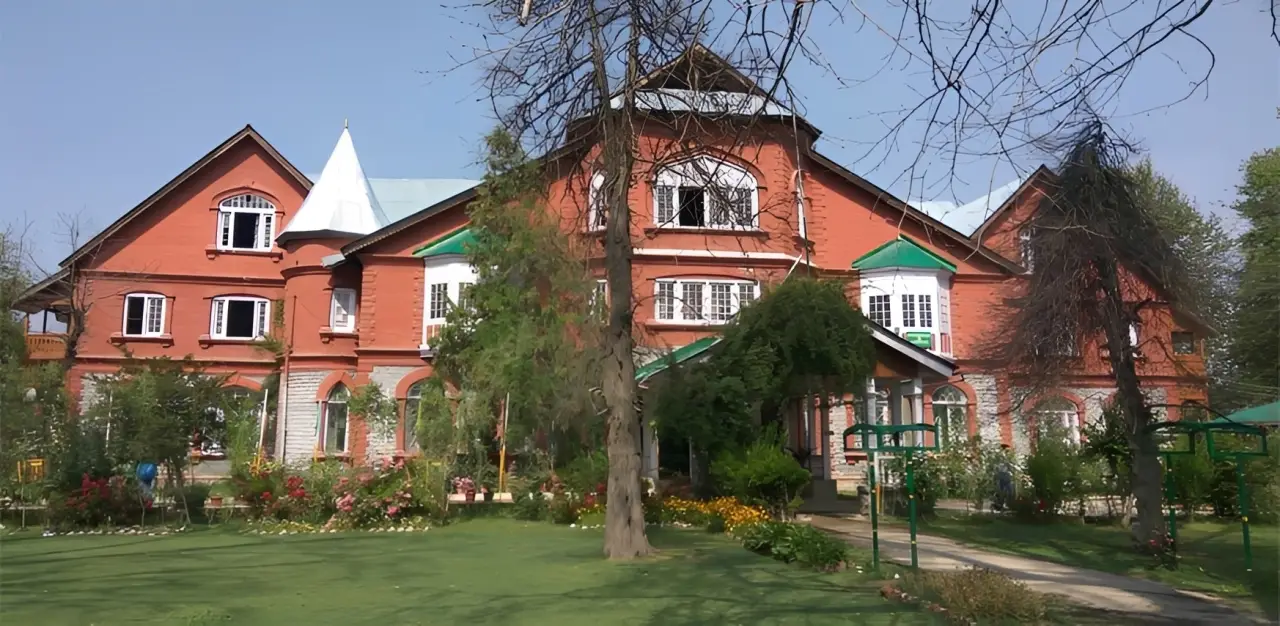
For more than two decades, the Higher Education Department has relied upon Academic Arrangement and other temporary engagements to ensure that classrooms remain functional. Every year, hundreds of highly qualified scholars enter government colleges under contractual arrangements, while thousands of equally qualified NET, SET, JRF, and PhD holders continue to wait outside the system. Many eventually cross the upper age limit, watching the most productive years of their academic lives pass in uncertainty. Their disappointment is not simply personal; it reflects a larger disconnect between educational planning and educational need.
This contradiction becomes even more significant when viewed in the context of J&K’s socio-economic realities. Unlike many other regions of India, the Union Territory has a limited network of private universities, research institutes, and knowledge-based industries capable of absorbing highly qualified graduates. For many young scholars, public higher education remains one of the few meaningful avenues through which years of academic preparation can be translated into public service. When that avenue itself becomes uncertain, the consequences extend beyond unemployment. They contribute to intellectual stagnation, frustration, and, in some cases, the migration of talented minds in search of opportunities elsewhere.
The issue is not merely the availability of jobs; it is also the quality of those opportunities. It is difficult to overlook the irony that scholars who once held prestigious Junior Research Fellowships, published research in reputed journals, or contributed to international academic discourse often find themselves working under temporary arrangements with modest remuneration and little certainty about the following academic session. Meanwhile, many equally qualified scholars remain entirely outside the system. A society that invests years in producing knowledge should also reflect upon how that knowledge is ultimately utilised.
Comparative experiences from other parts of India demonstrate that alternative approaches are possible. Several private universities offer salaries substantially higher than those currently received by many contractual lecturers in J&K, despite comparable or even lower entry qualifications. Bihar has recently undertaken faster recruitment of contractual college teachers with remuneration of about Rs 91,000, linked to structured government pay scales and allowances. Similarly, neighbouring Ladakh has adopted comparatively more favourable salary structures for college faculty. These examples should not be viewed as templates to be copied uncritically, since every government operates under different financial and administrative constraints. They nevertheless illustrate an important sociological insight: the value accorded to teachers is ultimately a reflection of policy priorities rather than administrative inevitability.
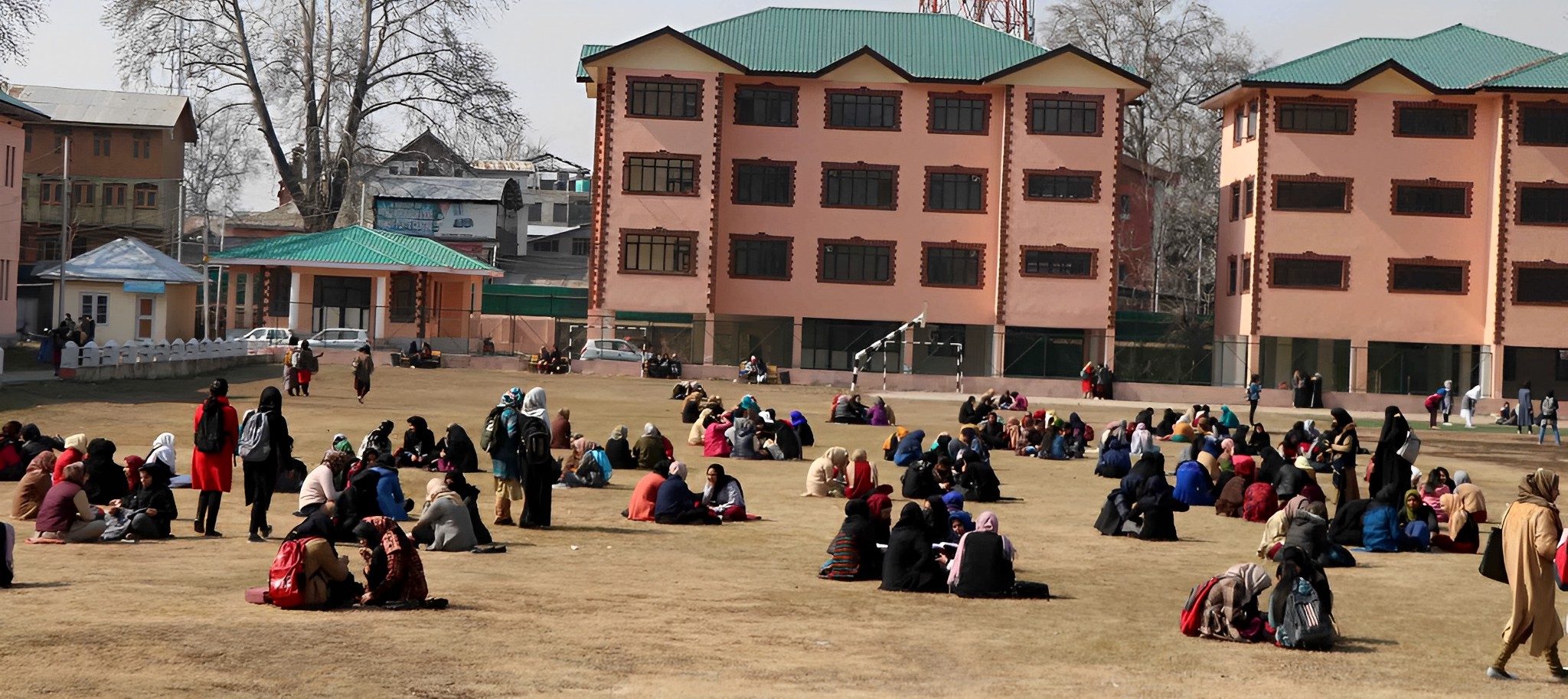
Equally important is the question of institutional credibility. Across J&K, discussions concerning favouritism, nepotism, political patronage, and alleged backdoor appointments have circulated for many years in public discourse. Such conversations are heard in villages, towns, university campuses, and social gatherings. As a sociologist, I do not present these narratives as facts, nor do I suggest that every allegation is true. Rather, I draw attention to something equally significant: the persistence of these perceptions has itself become a social fact worthy of reflection. Public confidence in institutions depends not only upon fairness but also upon the visible assurance that fairness prevails.
Political discourse has likewise reflected these concerns. For instance, recently some notable politicians and social activists have publicly alleged that previous governments facilitated thousands of backdoor appointments. Whether such allegations are ultimately substantiated is a matter for constitutional authorities and the legal process. Their wider significance lies elsewhere. They remind us that transparency in recruitment is no longer merely an administrative requirement; it has become essential for restoring public trust in state institutions.
The same expectation extends to educational governance. During election campaigns, the present Chief Minister, Omar Abdullah, publicly acknowledged the concerns of unemployed PhD scholars, a statement that resonated with many educated young people. More recently, he observed that government employment alone cannot resolve the broader challenge of unemployment. At the same time, recent participation of ministers in student protests in Delhi also raises an important question: will similar commitment be shown in addressing the longstanding concerns of the highly qualified scholars who have served J&K’s own public higher education system for years?
It also invites another equally important policy question: how should governments treat those highly qualified scholars who are already serving within public institutions under temporary arrangements?
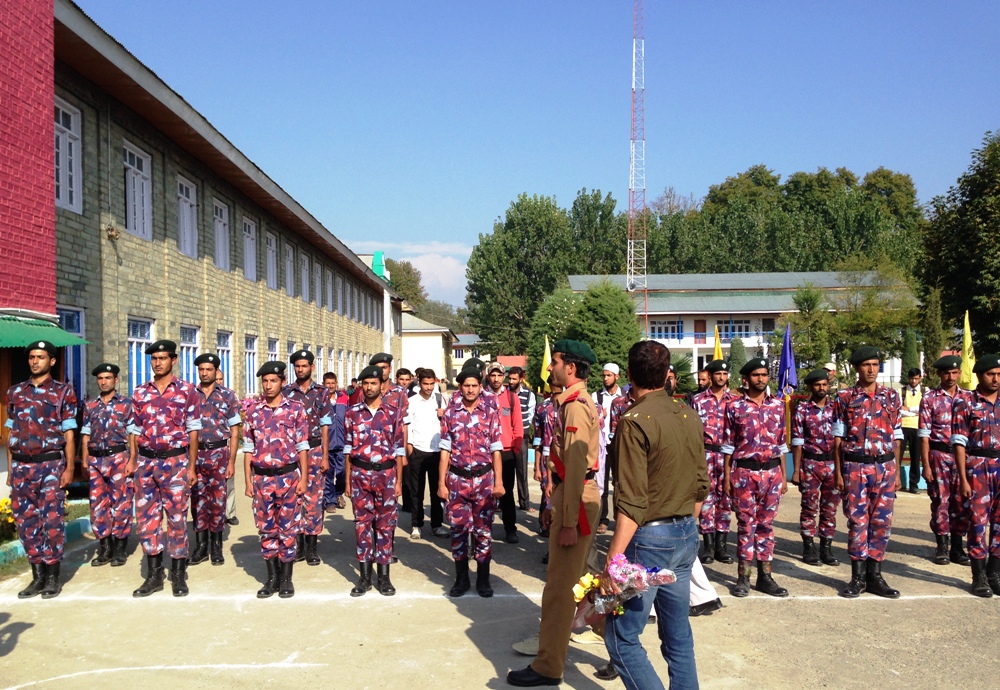
The issue of contractual college lecturers is not about creating lakhs of new government jobs. It concerns a comparatively small community of educators who have already sustained public higher education for years under recurring temporary appointments. Providing them with dignified remuneration, respectful professional nomenclature, transparent service conditions, and a coherent long-term policy is not merely an act of administrative fairness; it is an investment in educational quality, institutional continuity, and the future of public higher education itself.
For many contractual lecturers, another source of disappointment has been the repetition of assurances regarding improved service conditions. Over the years, proposals relating to salary enhancement and policy reform have periodically surfaced in public discussions, often accompanied by statements that the matter is under consideration or awaiting financial approval. Governments undoubtedly face competing fiscal priorities, and policy decisions require careful deliberation. Nevertheless, prolonged assurances without visible progress gradually weaken institutional confidence. Hope, like trust, cannot be sustained indefinitely through promises alone.
Leadership is ultimately judged not only by the challenges it acknowledges but also by the solutions it delivers.
From a sociological perspective, this tension may also be understood through Erving Goffman’s concept of impression management. Public institutions and political actors naturally seek to project competence, responsiveness, and commitment through speeches, press briefings, policy announcements, and official assurances. Such public communication is an important part of democratic governance. However, when repeated assurances are not accompanied by visible institutional change, the distance between public image and lived experience gradually erodes trust. Ultimately, institutions are judged less by the impressions they create than by the outcomes they deliver.
Goffman’s broader concept of dramaturgy offers another useful lens for reflection. Political campaigns, official meetings, and media interactions may be understood as the “front stage” of public life, where commitment to education, merit, and youth welfare is publicly affirmed. The everyday realities experienced by many students and contractual faculty, however, often unfold in the “back stage” of administrative life, where delayed recruitment, temporary appointments, and prolonged uncertainty continue to shape lived experience. The challenge for democratic institutions is to minimise the distance between public performance and institutional practice.
The recent student movements witnessed across different parts of India remind us that democratic societies possess an extraordinary capacity for peaceful reform. Students have raised their voices not only for better infrastructure but also for adequate teaching staff, transparent governance, and an educational environment worthy of their aspirations. Their demands are fundamentally about educational justice.
In Kashmir, similar concerns increasingly resonate among students and contractual faculty alike. Many educators have begun discussing the possibility of creating representative forums through peaceful, constitutional, and democratic means to engage constructively with policymakers. Such initiatives, if pursued responsibly, should not be viewed as movements of confrontation but as expressions of participatory citizenship. Universities flourish when dialogue replaces silence, when institutions welcome constructive criticism, and when reform emerges through engagement rather than alienation.
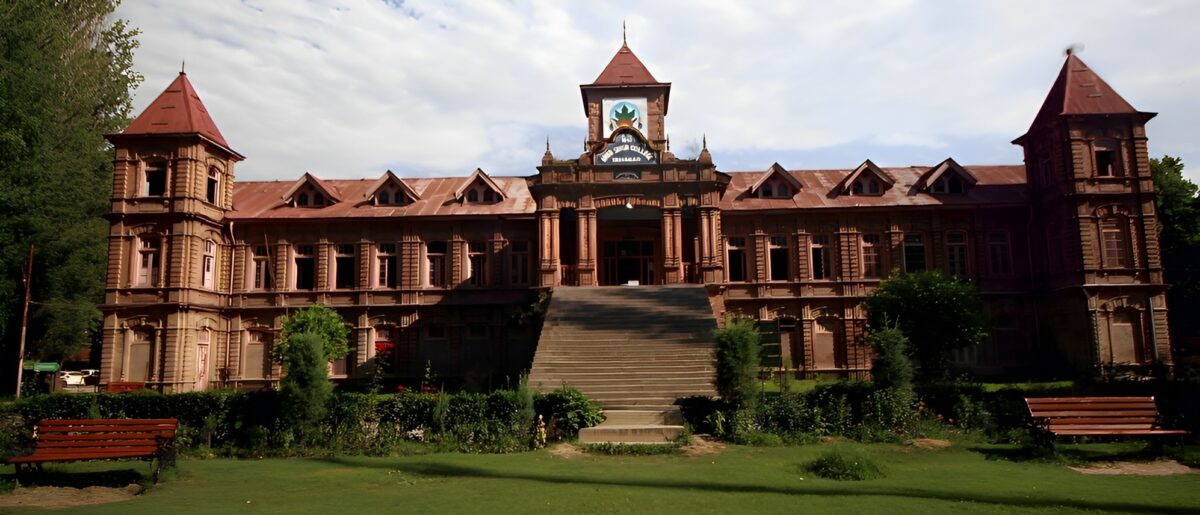
Ultimately, the future of higher education cannot rest upon temporary arrangements indefinitely. Every year that students wait for teachers and teachers wait for recognition is another year in which educational potential is quietly diminished. Reform therefore requires more than administrative adjustments. It requires a renewed commitment to merit, transparency, institutional accountability, and the belief that those entrusted with shaping young minds deserve both professional dignity and public respect.
Despite the concerns expressed throughout this essay, I remain optimistic about the future of higher education in J&K. My optimism does not arise from ignoring the challenges before us, but from believing that every institution possesses the capacity for self-correction when it is willing to listen, reflect, and reform.
The purpose of this essay has never been to question individuals or undermine institutions. On the contrary, it is written out of deep respect for public education and the conviction that universities remain among the most powerful institutions for shaping a just, enlightened, and democratic society. Criticism, when offered sincerely and constructively, is not an act of hostility; it is an expression of hope that our institutions can become stronger than they are today.
The Brazilian educator Paulo Freire viewed education as a practice of freedom, one that enables individuals not merely to acquire knowledge but to transform society through dialogue, critical reflection, and justice. Universities fulfil their highest purpose when they cultivate these values not only in classrooms but also in their own institutional culture.
The real crisis confronting higher education in Kashmir is therefore not merely one of delayed recruitment or modest salaries. It is the gradual weakening of the relationship between merit, dignity, and institutional trust. When highly qualified scholars remain uncertain about their future, when students lose valuable academic time because teachers are appointed late, and when institutional cultures unintentionally reproduce hierarchy instead of collegiality, the consequences extend far beyond individual careers. They affect the credibility of education itself.
Perhaps the contradictions discussed throughout this essay are captured remarkably well in Allama Muhammad Iqbal’s famous verse:
“Yeh ilm, yeh hikmat, yeh tadabbur, yeh hukumat,
Peete hain lahoo, dete hain taleem-e-musawat.”
Without reducing the verse to any single historical context, it offers a timeless reminder that institutions often proclaim the language of equality while simultaneously reproducing structures of inequality. Whether in politics, bureaucracy, or education, the real test of any institution lies not in the ideals it proclaims but in the justice it practices.
Meaningful reform need not begin with dramatic declarations. It can begin with practical, achievable commitments: timely recruitment, dignified remuneration for contractual faculty, transparent and merit-based appointments, equal opportunities for academic participation, uninterrupted teaching for students, and institutional cultures founded upon mutual respect rather than hierarchy. These are not extraordinary demands. They are the minimum expectations of an education system that seeks excellence.
At the same time, the responsibility for reform does not rest with governments alone. Universities, principals, faculty members, students, and civil society all share a stake in protecting the moral purpose of higher education. Senior academics can mentor rather than marginalise younger colleagues. Administrators can cultivate cultures of inclusion rather than silent divisions. Students can continue to demand quality education through peaceful and democratic engagement. Policymakers can recognise that investing in teachers is not expenditure but an investment in society’s intellectual future.
As someone who has lived within this system, I also believe that we must move beyond the language of resentment. Anger may draw attention to injustice, but it seldom builds enduring institutions. What higher education requires today is not bitterness but moral courage—the courage to acknowledge shortcomings, to embrace transparency, and to place the long-term interests of students above bureaucratic convenience.
A society does not decline merely because it lacks educated people. It declines when educated people gradually lose faith in the fairness of their own institutions. When merit ceases to inspire hope, the brightest minds no longer dream of strengthening public institutions; they begin to dream of leaving them. That is a loss no society can afford.
The consequences of this crisis extend beyond college campuses. When students observe teachers being treated unequally or without professional dignity, the authority and moral influence of the classroom can gradually be weakened. When classes are disrupted, and qualified teachers remain employed only for part of the academic year, students may also become disengaged from regular learning. At the same time, when educated youth remain unemployed, scholars are denied meaningful opportunities, and governments lack coherent policies to utilise their knowledge, frustration and alienation can acquire wider social consequences. From my experience as a participant-observer, these conditions can contribute to student alienation, declining enrolment in higher education, and greater vulnerability to problems such as substance abuse and other forms of social disorder. An education system that fails to value those who produce and transmit knowledge risks weakening not only its classrooms but the wider social fabric it is meant to strengthen.
Kashmir still possesses extraordinary intellectual talent. Its universities continue to produce gifted researchers, dedicated teachers, and ambitious students. The challenge before us is not the absence of merit but our willingness to recognise, nurture, and retain it. The future of higher education will therefore depend less upon the number of colleges we establish than upon whether we possess the wisdom to honour scholarship, reward integrity, and create institutions where every teacher is respected and every student receives the education he or she deserves.
As Allama Muhammad Iqbal AR reminded us:
“Jis khet se dehqān ko mayassar na ho rozi,
us khet ke har khosha-e-gandum ko jala do.”
The spirit of this verse is not one of destruction but of renewal. It calls upon societies to reform systems that fail to reward honest labour and human potential. In the context of higher education, its message is clear: institutions that depend upon knowledge must also learn to value those who dedicate their lives to producing and sharing it.
History rarely celebrates societies that neglected their brightest minds. It remembers them as cautionary tales.
Kashmir still has an opportunity to choose a different path—a path where merit is rewarded, teachers are respected, students are never deprived of learning, and public institutions become symbols of fairness rather than frustration.
The future of higher education in J&K will ultimately be shaped not only by budgets, buildings, or policy documents, but by a far more fundamental question:
Do we possess the moral courage to place merit above hierarchy, transparency above patronage, and justice above convenience?
If universities are the conscience of a society, then the manner in which they treat their teachers ultimately reveals how seriously that society values knowledge, justice, and human dignity.
(The author is an independent scholar and former Senior Research Fellow in Sociology at Aligarh Muslim University. He currently teaches Sociology at Government Degree College Boys, Sopore. The ideas are personal.)