by Mir Mujeeb
As Omar Abdullah’s strategic pragmatism strengthens NC’s power, Aga Ruhullah Mehdi’s defiance challenges its soul, turning Budgam’s bye-poll into a test of Kashmir’s political conscience.
In the maze of Jammu and Kashmir’s politics, where alliances shift like shadows and every move feels like a gamble on a stained chessboard Chief Minister Omar Abdullah has positioned himself as a modern-day Machiavellian prince. Much like Niccolò Machiavelli’s ideal ruler, Abdullah has relied on strategy over sentiment, and calculation over impulse. And it has paid off.
Omar not only revived the National Conference (NC) after the perceived humiliation of Article 370’s abrogation but also managed to stay a step ahead of the BJP’s carefully crafted Chanakya-Neeti, built on calculated delimitation, alleged vote-splitting, and centralised control.

But just as he stands tall after the 2024 Lok Sabha and Assembly victories, a new challenge rises from within: Aga Syed Ruhullah Mehdi, a voice of conscience and conviction who refuses to let politics lose its moral centre. If Omar is the hacker who learned to rewire Delhi’s code, Ruhullah is the developer who believes the whole system is rotten and must be rewritten from scratch. The battlefield is the political landscape in Jammu and Kashmir and Budgam is one of many such arenas where this clash unfolds.
A Chessboard Reset
The turning point came during the 2024 Lok Sabha elections. The BJP was confident—it had redrawn electoral boundaries after Article 370, raising assembly seats from 83 to 90, benefiting its Jammu strongholds and splintering the Muslim vote in Kashmir. Its plan was classic Chanakya doctrine: divide, weaken, and conquer. But Omar Abdullah , chose evolution over emotion.
His biggest move? Candidate selection. In the newly carved Anantnag–Rajouri seat, which cuts across Gujjar, Pahari, and mixed hill populations, Abdullah fielded Mian Altaf Ahmad. Not a politician chosen for numbers alone, but a spiritual figure trusted among Gujjars. The result was historic: Altaf defeated Mehbooba Mufti by over 2.8 lakh votes, bridging identity lines the BJP had been trying to manipulate via its Reservation dole-outs.
In Srinagar, Abdullah chose Aga Syed Ruhullah Mehdi, a fierce Shia leader with a steady reputation and a sharp tongue. Ruhullah’s resolute stance on autonomy and his ability to speak the language of pain and dignity earned him a victory margin of almost 1.9 lakh votes over another dynamic competitor, PDP’s Waheed Para.
These weren’t just electoral wins, they were carefully crafted counter-moves against the BJP’s cold tactics.
Next came the Assembly elections of September–October 2024, the first after Jammu and Kashmir was downgraded to a Union Territory. Despite delimitation adding six seats in Jammu and only one in Kashmir, Abdullah built a coalition with the Congress under the INDIA bloc. The BJP’s game was crystal clear: again, a coded mix of Chanakya playbook, divide the vote, multiply proxies, centralise authority.
But Omar Abdullah, carrying the humiliation of his 2024 defeat in Baramulla, did not surrender. He adapted, not by waving flags of outrage, but by playing politics like a calculated war. No slogans, no sentimentality, just cold precision. Like a seasoned chess master, he waited. And when the moment came in the 2024 Assembly elections, he struck.
He positioned himself not as a victim, but as the only realistic defender of stripped identity. The NC won 42 seats, Congress 6, 48 in total, a clear majority in the 90-member House. Abdullah won both Budgam and Ganderbal, later vacating Budgam to trigger the bye-poll. Importantly, the NC’s sweep in the Valley was not just Omar’s doing, Ruhullah’s passionate campaigning and ideological clarity gave it soul.
The political game extended to the Rajya Sabha polls in October 2025. Abdullah fielded Choudhary Mohammad Ramzan and Sajad Ahmad Kichloo, choices that looked simple but were loaded with precision. They helped NC secure three of four seats, pushing BJP to settle for one, despite accusations of cross-voting and horse-trading. For Sunil Kumar Sharma, the BJP’s Leader of Opposition known for his aggressive Jammu-centric approach, and Sajad Lone, who tried positioning himself as an alternative force, this is a direct containment move aimed to checkmate their rise & keep them entangled with the two newly chosen regional satraps.
Every Throne Meets Its Conscience
Yet, as history bears testimony, power built entirely on pragmatism and lacking ideological soul often begins to crack. And the crack has a name, Agha Ruhullah Mehdi.
While Abdullah prefers reconciliation with Delhi to recover statehood, Ruhullah speaks of dignity, broken promises, and truth. He has openly criticised his own party for compromising, especially on issues like reservation reforms and the fight for constitutional guarantees. He led movements demanding fair opportunities for open-merit candidates, accusing the government of ignoring unemployed youth. He talks of political prisoners, land dispossession, and the alleged political silence forced upon Kashmiris after 2019. His politics is seen to be not transactional; but emotional, moral, and deeply rooted in hurt and history.
This has made him the face of a generation that no longer trusts silence. In a time and space post 2019 where stalwart leaders and former CMs like Farooq Abdullah and Mehbooba Mufti appeared softened by past alliances with Delhi, Ruhullah emerged as someone who refuses to bend. His principled refusal to campaign in Budgam, his pointed speeches, and sparse but piercing tweets on social media suggest a deeper ideological battle, not just for power, but for the soul of Kashmiri politics.
And so, all eyes for now turn to Budgam. The November 11, 2025 bye-poll is not just another election, it is a verdict for the NC. The candidates are all from influential clerical families: NC’s Aga Syed Mehmood, PDP’s Aga Muntazir Mehdi, and independent Aga Syed Hussain Budgami. Ruhullah’s absence from the campaign trail speaks louder than any speech.
To put the contrast, Omar knows numbers. Ruhullah knows narratives.
Omar builds alliances. Ruhullah builds belief. Omar plays chess. Ruhullah writes scripture. One runs the system like a hacker cracking code. The other refuses to fix the bug, he wants a new software.
And that difference is now dividing drawing rooms, twitter spaces, WhatsApp groups, courtyards, and NC’s own core supporters.
For Ruhullah the stakes are not particularly high since he has taken a principled refrain from the campaign but for CM Omar Abdullah the stakes are complicated. If NC wins Budgam, The Price prevails in this mini battle. It will cement Omar as the undisputed ruler of Kashmir’s mainstream politics, capable of managing dissent within without bleeding votes outside on his own.
But it won’t silence Ruhullah. It will only increase his aura as a man who refused to bow yet didn’t sabotage.
But if his candidate loses Budgam, it won’t just be an electoral loss. It will be a message that in today’s Kashmir, even the most skilled chess player must answer to the conscience of the board.
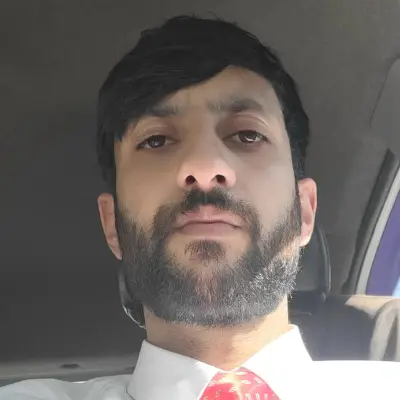
But amidst the din, let’s be clear, this is not a Bollywood script. This is politics. This is Kashmir. Morality alone does not guarantee power. But it does threaten comfort.
This is no longer just Omar vs BJP. It is Omar’s calculated politics vs Ruhullah’s moral rebellion. The architect versus the idealist. The Machiavellian prince versus the metaphorical prophet.
(The author is a PhD Scholar, International Relations, Jamia Millia Islamia Delhi. Ideas are personal.)