by Rayees Ahmad Kumar
Despite global awareness campaigns and legislation, public tobacco use remains rampant. Stronger enforcement, community education, and civic responsibility are essential to curb this silent, pervasive health threat.
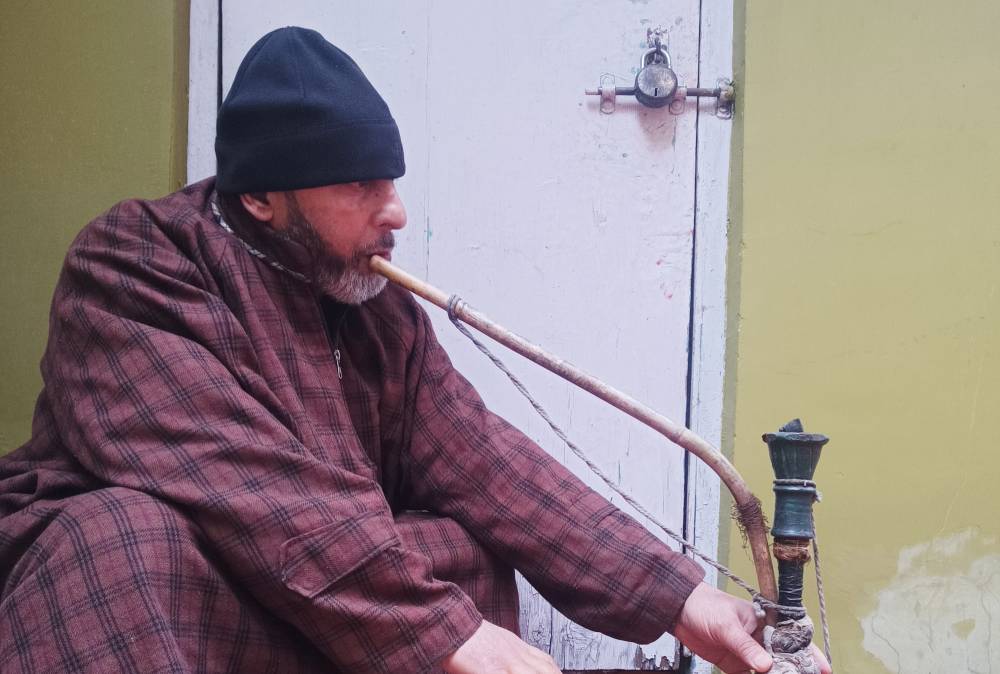
Every year on May 31, the world observes World No Tobacco Day, a call to action against one of the deadliest, most avoidable health risks of modern civilisation: tobacco consumption. The origin of this global event goes back to 1987, when the World Health Organisation (WHO) resolved to set aside a day for raising awareness about the devastating impact of tobacco use. Yet, nearly four decades later, the situation in our public spaces remains deeply troubling. Despite legislation at both central and state levels, smoking and tobacco use continue unabated—in buses, restaurants, hospitals, and even near schools. This prompts a pressing question: Are we doing enough to protect public health, or are we simply ticking symbolic boxes each year while ignoring the persistent violations happening right under our noses?
Public transport remains one of the most flagrant examples of this failure. It is not uncommon to witness drivers and conductors lighting up while ferrying passengers, including children and the elderly. The disregard is not merely for the law but also fellow citizens’ health and well-being. Equally concerning is the growing normalisation of smoking in restaurants, cafés, and around hospital corridors, where people often smoke with impunity.
The roots of tobacco use may be traced as far back as 1492, when Christopher Columbus and his men observed the indigenous people of Tobago using tobacco leaves. What began as a cultural practice has since ballooned into a global industry that trades in addiction, disease, and death. The facts, laid bare by medical science, are staggering: tobacco smoke contains over 4,000 chemicals, of which 43 are carcinogenic. Substances such as polycyclic hydrocarbons, formaldehyde, ammonia, and carbon monoxide create a toxic cocktail that damages cells, interferes with respiratory function, and impairs oxygen transport in the bloodstream.
But perhaps the most sinister element of all is nicotine—a powerful, highly addictive substance that hooks users by stimulating the central nervous system, raising heart rates and triggering hypertension. Then comes tar, the villain most associated with lung cancer. Studies confirm that smokers are ten times more likely to die of lung cancer than non-smokers. Pregnant women who smoke risk giving birth to underweight or premature babies. And this tragedy extends beyond direct smokers: passive smoking is an invisible menace, placing bystanders at equal, if not greater, risk.
Given this evidence, one might ask: Why is smoking still tolerated in public spaces? Why is it so easy to light up in a park, on a school footpath, or inside a shared cab? While India does have laws in place under the Cigarettes and Other Tobacco Products Act (COTPA), 2003, enforcement has been lax and inconsistent. Smokers continue to dominate spaces that should be safe for all. The indifference of law enforcement agencies has allowed a culture of impunity to flourish. Social media and news outlets have occasionally documented confrontations between smokers and non-smokers in public places, but these encounters rarely translate into policy reform or stricter checks.
What’s more alarming is the growing uptake of smoking among teenagers and young adults. In educational institutions, especially colleges, the presence of cigarettes, hookahs, and other tobacco products is no longer surprising. Warning labels printed on cigarette packets—”Smoking Kills” or “Smoking Causes Cancer”—do little to deter this demographic. Instead, many students spend their allowances and parents’ hard-earned money on feeding this deadly habit.
Then there are the silent corners of cities where youth gather to smoke hookah, chew gutkha or pan masala—forms of smokeless tobacco that are no less harmful. At weddings, eateries, or festivals, one often encounters such indulgences passed around as social lubricants, with little consideration for their consequences. Worse still, these products are easily available near schools and playgrounds, exposing children to tobacco at an impressionable age. This is where laws alone fail. We need a deeper cultural shift—one that requires community mobilisation, education, and proactive civil action.
Teachers, clerics, social workers, and local leaders have a vital role to play. Schools can dedicate morning assemblies to delivering short but impactful messages about the health consequences of tobacco use. Religious leaders can address the moral and social harms of smoking in sermons and Friday prayers. Community health workers can hold street-corner awareness sessions, especially in high-risk neighbourhoods. Every citizen has a stake in this fight.
To expect this change from the government alone is wishful thinking. Annual seminars and debates on World No Tobacco Day are not enough. We must transform awareness into behavioural change. This means discouraging tobacco use through social disapproval, not hatred, but compassion. Smokers should not be vilified; rather, they must be shown the path to recovery and freedom from addiction. Support systems such as helplines, counselling, and cessation clinics need to be made visible, accessible, and affordable.
Civic responsibility must be revived. We need to cultivate a culture where people not only refuse to smoke in public but also speak up when others do. Tobacco products should not be sold near public gathering areas such as railway stations, schools, or hospitals. Surveillance needs to be localised, with Resident Welfare Associations, school managements, and even bus depot supervisors empowered to report violations.
The war on tobacco cannot be won in courtrooms or conferences alone. It must be fought in the hearts and habits of individuals, in the choices they make at the street corner paan shop, on a bus ride, or at a social gathering. Until then, the question remains: can we afford to stay silent on public smoking any longer?
(A teacher, the author is a writer from Qazigund, Kashmir. Ideas are personal.)