by Sajad Farooq Rather
The resolution’s legal impact on the central government is negligible, but it carries significant political and symbolic weight.
The National Conference (JKNC) pledges to reinstate Jammu and Kashmir’s statehood and revive Article 370, granting the region its former special status, as outlined in its election manifesto.
In the latest elections, the NC-Congress alliance achieved a resounding victory, securing 48 of 90 available seats. The JKNC won 42 of the 51 seats it contested, while Congress claimed six.
This triumph marked the JKNC’s first majority since 1996. It underscores the widespread discontent among the populace regarding the central government’s decision on August 5, 2019. On this date, Article 370 was revoked and Jammu and Kashmir’s special status was abolished.
The JKNCN’s resolution in the Jammu and Kashmir Assembly has fallen short of expectations, considering its recent electoral victory was built on promises to restore Article 370 and statehood. This majority win did not translate into explicit demands for these issues within the resolution.
Instead, the JKNC merely expressed concern over Article 370’s revocation without outright condemnation. This lukewarm stance raises questions about the party’s genuine political intentions.
The resolution’s legal impact on the central government is negligible, but it carries significant political and symbolic weight. It pressures New Delhi to honour statehood restoration commitments.
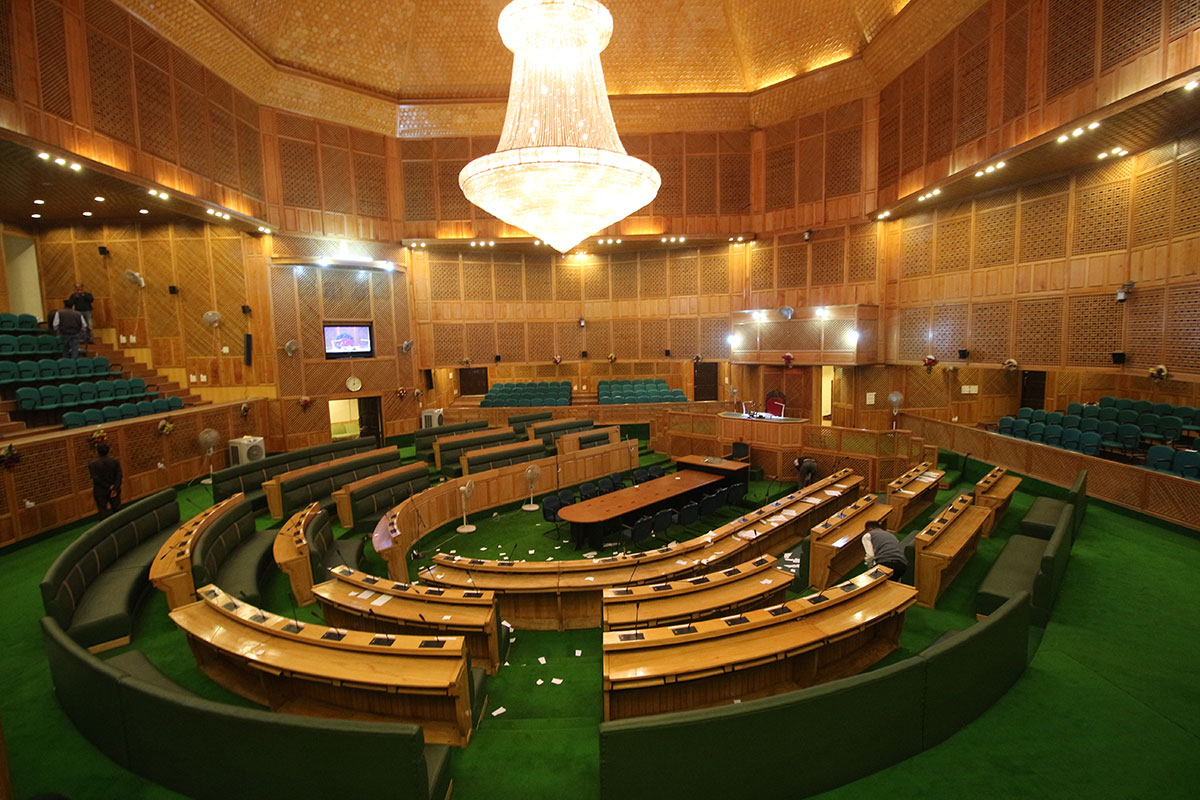
The resolution advocates dialogue between New Delhi and Jammu and Kashmir’s elected representatives. However, this does not fully meet public expectations for a clear demand to reinstate special status.
A deeper issue emerges: after securing a strong mandate, why does the JKNC hesitate to take a definitive stand on this critical matter? This reluctance sparks introspection into the party’s commitment to its electoral promises and the will of the people.
The election saw the Indian National Developmental Inclusive Alliance, comprising the JKNC, Indian National Congress and Communist Party of India, win 49 seats. The JKNC emerged as the single largest party, securing 42 seats.
The party’s reluctance to fully commit to restoring special status and statehood has sparked uncertainty among voters, who question whether political expediency has overshadowed campaign promises. This hesitation raises fundamental concerns: is this a lack of political resolve or a calculated move to avoid antagonising national powers?
The people of Jammu and Kashmir vehemently opposed to Article 370’s revocation, are left pondering whether their leaders will genuinely challenge the status quo despite electoral victories.
A deeper issue complicates this landscape: the disunity plaguing Jammu and Kashmir’s regional parties at this critical juncture. The JKNC and Peoples Democratic Party (PDP), the region’s dominant forces, have failed to present a unified stance on Jammu and Kashmir’s future.
Their divisions manifested in the assembly session. The PDP swiftly passed a resolution condemning Article 370’s abrogation on the first day. The NC followed suit with its resolution days later. Notably, neither party engaged in prior coordination or communication with other regional entities, including the Peoples Conference and Awami Itihad Party.
This fragmentation underscores the challenges in forging collective resistance against New Delhi’s decisions. Effective opposition demands unity, but Jammu and Kashmir’s regional parties struggle to achieve this cohesion.
The stark absence of cooperation among Jammu and Kashmir’s main parties exposes a profound political rift. This division undermines efforts to present a unified front against the central government’s decisions, particularly at a time when the region’s autonomy faces severe threats.
The regional parties seem content to pursue individual agendas, abandoning the unity once embodied by the People’s Alliance for Gupkar Declaration. Formed to restore Jammu and Kashmir’s autonomy, this coalition now appears fractured. Leaders Farooq Abdullah and Mohammad Yousuf Tarigami successfully united regional parties against Article 370’s abrogation. However, now in power, these parties fail to act in unison.
Their inability to demonstrate leadership leaves the people of Jammu and Kashmir awaiting direction. The absence of a united strategy raises questions about political sincerity. Previously, these parties rallied behind a common cause while out of power; now, with a mandate, they seem fragmented and hesitant.

This failure to prioritise the common good leaves a bitter taste. It prompts questions about the need for political introspection and a reconsideration of priorities. History may judge these leaders as opportunistic figures, prioritising manoeuvring over fulfilling their entrusted mandate.
Their inaction underscores the imperative for unity in resisting New Delhi’s decisions. Effective opposition demands cohesion, yet Jammu and Kashmir’s regional parties struggle to achieve this.
Jammu and Kashmir’s current political landscape necessitates profound reflection. The JKNC, armed with the largest mandate, bears the responsibility of spearheading this endeavour. Its leadership must be unwavering, transparent and faithful to electoral promises. Anything less risks alienating a populace already traumatized by the loss of special status and autonomy.
The regional parties – notably the NC, PDP, AIP and PC – must introspect on their role in this critical juncture. Their fragmentation and lack of coordination since the elections are disturbing.
Are these parties genuinely dedicated to their shared objective or prioritising short-term political advantages? Effective leadership demands cohesion and strategic unity, qualities thus far elusive among these regional entities.
This pivotal moment demands political accountability. Jammu and Kashmir’s future depends on the collective resolve of its leaders to honour electoral commitments and forge a united front against central government decisions.
The absence of unity among Jammu and Kashmir’s leaders in this critical moment will only exacerbate public disillusionment.
This pivotal juncture demands introspection from all regional leaders, notably the NC, PDP and Congress. What enduring legacy do they aspire to leave? Will they honour their commitments, restoring autonomy and special status, or succumb to political expediency?
Their inaction will forever taint their reputations. History’s verdict will not hail them as champions of the people’s rights but as opportunistic figures prioritising power over principle.
This moment serves as reckoning and redemption. Will Jammu and Kashmir’s leaders seize the opportunity to reaffirm their dedication to the cause, or falter, forsaking the public trust?
The fate of Jammu and Kashmir hangs in the balance, as its leaders confront the consequences of their actions.
(The author is a lawyer specialising in Kashmir-related legal matters. Ideas are personal.)