The detention of Mehraj Malik, Jammu and Kashmir’s sole AAP legislator, under the Public Safety Act marks a rare and tense moment. Imprisoned in Kathua, Malik’s arrest has rattled the political landscape, sparked protests, exposed societal divides, and prompted urgent questions about democracy’s reach in the region, reports Syed Shadab Ali Gillani
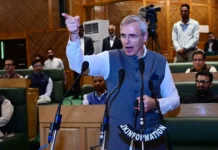
Mehraj Malik, the lone Aam Aadmi Party (AAP) legislator in Jammu and Kashmir, has always been a figure in the public eye. At times celebrated for his bold stances, other times criticised for his controversial statements, Malik’s presence in the political landscape of the region has been hard to ignore.
His rise to prominence began with a surprise victory in the 2024 Assembly elections from Doda, where he broke the stranglehold of traditional parties. At 36, Malik’s political trajectory has now reached a dramatic turning point as he was detained under the Public Safety Act (PSA), the first case of its kind against a sitting MLA in Jammu and Kashmir in several years. Currently, he is in Kathua jail.
Malik’s detention has reverberated through the political corridors of Jammu and Kashmir, marking an unprecedented chapter. The arrest followed the recent amendment to the Jammu and Kashmir Reorganisation Act, which now mandates the automatic removal of any legislator detained for 30 consecutive days on charges carrying a minimum five-year prison term.
The Man
Born in 1988, Malik’s political journey began as an independent candidate in 2014. He gained a foothold in local politics when he was elected to the Doda District Development Council in 2020. His ascent continued when he became the first AAP MLA in Jammu and Kashmir in October 2024.
Malik’s political narrative is deeply rooted in local grievances. He focused on land evictions, healthcare inadequacies, and the daily struggles of the common man. His confrontations with the administration were frequent and often highly publicised. Authorities claim he was booked in more than a dozen FIRs for offences ranging from verbal abuse of officials to physical intimidation. Ten daily diaries were reportedly filed against him. His supporters, however, see him as a leader who challenged entrenched power structures, while critics labelled him a habitual offender.
The immediate cause of his latest detention was an online post accusing the deputy commissioner of Doda of misusing power. On September 8, 2025, he was detained under the PSA on grounds of disturbing public order. The Act, introduced in 1978, permits detention without trial for up to two years and has been widely criticised for its misuse. Until now, it has been mainly applied against separatists or individuals accused of challenging sovereignty. Malik’s arrest stands out as the first time an elected MLA has been detained under the law.
Triggering Incident
The PSA came a day after Malik was detained at Dak Bungalow Doda for allegedly using abusive language against the district magistrate during a dispute over shifting a damaged government health centre to a private building. Malik had broadcast the confrontation live on his Facebook page on September 5.
During the live session, Malik was reportedly confronted by an activist from a particular political party. He accused the district administration and the police of bias. He alleged that the deputy commissioner had abused his authority and used harsh language against him. A day later, an FIR was registered at Gandoh Police Station following a complaint by the Block Medical Officer of Thathri. Malik, along with five others, was booked under charges related to the incident.
Protests in Doda
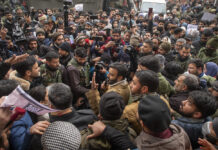
The detention sparked protests across Doda and other parts of Jammu and Kashmir. Locals took to the streets, blocking highways and clashing with security forces. The government responded with restrictions on movement and communication.
Authorities have kept Section 163 in force across the district. Internet services have been suspended for four days, while mobile connectivity in Bhalesa, Kahara and Chilli Pingal has been shut for two days.
Anticipating protests after Friday congregational prayers, authorities imposed strict restrictions in Doda district and ordered the closure of educational institutions. Officials said several protest-prone localities were sealed, while internet services remained suspended across the district. In Mehraj Malik’s native village, mobile calling facilities were blocked. Residents claim around 74 people have been detained in Doda district and about 15 in Kishtwar district. Adequate deployments were also made across the region. Protests, however, continue. Videos of protests are being shared online, and protesters can be seen shouting “Tera bhai mera bhai, Mehraj bhai.”
Malik’s father, Shamasuddin Malik, said that his son had been wrongly implicated. “The court will decide now. There was a fight with DC sahib (Deputy Commissioner of Doda). He has been wrongly charged under PSA,” Shamasuddin said, while expressing faith that justice would ultimately prevail.
Political Class
The political response to the arrest has been sharply divided. Omar Abdullah and Sajad Lone described it as an assault on democracy. Omar Abdullah termed it a misuse of preventive detention powers. The BJP defended the move, asserting that elected representatives must respect the law.
The case carries broader implications for Kashmir’s political class. For decades, the PSA was applied mainly against those accused of militancy or separatist activity, not elected legislators, even in cases of serious corruption. Malik’s arrest signals a shift in the application of detention laws, now extending to elected politicians. For parties that once opposed the PSA’s use against civilians, the case demonstrates that no one is beyond its reach.
JKNC MP Aga Ruhullah Mehdi, NC MLA Salman Sagar, and CPI(M) veteran MY Tarigami criticised the use of PSA on the sitting legislator, calling it undemocratic and draconian. Aga Ruhullah’s X post read, “Invoking the Public Safety Act (PSA) against MLA Mehraj Malik is unjustifiable. If an elected representative has erred, he must be questioned and dealt with under due process of law. That is how accountability works in a democracy.”
He added, “The PSA, intended for exceptional cases of grave security threats, has been repeatedly misused in Jammu & Kashmir to detain individuals on vague and arbitrary grounds. It has effectively become a tool to silence voices. Such misuse erodes public trust in institutions and reduces a legal safeguard into an instrument of suppression. We strongly condemn the use of abusive language by Mehraj Malik, but this is not justice; it is repression.”
Sajad Lone strongly criticised the imposition of the PSA on Malik, calling it a grave assault on democracy in Jammu and Kashmir. On X, he wrote, “We strongly condemn the use of PSA. This is a soulless democracy.” He further said that despite elections, the people’s mandate remained powerless.
“If an elected representative cannot express his sentiments, what purpose do elections serve? They have been reduced to a mere facade, and such actions only deepen the credibility crisis of democratic institutions,” Lone remarked.
MLA Pulwama Waheed Parra also condemned the PSA’s use, describing it as a draconian measure aimed at silencing political voices. On X, he said such laws were being weaponised to “crush dissent” and warned that authoritarian tactics could never resolve political differences in a democratic framework.
Omar Abdullah has repeatedly said Malik’s detention was wrong and eroded public trust in democratic institutions. He stated there was “no justification” for applying the PSA against an elected representative who posed no threat to public safety.
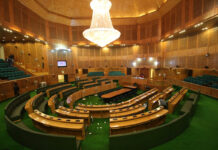
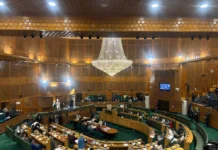
The controversy deepened when the Jammu and Kashmir Legislative Assembly Secretariat was accused of endorsing the PSA against Malik. The Secretariat clarified that it had no role in the matter and had only circulated the detention order as per procedural rules. The Speaker of the Assembly, Abdul Rahim Rather, said neither the Assembly nor its Secretariat had any role in approving or disapproving arrests. “Only the Speaker has the authority in such matters. Whenever a member is arrested, it is the duty of the Speaker to inform fellow members. This is the end of our role,” he said.
Senior Aam Aadmi Party leaders alleged earlier this week that they were detained in Srinagar and prevented from holding a scheduled press conference.AAP Rajya Sabha member Sanjay Singh and Delhi MLA Imran Hussain, the party’s in-charge for Jammu and Kashmir, said they were confined to a guest house in Church Lane by the administration and barred from addressing the media.
Imran Hussain said, “Democracy is being murdered here. We were scheduled to address a press conference, but were denied permission. We are being held at the guest house in Church Lane, its gate locked, and no reason has been provided for our detention.”
“Mehraj Malik is in jail because he raised the problems of his people. He is an elected representative. If elected representatives are not allowed to speak and raise their voice, then what is the purpose of being an MLA, and what is the meaning of democracy?” Hussain added.
People’s Democratic Party president Mehbooba Mufti urged the administration led by Lt Governor Manoj Sinha to release Malik. Speaking to reporters in Srinagar, she said the use of the PSA against an elected representative was unjustified.
“PSA is not warranted for a people’s representative even if he has used some offensive language against government officials. Such arrests erode democracy and restrict people from expressing themselves,” she said.
Mehbooba alleged the arrest of Malik was aimed at diverting public attention from the Hazratbal shrine incident. “The sitting MLA has been detained simply to shift focus. This approach is not democratic,” she said.
Mehraj Malik is now the second lawmaker from Jammu and Kashmir detained under the PSA after jailed MP Engineer Rashid, who has been behind bars since 2019. The fate of both lawmakers remains uncertain.