by Muhammad Nadeem
Eid al-Adha serves as an annual checkpoint, urging believers to assess their inner state, identify worldly chains that bind them, and consciously strive for zuhd and taqwa.
The Prophet (peace be upon him) said:
“Time has returned to its original state as it was on the day Allah created the heavens and the earth. The year consists of twelve months, of which four are sacred. Three of these occur in succession: Dhul-Qa‘da, Dhul-Hijja, and Muharram. The fourth is Rajab, which lies between Jumada al-Thani and Sha‘ban.”
He then asked, “Which month is this?”
We replied, “Allah and His Messenger know best.”
He remained silent for so long that we thought he might refer to it by another name. Then he said, “Is it not Dhul-Hijja?”
We replied, “Yes.”
He asked, “Which town is this?”
We replied, “Allah and His Messenger know best.”
Again, he remained silent for so long that we thought he might refer to it by another name. Then he said, “Is it not the sacred city (Mecca)?”
We replied, “Yes.”
He then asked, “What day is today?”
We said, “Allah and His Messenger know best.”
He remained silent once more until we thought he would rename the day. Then he said, “Is it not the Day of Sacrifice (Yawm al-Nahr)?”
We said, “Yes.”
He then declared: “Indeed, your blood, your property, and your honour are sacred to one another, just as this day is sacred, in this city of yours, in this month of yours. You will meet your Lord, and He will question you about your deeds. Beware: do not go astray after me by killing one another. Let those who are present convey this message to those who are absent, for it may be that some who receive it second-hand will understand it better than those who heard it directly.”
Muhammad, the sub-narrator, used to add: The Prophet then said, “Have I not conveyed the message? Have I not conveyed the message of Allah to you?”
Eid al-Adha, the Festival of Sacrifice, stands as one of the most profound observances within the Islamic tradition, weaving together intricate layers of theological significance, ethical imperatives, and spiritual aspiration. Its philosophy extends far beyond the visible ritual, embedding within it timeless principles that guide the believer’s relationship with the Divine, the self, and the community. Rooted in the foundational Abrahamic narrative, this celebration encapsulates a dynamic interplay of faith, obedience, compassion, and renewal, forming a cornerstone of Islamic ethical and spiritual life.
Faith and Submission
“And whoever fears God and remains mindful of Him, He will make a way out for him from every difficulty, and will provide for him from sources he could never have imagined.” Surah At-Talaq (65:2–3)
The very essence of Eid al-Adha finds its origin in the unwavering faith and submission exemplified by Prophet Ibrahim (peace be upon him). The narrative of his preparedness to sacrifice his beloved son, Isma’il (peace be upon him), upon divine command, serves as the theological cornerstone.
This act transcends mere historical commemoration; it embodies the ultimate test of faith, the willingness to surrender one’s deepest attachments and desires in absolute obedience to Allah’s will. It represents the pinnacle of tawhid (monotheism), affirming that nothing, not even the most cherished aspects of life, should stand between the believer and the Creator.
The festival thus becomes a powerful annual reminder of this core Islamic principle: true faith necessitates complete trust (tawakkul) and submission to the divine decree, even when its wisdom remains beyond human comprehension. It reinforces the belief that ultimate loyalty belongs solely to Allah, shaping the believer’s worldview and priorities.
Sacrifice as Social Justice and Compassion
“Surely, Abraham was an example: devoutly obedient to God, upright by nature, and not among the polytheists. He was grateful for Our blessings. We chose him and guided him to a straight path. We granted him goodness in this world, and in the Hereafter, he shall surely be among the righteous.” Surah An-Nahl (16:120–121)
The ritual of Qurbani, the animal sacrifice, is the most visible manifestation of Eid al-Adha. However, its philosophy elevates this act far above simple ritualism. The sacrifice symbolizes the believer’s willingness to offer something of value echoing Prophet Ibrahim’s devotion but its purpose is intrinsically linked to social welfare and justice.
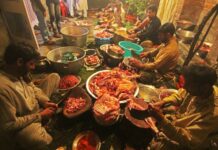
The mandatory distribution of the sacrificial meat, particularly to the poor, needy, and vulnerable members of the community, transforms the ritual into a powerful engine of social solidarity and compassion. This act of sharing is not merely charity; it is a fundamental obligation embedded within the celebration itself.
This distribution serves multiple ethical purposes. It ensures that the blessings of the festival reach every stratum of society, fostering a tangible sense of communal care and breaking down barriers of wealth and status. It compels the sacrifice to look beyond personal piety and actively engage in easing the hardship of others.
The sacrifice, therefore, becomes a practical expression of social responsibility, reminding the affluent of their duty towards the less fortunate and reinforcing the Islamic principle that true worship is incomplete without active concern for societal well-being. The ritual embodies the ethical imperative to translate faith into action that benefits the collective, promoting generosity and actively combating inequality.
Metaphysical Symbolism
“Neither their meat nor their blood reaches Allah, but what reaches Him is your piety.” Surah Al-Hajj (22:37)
Beyond the tangible act lies a rich layer of metaphysical symbolism. The physical sacrifice of an animal represents the believer’s internal struggle and commitment to sacrifice their base desires, ego, and attachments to the material world. Just as the animal is offered, the believer is called upon to sacrifice their negative traits: greed, envy, arrogance, and excessive worldly love that hinder spiritual progress and distance them from Allah. This process signifies a profound purification (tazkiyah) of the soul (nafs).
The act symbolizes the relinquishing of lower, animalistic impulses in favour of higher spiritual aspirations. It is a declaration of prioritizing the eternal over the ephemeral, the divine over the mundane. This internal dimension transforms Eid al-Adha from a communal feast into a deeply personal journey of self-reflection and spiritual recalibration. It serves as an annual checkpoint, urging believers to assess their inner state, identify worldly chains that bind them, and consciously strive for zuhd and taqwa.
Unity and Shared Identity
The Prophet (peace be upon him) delivered the sermon after offering the prayer on the Day of Nahr and said, “Whoever offers the prayer as we do and performs the sacrifice as we do, his sacrifice will be accepted by Allah. But whoever performs the sacrifice before the ‘Id prayer, it will not be accepted.”
Abu Burda ibn Niyar, the uncle of Al-Bara’, said, “O Messenger of Allah, I slaughtered my sheep before the ‘Id prayer, thinking today was a day of eating and drinking, and I wished for my sheep to be the first to be slaughtered in my household. So I slaughtered it and ate before coming for the prayer.”
The Prophet (peace be upon him) said, “The sheep you slaughtered is only meat, not a valid sacrifice.” Abu Burda said, “O Messenger of Allah, I have a young she-goat that is more beloved to me than two sheep. Will that suffice as a sacrifice for me?”
The Prophet (peace be upon him) replied, “Yes, it will suffice (as a Nusuk) for you, but not for anyone after you.”
Eid al-Adha is inherently a communal celebration. The congregational Eid prayer, performed in vast gatherings, visually and spiritually reinforces the unity of the Muslim community (ummah). Standing shoulder to shoulder, rich and poor, diverse in background yet united in worship, believers experience a powerful sense of shared identity and equality before Allah. This collective observance dissolves social hierarchies, if only momentarily, fostering a profound sense of belonging and mutual support.
The festival period is marked by visiting family, friends, and neighbours, exchanging greetings, sharing meals, and extending goodwill. These practices actively strengthen the social fabric, mend rifts, and cultivate bonds of kinship and friendship. The philosophy embedded here emphasizes that individual spiritual growth is inextricably linked to the health and harmony of the collective.
True piety flourishes not in isolation but within a community bound by shared faith, mutual responsibility, and active compassion. Eid al-Adha becomes a vital mechanism for nurturing this essential social cohesion.
Spiritual Renewal
“And remember Allah during these appointed days.” Surah Al-Baqarah (2:203)
Eid al-Adha is a catalyst for spiritual renewal and deep introspection. The period surrounding the festival is not merely about external rituals but is ideally a time for heightened mindfulness, increased prayer, and sincere self-examination. Believers are encouraged to reflect on the profound meanings embedded within the Abrahamic sacrifice and its relevance to their own lives.
This introspection focuses on assessing one’s relationship with Allah: the depth of faith, the sincerity of worship, and the level of trust in divine wisdom. It also involves evaluating ethical conduct: the fulfilment of obligations towards others, the practice of justice and kindness, and the purification of intentions. The festival serves as a spiritual reset, an opportunity to seek forgiveness, renew commitments to righteous living, and deepen one’s connection to the Divine. It transforms the celebration from a festive occasion into a dynamic spiritual exercise aimed at personal and moral development.
The Essence of True Sacrifice
“Today I have perfected your faith for you, completed My favour upon you, and chosen Islam as your way. But whoever is compelled by extreme hunger, without intending to sin, then surely Allah is All-Forgiving, Most Merciful.” Surah Al-Ma’idah (5:3)
Eid al-Adha ultimately points towards the essence of true sacrifice, which transcends the physical act. While the ritual of Qurbani is a prescribed obligation, its deeper purpose is to cultivate a permanent state of mind and being. The real sacrifice lies in the consistent effort to live a life aligned with the teachings of Allah and His final Messenger prophet Muhammad (peace be upon him): to sacrifice time for worship and service, to sacrifice wealth for the benefit of others, to sacrifice ego for the sake of harmony, and to sacrifice personal desires for the greater good.
The festival teaches that true devotion is manifested not just in one day but through a sustained commitment to ethical living, compassion, and justice. The meat distributed is a symbol of the ongoing responsibility to nourish and support the community. The prayers offered are a reminder of the constant need for divine guidance and connection. The philosophy, therefore, extends the spirit of Eid al-Adha throughout the year, urging believers to embody its core values of faith, submission, generosity, and purification in their daily existence.
Yearning
“Proclaim the pilgrimage to all people.” Surah Al-Hajj (22:27)
Eid al-Adha is anchored in the ultimate demonstration of faith and submission by Prophet Ibrahim, transforming this legacy into a living tradition of ethical obligation and social justice through the ritual of Qurbani and the imperative of sharing. It carries profound metaphysical weight, symbolizing the internal struggle against base desires and the yearning for spiritual purification and closeness to Allah.
Eid al-Adha transcends its ritual form, offering a timeless blueprint for a life lived in conscious devotion, active compassion, and continuous striving towards spiritual and moral excellence, reminding Muslims that the most significant sacrifices are those made daily in the pursuit of righteousness and the service of Allah and humanity.
(The author is a book reviewer, independent researcher, and translator with over a decade of editorial experience in the media and publishing industries. His diverse portfolio includes reviews, essays, and short stories, published in national and international magazines, journals, and anthologies. He is the Founding Editor of Mountain Ink Magazine, and Contributing Editor at Gulshan Publications. He currently serves as a Copy Editor at Kashmir Life. Ideas are personal.)