by Mehraj Din Malla
The aspirants of Jammu and Kashmir are not opponents of the Commission. They are students who continue to believe in fair competition and honest effort.
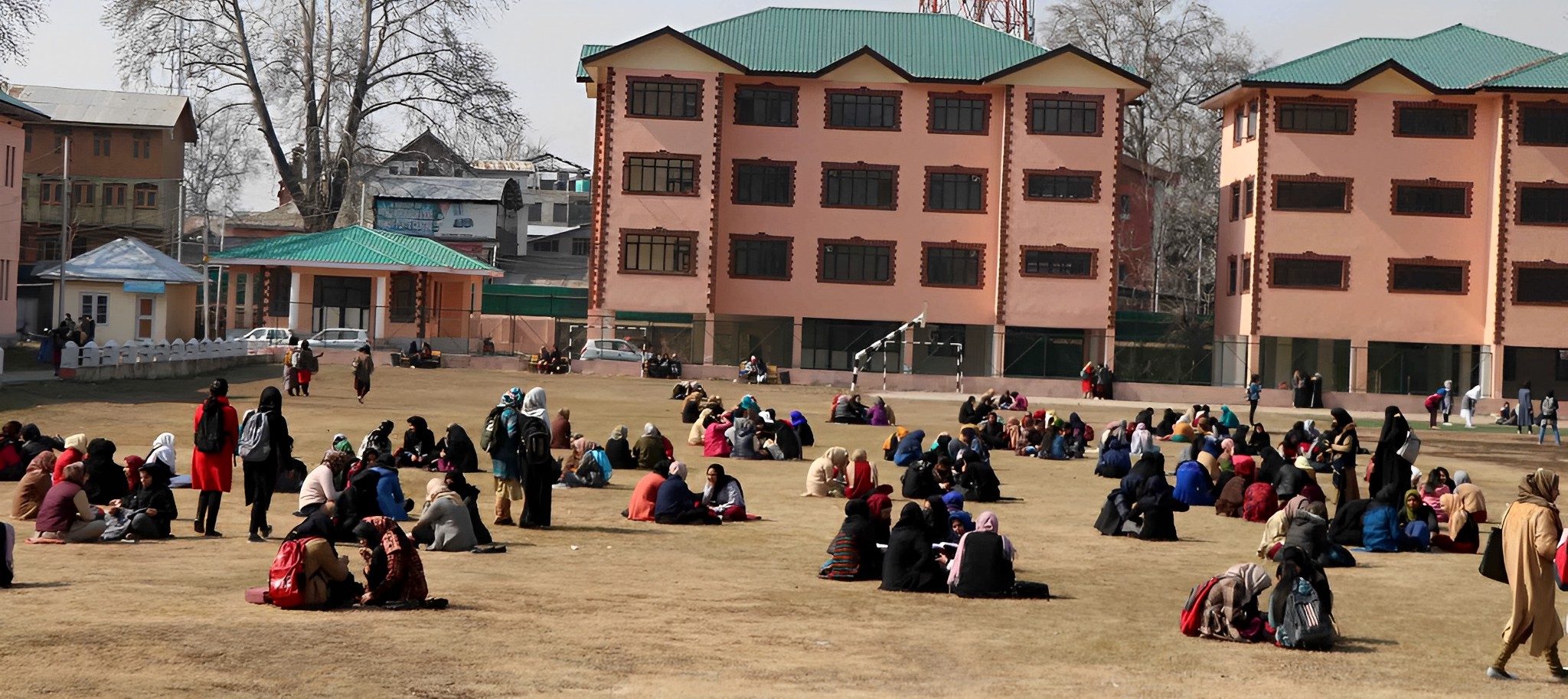
Over recent weeks, a wave of disappointment has swept through the aspirant community across Jammu and Kashmir. The reason is not another routine examination, but the recently conducted JKPSC tests, which many candidates describe as far below the expected standard. What should have been a fair test of merit has turned into a source of debate, frustration, and disillusionment.
For thousands of students, the JKPSC exam represents more than a career opportunity. It is a dream built on years of education, sleepless nights, and financial sacrifice. Yet many feel their preparation and effort were rendered meaningless by question papers that were unusually easy and poorly balanced. Aspirants from various disciplines expressed the same concern, saying they expected a postgraduate-level test but encountered one that fell short of that standard.
Traditionally, JKPSC examinations have been known for their rigour and precision. They were designed to identify the most capable candidates who demonstrated deep understanding rather than surface knowledge. This year, however, the pattern shifted. In several subjects, the questions were so simple that even those with only basic familiarity with the syllabus achieved high marks.
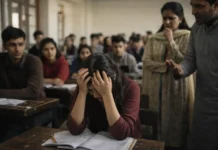
Many candidates who had studied intensively were left disheartened. One of them said the paper resembled a school-level test rather than one meant for postgraduates. The result, they said, was not a measure of knowledge but a matter of chance. This decline in standards has raised an unsettling question: has the Commission lost its credibility? Many fear that if such lapses persist, the institution’s reputation may suffer lasting damage.
When Merit Loses Meaning
The greatest disappointment among aspirants is not the ease of the paper but the feeling that their hard work no longer holds value. A competitive examination is meant to distinguish depth of preparation and understanding, but when the standard drops, that distinction disappears. Those who spent months mastering complex topics now find themselves scoring lower than those who prepared superficially.
As one student remarked, the exam did not test knowledge; it rewarded luck. This sentiment is shared across disciplines. For students who once viewed JKPSC as a symbol of fairness, this year’s experience has left them questioning its very purpose.
Competitive examinations already place immense pressure on students. Many devote years of their lives to preparation, often at the cost of social life and personal well-being. Families invest their hopes and resources in these efforts. When the test fails to reflect genuine preparation, it leaves a deep psychological wound. The reaction among many aspirants has been one of exhaustion and betrayal.
For young graduates who have dedicated years to achieving a government post, such experiences erode confidence in the future. Their demand is simple: fairness. They do not seek sympathy, but justice through a credible examination that recognises true merit.
The student community has now made a collective appeal for the Commission to hold a re-examination. Their demand arises not from hostility but from concern for fairness. If an exam falls short of its expected level, re-conducting it becomes essential to preserve integrity.
Candidates argue that a re-exam would restore faith in the Commission’s credibility. One aspirant said that if an error has occurred, acknowledging and correcting it would reflect institutional responsibility. Many also point to broader structural issues within the system, such as inadequate question moderation and weak quality checks, which require immediate attention.
Protecting the Commission’s Reputation
JKPSC has long been regarded as a respected institution of public recruitment in Jammu and Kashmir. Generations of students have trusted its fairness, believing that effort and ability determine success. Yet this year’s experience has shaken that trust.
A public service commission relies on credibility. Once the perception of arbitrariness takes root, confidence is difficult to rebuild. Students now fear that this episode may set a precedent where examinations no longer challenge intellect but become mere formalities. To safeguard its standing, the Commission must address these concerns, not to appease critics but to uphold principles.
It is important to note that the aspirants raising these concerns do not intend to attack or defame the Commission. Their appeal is constructive and rooted in hope. They are not adversaries but participants in a system they wish to trust. Their voices represent disappointment, not defiance.
The demand for a re-examination is a call for justice. Acknowledging that an error occurred would strengthen, not weaken, the institution. Transparency and responsiveness would demonstrate that the Commission values merit above all.
Every institution encounters setbacks. What defines its integrity is how it responds. The Commission can treat this episode as criticism or as an opportunity to improve. If it chooses the latter, this could become a moment of renewal, leading to stronger internal checks and more reliable question moderation.
Involving subject experts, introducing academic review panels, and conducting standardisation tests before finalising papers are measures that can prevent such lapses. These reforms would ensure fairness and show young aspirants that their voices are heard.
The Way Forward
The aspirants of Jammu and Kashmir are not opponents of the Commission. They are students who continue to believe in fair competition and honest effort. Their faith in JKPSC has been shaken, but it is not lost. What they ask for is a process that reflects merit, not chance.

Re-conducting the examinations for affected subjects, ensuring thorough moderation of future papers, and publicly reaffirming a commitment to fairness would help restore confidence. The message from aspirants remains clear: they believe in hard work and equal opportunity, but the system must match that belief with fairness.
If the Commission listens, it will not only regain respect but also emerge stronger, setting an example for other institutions across India. The youth of Jammu and Kashmir deserve nothing less.
(The author is a freelance writer from Kondabal, Ganderbal. Ideas are personal.)