by Dr Prof SM Afzal Qadri
Dr Tariq Kozi’s purpose in writing a book is to help young, upcoming doctors to guide them on how they can be people-friendly doctors.

The Be A Good General Petitioner is based on the experience of Dr Tariq Kozi, a medical doctor in his 45 years of practice in medicine in a suburb of Mumbai. He currently works at the National Hospital Kalyan.
A physician has to face a variety of patients, from an obedient person to a short-tempered patient, and he has to satisfy patients cross-questioning, and organising the mind of the patient. Some patients are not willing to cooperate with their treating doctors for various reasons and frustrations.
This is where; a doctor has a role to convince a patient that he will be cured even in serious health problems. Here the doctor’s role is that of the counsellor so that he or she can create a positive mindset in a patient.
Dr Tariq, an alumnus of Government Medical College Srinagar, has in this book mentioned that he has learned a lot from his patients, on-call consultants and surgeons who visit his hospital where he is working for his patients especially those who belong to the poor class.
His purpose in writing this book is to help young, upcoming doctors to guide them how they can be people-friendly doctors. He argues that every day a family physician has to face uninformed, informed and well-informed patients in his clinic and he must be ready to face it. He feels that this book which has covered various areas of medicine will help young doctors to face this challenge.
He acknowledges the contribution of his teachers who have taught him in Medical College. Notably among them are Prof SN Ahmed Shah, Prof Brij Mohan Bhan, Prof SN Dhar, Prof. Hamid Durrani, Prof HU Zargar, Prof AR Nasti and Prof Girja Dhar. In compiling this work he has sought help from some of the renowned doctors from GMC, Srinagar, Mumbai, Kalyan and Calcutta. He has discussed in detail the precautions and steps which a family physician should take to treat his patient.
The book is divided into several chapters and he has discussed how and by which aids a medical professional should treat common diseases like fever, diabetes, hypertension, convulsions disorder, pregnancy-related issues etc. A complete chapter is dedicated to the importance of medico-legal cases and doctors’ role in dealing with such cases.
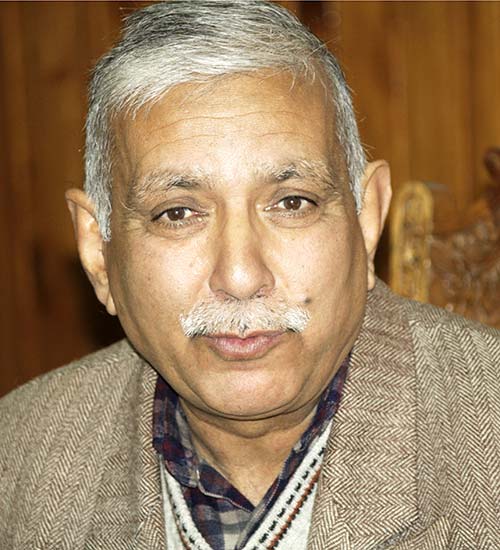
Dr Tariq has given guidelines that the doctor should follow while giving a certificate in medico-legal cases. He has discussed the definition of a medico-legal case the various kinds of medico-legal cases and the protocol for fulfilling the medico-legal report. He has also explained the procedure for recording dying declarations. He has referred to some instances of negligence in medico-legal cases also.
A full chapter is devoted to dealing with precautions and steps to take while treating a patient. He explains that an ideal clinic has all basic facilities and a full-fledged emergency kit in cases of emergency. A complete chapter is devoted to circumcision, its benefits and the risks of not doing so.
In short, the book is very needful for the practising physician, especially for those who have recently joined the profession and is a short guide to deal with certain classes of diseases/emergencies. The Rs 500 book is published by National Hospital, Agra Road, Kalyan.
(The author is former Dean and head of the Faculty of Law, University of Kashmir. Ideas are personal.)