by Iqbal Ahmad
A young Kashmiri library professional is reviving reading culture through Living Libraries, domestic book initiatives, and a hybrid vision blending tradition with technology
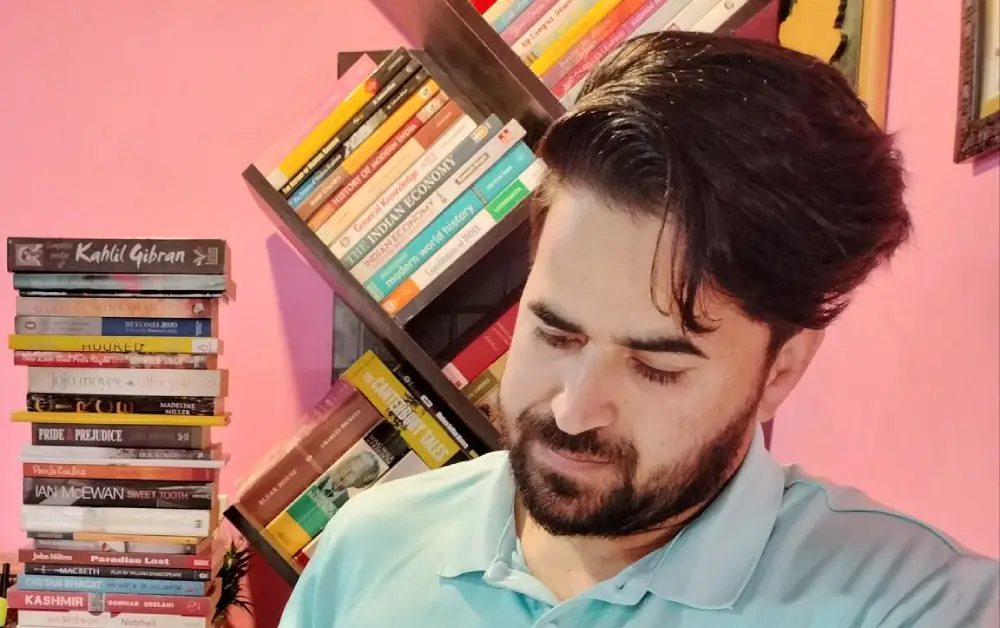
In an age dominated by screens and instant digital gratification, libraries are often dismissed as relics of a slower past. Yet for Ishfaq Manzoor Wani, a young library professional from Ikhpara in south Kashmir’s Kulgam district, libraries remain the very heartbeat of the intellectual and academic ecosystem.
Driven by a belief that knowledge is the most powerful tool for personal and social transformation, Wani has been working steadily to revive reading habits and reimagine the role of libraries in contemporary society. His initiatives, including the concept of Zinda Kitab Ghar or Living Library and the Domestic Library movement, aim to restore books and libraries to the centre of community life.
The Living Library concept envisions libraries as dynamic, interactive spaces rather than silent repositories of books. Under this model, books are brought “alive” through dialogue, discussion, and engagement, allowing readers to interact with experts, authors, and individuals with lived experiences who become “living books”. The idea, Wani says, is to transform libraries into vibrant centres of conversation, mentorship, and knowledge-sharing.
Complementing this is the Domestic Library initiative, which encourages families to create small personal libraries at home. The idea is to nurture reading habits from an early age and embed books into everyday domestic life, countering what Wani sees as a steady decline in deep reading among the youth due to digital entertainment.
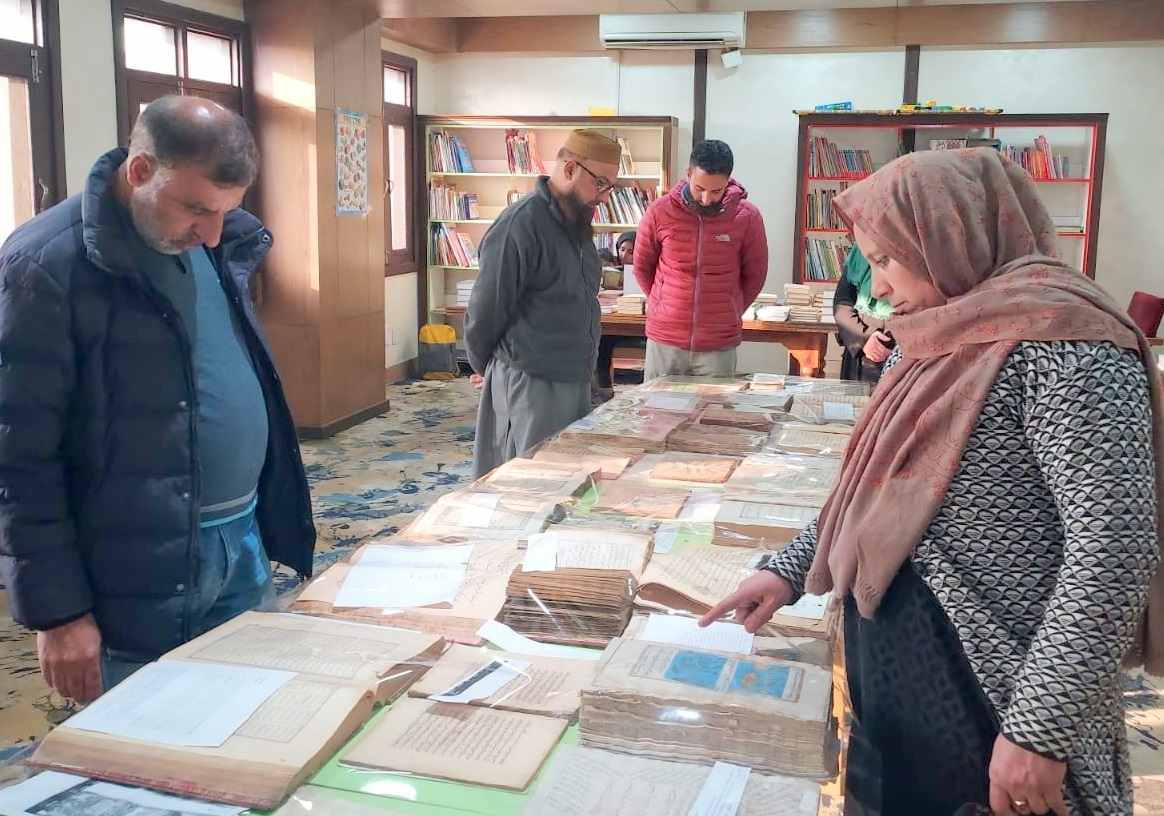
A medical Library and Information Science professional by training, Wani also holds academic qualifications in civil engineering. He is a writer and researcher who has authored several books on library science and social themes, as well as multiple research papers. For him, writing and research are natural extensions of librarianship, both aimed at preserving ideas, managing knowledge, and opening new paths of thought.
His professional journey has largely focused on improving access to medical and scientific information for students, researchers, and healthcare practitioners. As a certified trainer for UpToDate, one of the world’s leading clinical decision support platforms, Wani guides medical professionals on the effective use of evidence-based tools in patient care and clinical decision-making. He views this role as a bridge between theoretical medical knowledge and practical healthcare delivery.
Medical libraries, he argues, are particularly crucial in a region like Kashmir, where the healthcare sector is evolving rapidly. Well-equipped medical libraries ensure that doctors, students, and researchers remain connected with global advancements, updated research, and best clinical practices, fostering innovation and critical thinking.
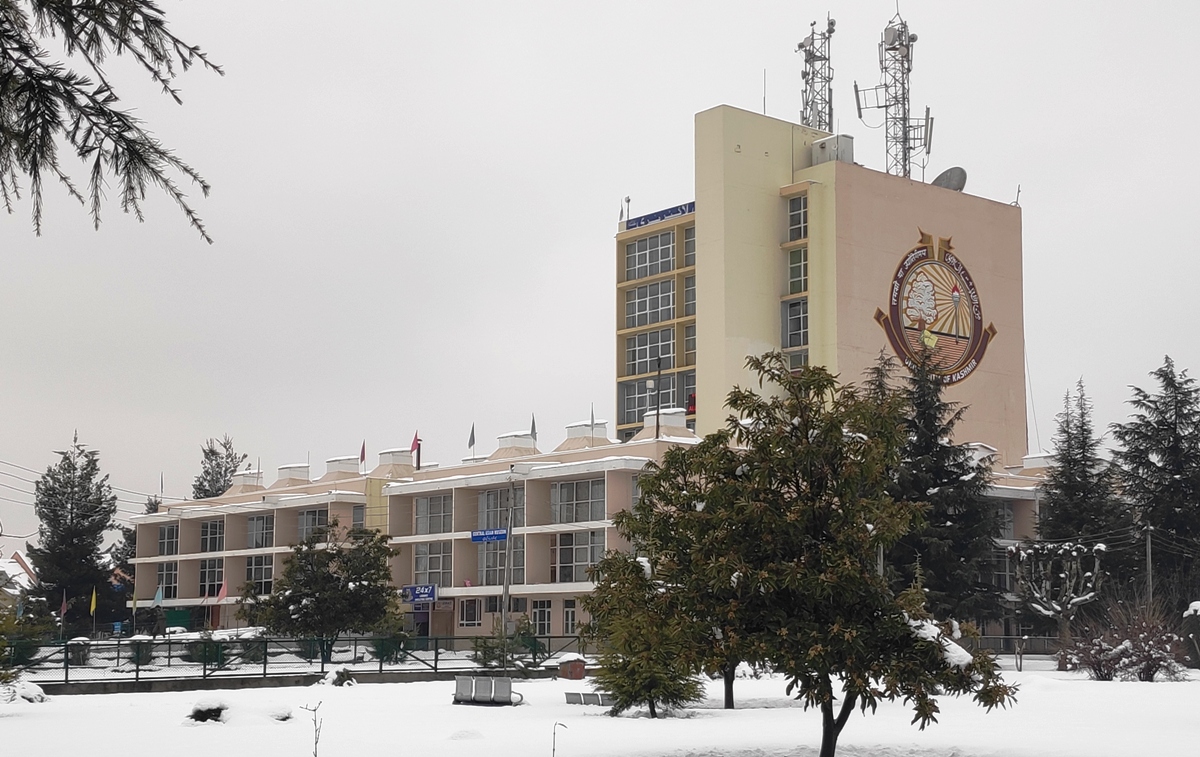
Wani acknowledges that libraries today face serious challenges, including shrinking reading habits among young people, shortages of space, limited staffing, and gaps in modern infrastructure such as RFID systems and access to e-resources. However, he believes these challenges can be converted into opportunities through strategic planning and institutional support.
On digitisation, his view is unambiguous. It is no longer a choice but a necessity. Today’s learners, he says, demand quick, remote, and user-friendly access to information. Integrating digital platforms, e-journals, AI-powered tools, and remote access systems can dramatically expand the reach of libraries beyond physical boundaries. At the same time, he advocates a hybrid model where traditional books coexist with advanced digital resources.
According to Wani, printed books and digital content are not rivals but complements. Printed books offer depth, emotional connection, and authenticity, while digital resources provide speed, updates, and global connectivity. A successful library, he maintains, harmonises both worlds while preserving the timeless value of books.
At the heart of his work is a larger concern about the erosion of reading culture. A society that reads, he says, is a society that questions, creates, and leads. The shift towards shallow, screen-driven content risks producing a generation disconnected from deep thinking and reflection. Kashmir, with its long tradition of scholarship and learning, has a responsibility to protect and strengthen this legacy.
His message, especially to young people, is simple: cultivate the habit of reading. It sharpens the mind, nurtures empathy, and builds character. Knowledge, he insists, is not merely for examinations but for shaping society itself. Libraries, often underestimated, remain silent powerhouses of growth, wisdom, and change for those willing to step inside.
(The writer is a senior archaeologist and author. Ideas are personal.)