by Mukhtar Ahmad Qureshi
Every child possesses a unique set of characteristics, rendering a one-size-fits-all teaching approach ineffective. Personalised learning allows students to progress at their own pace, focusing on their strengths and addressing their weaknesses.
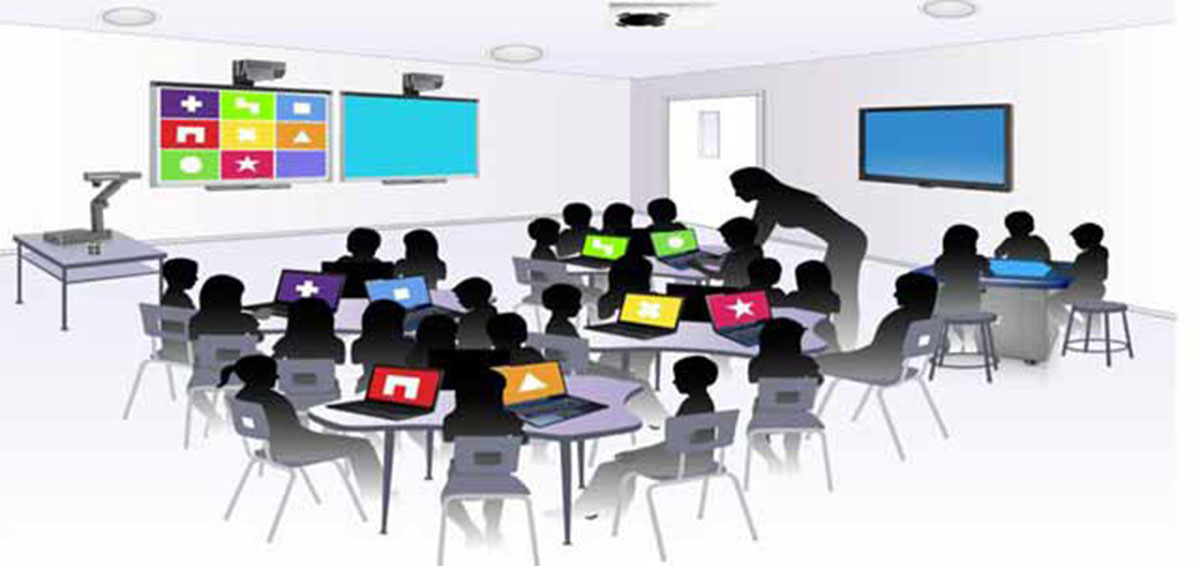
As education strides further into the future, the landscape of research and teaching has undergone a seismic shift, leaving educators racing to keep pace with a culture brimming with change and evolving demands. The traditional “chalk and talk” approach no longer suffices in a world propelled by technology, creativity, and critical thinking. To make learning truly resonate, we must embrace innovative teaching methodologies that foster curiosity, collaboration, and lifelong learning, ensuring these elements converge seamlessly within young minds.
Activity-based learning stands as one of the most potent tools to sustain student engagement in the classroom. Its impact became evident to me when I first introduced it to my students; the shift in their enthusiasm was palpable. Rather than passively absorbing information, they became active participants in their learning journey.
For example, mathematical concepts can be brought to life through puzzles, games, and real-life problem-solving scenarios. This approach not only makes learning enjoyable but also enhances information retention, ensuring that knowledge sticks.
We are undeniably a digital generation, and integrating technology into education is no longer optional but essential. In an era where smartboards, educational apps, and virtual classrooms are readily available, the reliance on traditional textbooks has diminished.
I have employed interactive quizzes, storytelling apps, and online simulations to transform lessons into dynamic experiences. For instance, in a history class, a virtual tour of the ancient world using Virtual Reality can transport students to another era, rendering learning profoundly immersive.
The flipped classroom model inverts the conventional teaching paradigm. Rather than introducing concepts during class and assigning homework afterwards, students first engage with the material at home through videos, articles, or presentations. Classroom time is then reserved for discussions, problem-solving, and application-based activities.
When I implemented this approach, I observed that students arrived better prepared, eager to resolve doubts, and more actively engaged in group tasks. Their involvement in collaborative activities deepened, reflecting a heightened connection to the subject matter.
Activity-based learning stands as one of the most promising methods to sustain student engagement, even in settings where participation might otherwise wane. I was struck by the transformation in my students when I first introduced this method. No longer passive listeners, they became active participants, fully immersed in the learning process.
For example, mathematical concepts can be explored through puzzles, gadgets, and real-life problem-solving scenarios. When students engage with learning in such an enjoyable manner, their retention of information improves significantly.
We are undeniably a generation shaped by technology, and its integration into education is no longer optional. In a world where smartboards, educational apps, and virtual classrooms have become ubiquitous, traditional textbooks have faded into the background. Interactive quizzes, storytelling apps, and online simulations can transform lessons into dynamic, engaging experiences. For instance, I have witnessed the profound impact of using interactive quizzes, storytelling apps, and simulations to make lessons more immersive and participatory.
Gamification stands as a highly effective strategy for fostering engagement. By incorporating elements such as points, badges, leaderboards, and interactive games, even the most challenging subjects can become enjoyable. I recall organising a maths quiz competition in my class, where students earned points for correct answers. Their enthusiasm and motivation were palpable. Games not only encourage healthy competition but also provide immediate feedback and cultivate a positive learning environment.
Every child possesses a unique set of characteristics, rendering a one-size-fits-all teaching approach ineffective. Personalised learning allows students to progress at their own pace, focusing on their strengths and addressing their weaknesses. By leveraging AI-powered tools and adaptive learning platforms, educators can design tailored assignments, track progress, and provide targeted support. From my own experience, I have observed that students who receive individualised attention tend to value their studies more deeply and perform better academically.
Students grasp principles more effectively when they witness them in action. Experiential learning involves real-world engagement, such as field trips, hands-on experiments, and activities that bring classroom topics to life. For instance, in an environmental science class, students might visit a local conservation site to explore sustainable practices. Such experiences bridge the gap between theoretical knowledge and practical application, fostering a deeper understanding.
Stories possess the unique ability to entertain, enlighten, and educate. Whether teaching literature, history, or even science, storytelling can simplify complex concepts and make them memorable. I have often used narratives of real events to help students grasp challenging ideas. For example, recounting the struggles and triumphs of a scientist can make physics more relatable and engaging. Through storytelling, learners form an emotional connection to the subject, enhancing both comprehension and retention.
Learning transcends the mere acquisition of academic knowledge or the memorisation of facts; it encompasses the mastery of emotional intelligence and well-being. Integrating mindfulness into the classroom—whether through a few minutes of daily relaxation, gratitude journals, meditation, or deep breathing exercises—can significantly enhance students’ concentration, resilience, and positive thinking. In my school, I have observed the transformative effects of mindfulness practices. Students demonstrated improved focus, reduced anxiety, and greater respect for one another. When individuals are attuned to their emotions, they approach learning with a sense of balance and happiness, fostering a more harmonious educational experience.
As educators, we bear the responsibility of shaping young minds and preparing them for the challenges of the future. While traditional methods hold value, innovation is essential to engage 21st-century learners effectively. Experimenting with new teaching techniques has proven fruitful, with activity-based learning creating vibrant and stimulating environments. Sustainable learning centres do more than impart knowledge; they inspire, empower, and cultivate lifelong learners. These concepts represent the forefront of educational innovation. As educators, we must embrace them, ensuring that teaching remains not only meaningful but also impactful and enjoyable.
(The author is a teacher, and columnist from Boniyar, Baramulla. Ideas are personal.)