by Sameer-Ul-Haq
Alama Iqbal and his companion, Ghulam Rasool Mehr, embarked on a train journey from Cairo, traversing Khan Yunus, the Gaza Strip and Ludh, before reaching Jerusalem.
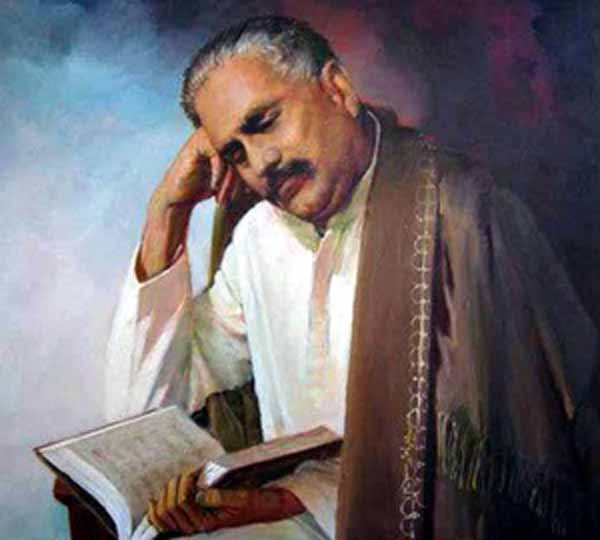
Alama Iqbal, a renowned poet and philosopher, was emerging as a pivotal leader in the Indian subcontinent’s Muslim political landscape. His stature was underscored by the British Indian government’s invitation to participate in the second Round Table Conference in London, scheduled for October 1931.
To assume his role at the conference, Iqbal departed Lahore on 9 September and proceeded to Delhi. His subsequent destination was Bombay, the point of departure for his London-bound journey. From the outset, Iqbal had expressed his intention to expand his travels beyond the conference, exploring additional destinations within and outside Europe.
Accompanying Iqbal on this voyage were four esteemed Muslim delegates: Justice Suhrawardy, Shaikh Mushir Hussain Kidwai, Khan Bahadur Hafiz Hayat Hussain and Sayyid Ali Imam. Together, they embarked on a significant sea journey from Bombay to London, underscoring the importance of Iqbal’s participation in the conference and his broader diplomatic and cultural ambitions.
Muhammad Iqbal arrived in London on September 27, 1931. His presence was met with great fanfare, as dignitaries such as Sir Samuel Hoare, Secretary of State for India, and Sayyid Zia Uddin Tabatabie, former Prime Minister of Iran, paid him visits. Iqbal was also honoured with numerous receptions and met with freedom fighters from Chechnya and Turkey.
During his stay, Iqbal delivered a lecture at Cambridge University for the International Muslim Association. Upon arrival at the train station, he received a warm welcome from Chaudhary Rahmat Ali and others.
Iqbal’s interactions with Muhammad Ali Jinnah were pivotal during this visit. Recognising Jinnah’s exceptional leadership qualities, Iqbal urged him to end his self-imposed exile in London and return to India to champion the Muslim cause. Iqbal firmly believed Jinnah was the ideal leader to work towards the betterment of Indian Muslims.
Following his productive London stay, Iqbal departed for Paris. Umrao Singh Sher Gill, a close friend, warmly greeted him at the Paris train station. Iqbal’s subsequent destination was Rome, where Professor Airastco, a philosophy lecturer at Rome University, received him. The next day, Iqbal visited Rome University, engaging with scholars, and met with Afghanistan’s former king, Aman Allah Khan, who was residing in Rome as a political refugee.
During his Roman sojourn, Iqbal received an overture from Benito Mussolini, Italy’s dictator, who sought an audience with the celebrated poet of the East. Deeply impressed by Iqbal’s stature, Mussolini extended an invitation for a meeting at his office on November 27, 1931.
Their encounter commenced with Mussolini rising from his seat to greet Iqbal warmly, sealing their meeting with a handshake. The two engaged in conversation for approximately 40 minutes.
Iqbal’s subsequent destination was Egypt. Upon arriving in Cairo, he was met with an effusive welcome. Members of Shahab Al Muslimeen and students from Al Azhar University, hailing from India, paid him visits.
Iqbal’s exploration of Cairo encompassed iconic historical sites: the majestic pyramids, serene gardens along the Nile and other revered landmarks.
A memorable encounter unfolded when renowned Sufi, Sayyid Muhammad Madi Abu Al Azam, sought out Iqbal at his hotel. Their discourse centred on fostering unity and betterment among Muslims.
Additionally, Iqbal received an invitation from Egypt’s Prime Minister, Mustafa Al Nahas Pasha, and subsequently visited Al Azhar University before departing Egypt.
Iqbal and his companion, Ghulam Rasool Mehr, embarked on a train journey from Cairo, traversing Khan Yunus, the Gaza Strip and Ludh, before reaching Jerusalem.
Upon arrival, Mufti Amin Al Husseni warmly welcomed Iqbal, extending an invitation to participate in the Muslim World Congress in Palestine. This gathering held significance, given the intensifying Zionist influence in Palestine by 1931. Iqbal’s allegiance to the Muslim Brotherhood motivated his involvement.
At the congress, Iqbal articulated his vision on key proposals: transferring the Hejaz railway committee to a Muslim international administrative company and establishing a premier university in Jerusalem.
During his address, Iqbal cautioned against two profound threats to Muslims: “materialism and excessive nationalism.” He poignantly declared, “I worry less about Islam’s enemies than Muslims themselves.” His introspective words linger: “Are Muslims today in a state worthy of Prophet Muhammad’s (peace be upon him) pride?”
Iqbal also paid homage to revered Christian sites, including the Mount of Olives.
On December 15, 1931, Iqbal departed Jerusalem alongside Mehr. They sailed from Port Said to Bombay on 18 December, concluding this pivotal journey.
January 1933 marked the realization of Iqbal’s enduring aspiration to visit Spain. He entered the country as a tourist, eager to immerse himself in its profound Islamic legacy.
His journey commenced in Madrid, followed by a poignant visit to Andalusia. Spain’s Minister of Education extended a warm welcome, facilitating Iqbal’s tour of the revered mosque of Cordoba, historically converted into a cathedral.
In a historic moment, in January 1933, Iqbal became the first Muslim in over 400 years to offer prayers within this erstwhile mosque. Spanish authorities typically prohibited such observances, making this occasion particularly remarkable.
Inspired, Iqbal wrote Masjid iQurtaba. This poem celebrates the majestic beauty reflecting Andalusia’s grandeur under Muslim rule for nearly 800 years.
Seated within the mosque’s hallowed halls, Iqbal composed:
hai yehi meri namaz, hai yehi mera wuzu
meri nawaon me hai mere jigar ka lahu
“This is my prayer, this my ablution
My innovations soaked in my heart’s blood”
This powerful verse encapsulates Iqbal’s profound spiritual connection.
In a heartfelt postcard to his son, Javed, Iqbal wrote: “May God illuminate your eyes with the mosque’s splendour.”
During his European sojourn, Iqbal received a letter from Javed, requesting a gramophone. Instead of fulfilling this wish, Iqbal crafted a poetic message, Javed Ke Naam:
dayare ishq mein apna maqam paida kar
naya zamana naye subha i shaam paida kar
mera tareeqay amiri nahi faqiri hai
khudi na bech gareebi mein naam paidakar
“Establish your presence in the realm of love,
Create new dawns and evenings for this era.
My path is one of spiritual wealth, not material riches.
Do not sell your dignity; forge a name in humility.”
Iqbal, who often referred to himself as a spiritual wanderer (qalandar) in his poetry, harboured a profound desire: to not outlive Prophet Mohammad (peace be upon him), who passed away at 63.
Fate aligned with his wish. Iqbal passed away on 8 April 1938, aged 60, leaving an enduring legacy.
(The author, a native of Bandipora, Kashmir, holds a master’s degree in History from the University of Kashmir. Ideas are personal.)