by Iqbal Ahmad
Mughal patronage fostered Kashmir’s calligraphic excellence, leaving a lasting legacy in manuscripts, coins, inscriptions, and celebrated master calligraphers
The skill of decorative writing was born in Kashmir during the Muslim Sultanate period and later became more fascinating during the Mughal era in the 16th century CE.
The inscriptions produced during the Mughal period were no less a masterpiece than the architectural marvels exhibited in the fine royal buildings and garden constructions.
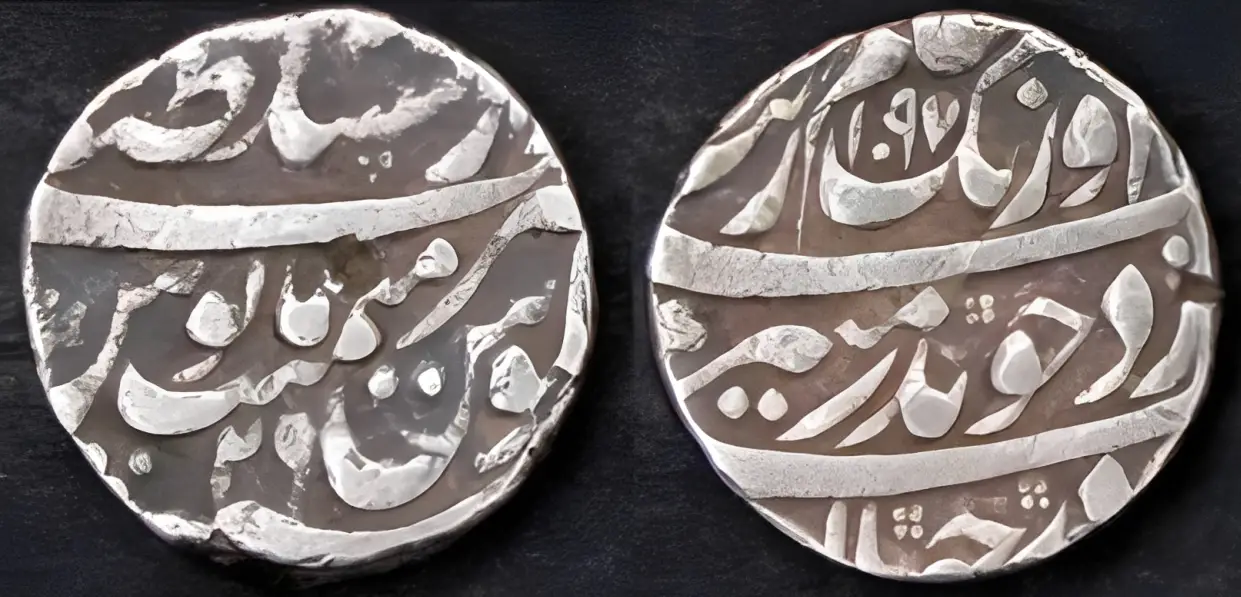
The best specimens of calligraphy can be seen in the manuscripts produced during the Mughal period across the entire dominion. The writing styles reflected on their coins and engraved inscriptions are no less amazing, while the calligraphic patterns adopted by them for their vast coinage and on a few epigraphs had a very deep influence on the rulers who came after them and followed their predecessors. The Durrani and Sikh period coins and epigraphs too exhibit the Mughal style of writing and engraving.
Mughal Calligraphy
Mughals are believed to have promoted the Naskh and Nastaliq patterns of calligraphy. In the words of Abul Fazal, the Mughal emperors Akbar and Jahangir promoted the Nastaliq, or the Round Persian, characters. Providing a brief description of various calligraphic patterns used during the Mughal period in India and Central Asia, he writes that Suls, Naskh, Tanqi, Riqa, Muhaqqaq, Raihan, and Taliq styles of writing were commonly used throughout the Mughal dominion, which included the land of Jammu and Kashmir.
The general scripts adopted in Kashmir, as recorded by Diwan Kirpa Ram in his Gulzari Kashmir, were either Arabic or Persian. The styles were Kufi, Naskh, Makramat, Suls, Riqa, and Raihan in Arabic, and Nastaliq, Shikast, Gular, Nakhan Shikast, Aniz, and Shaifa in Persian.
Despite various calligraphic styles, the Mughals are known to have promoted their writing mechanism mostly in the Round Persian character called Nastaliq. Such specimens can be observed on a number of copper, silver, and gold coins of Akbar, Jahangir, and Shah Jahan, and on historic Mughal-period inscriptions at the arcade of Verinag Spring, at the gate of Kathi Darwaza of Kohimaran Rampart, and at several other monuments of the Mughal era.
Famous Calligraphers
In fact, this art was introduced during the Shahmiri period, but it flourished during the Mughal period. The Mughals appointed several reputed writers and calligraphers and honoured them as well.
Mohammad Hussain Kashmiri, a reputed calligrapher who served as one of the courtiers of Akbar, was honoured with the title of Zarin-Qalam (Golden Pen). Mohammad Hussain Kashmiri, writes Abul Fazal, surpassed his master Maulana Abdul Aziz by his handsome pen. Ali Chaman was another noted court calligrapher of Akbar. Mohammad Murad Kashmiri was given the title of Shirin Qalam (the Sweet Pen) by his master, Shah Jahan.
Several Kashmiri artists received patronage in the Durrani courts. Bawani Dass-Katchro was the court calligrapher in the Durrani Darbar. Gradually, this art spread from the royal courts to towns and rural areas. Certain families adopted it as their main profession and promoted it further.
Promotion of Calligraphy
It was because of the popularity of the art of calligraphy in Kashmir that the region possesses a rich repository of manuscripts and epigraphs in various calligraphic styles. There are a number of manuscripts in various official and non-official collections in Nastaliq and Naskh styles.
During the modern age, the Urdu press and Urdu, Persian, and Arabic book writers played a vital role in the promotion of the skill of calligraphy. The Academy of Art, Culture and Languages has also been conducting calligraphy classes for the last several years. The Academy has also been taking care of old manuscripts exhibiting wonderful styles of calligraphic art.
Besides, the Cultural Academy, research libraries, archives, and other private and government institutions have been preserving hundreds of manuscripts and several epigraphs.
Mughal Epigraphs
A good collection of Mughal coins is also exhibited in the museums of Jammu and Kashmir. Most of the Mughal coins are housed in the numismatic collection of the SPS Museum at Lal Mandi, Srinagar.
Two rare stone inscriptions are also housed in the archaeological gallery of the old SPS Museum at Lal Mandi, Srinagar. One of the inscriptions, in Persian, belongs to Jahangir’s period, while the other, written in Arabic, belongs to Aurangzeb’s period. These epigraphs are of historical value as they provide significant information about the Mughal period.
Persian Inscription
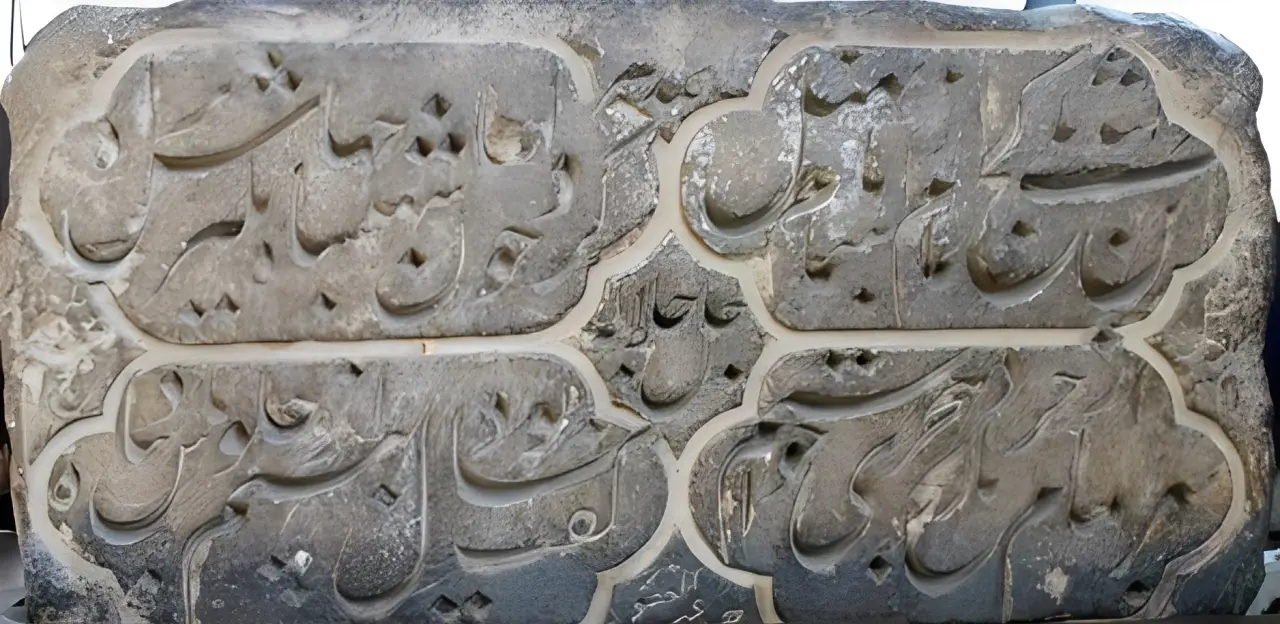
This stone inscription is engraved on a dumpy stone slab measuring 1.5 ft × 1 ft and is divided into four equal rectangular decorative panels, with the centre decorated by a circle. The engraving is in Persian, in the Nastaliq style, commonly known as the Round Persian character.
The inscription carries information regarding the foundation of a bridge over the River Jhelum at Pantha Chowk, Srinagar, built during the 17th century AD.
This inscription provides information about the first historic bridge of the Mughal era constructed over the River Jhelum near Pantha Chowk. The bridge was constructed during the reign of Mughal Emperor Jahangir, and the engineer who worked on it appears to have been a European, mentioned in the inscription as K Bahel, alongside its builder, Jahangir Shah. The date is also given in Persian letters, corresponding to the period of Jahangir.
Arabic Inscription
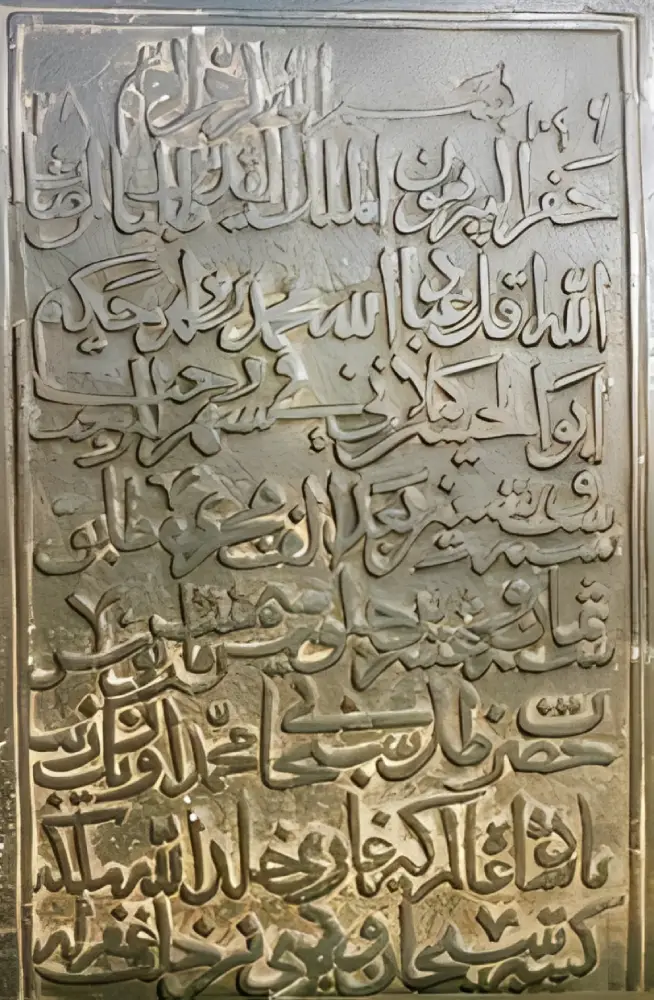
This Arabic inscription is embossed on a standing black-coloured stone measuring 1.5 ft × 2 ft. The inscription consists of nine equal lines, with the name of God in the uppermost line and the date given as 1096 AH. It records the digging of a well at Shakergarh in Mansoori during the 17th century AD.

According to tradition, during Aurangzeb’s reign there was a severe water scarcity in the Shakergarh area. When Mughal Emperor Aurangzeb learnt about it, he issued a royal order directing that a well be dug in the area. The well was excavated, and a foundation stone in the form of an Arabic inscription was erected at the site, mentioning, among other details, the name and title of the emperor as Hazrat Zill-e-Subhani Mohammad Aurangzeb Badshah-i-Alamgir.
It was during an archaeological survey of the area in 1966 that the State Archaeology Department recovered the inscription. It was subsequently placed on display in the archaeological gallery of the old SPS Museum at Srinagar.
(The author is a retired archeologist. Ideas are personal.)