by Dr Suheel Rasool Mir
Central and state governments can potentially elevate the Shina language by granting it due recognition within cultural academies, colleges, and universities. Such a step would enable scholars and students to engage with the rich historical legacy of the Dard tribe.
The Dards of Gurez and Ladakh, a people steeped in cultural richness, possess a language of remarkable depth, refined customs, ancient laws, and festivals rooted in antiquity.
In the rugged terrains of the Himalayas, the Shina language flows from the tongues of the Dards of Gurez and Kargil, binding their communities in a shared heritage. Yet, amidst these towering peaks, the terms “Dard” and “Shina” often intertwine, fostering a misconception that they are the same. Beneath this linguistic veneer lies a nuanced narrative of identity, geography, and language that distinguishes them.
Over centuries, the Dard tribe has woven itself into the cultural tapestry of the Himalayan belt, contributing traditions, customs, and a way of life that is distinctly their own.
Shina is more than a language; it is the sonic thread that stitches together the intricate histories, memories, stories, folklore, and expressions of the Dards. Though often used synonymously with “Dard,” the distinction is profound: Shina is the linguistic vessel through which the Dard people articulate, communicate, and safeguard their cultural heritage.
It is the lifeline of Dard existence, encapsulating their collective wisdom, narrative traditions, and the rhythms of everyday conversation. As a language, Shina stands as a testament to the linguistic diversity thriving in the shadow of Ladakh’s peaks and valleys.
Yet, complexity arises from the historical application of the term “Dard” to a multitude of communities across disparate regions. This has led to its conflation with the broader linguistic and cultural identity of the Dards, blurring the lines between tribe and tongue. In truth, while “Dard” signifies a tribal identity, Shina is the linguistic treasure chest that holds the essence of Dard communication, preserving the soul of a people through the power of words.
The word Dard carries a history as ancient as the mountains themselves, tracing its roots to a tribe mentioned in Sanskrit literature as Darada. Kalhana, in his seminal work Rajatarangini, the History of Kashmir, refers to them as Dardh, a people inhabiting the lands where the Shin community, still known as Dards, reside today.
Raza Amjad, a 57-year-old luminary from KarkitHaral, is not merely a teacher shaping young minds but also a guardian of the Dardic legacy. With an encyclopaedic knowledge of Dard traditions and history, he stands as a living repository of cultural wisdom, transcending the pages of textbooks to become a bridge between the past and the present. As a Shina poet, Raza weaves verses that capture the essence of the Dardic people, his words echoing the heartbeat of the community.
Dard is far more than a linguistic label; it signifies a distinct tribal identity, one that has flourished in the rugged terrains of Chilas, Astore, Chitral, Kohistan, and Gilgit, among others. Rooted in a rich historical tapestry, the Dard tribe has carved its identity across the vast Himalayan expanse.
The term itself is steeped in the region’s history, originally evoking a sense of fear and the formidable nature of the land. It was this essence of awe and intimidation that the word “Dard” came to encapsulate, a name as enduring as the mountains it describes.
The Dards are a people united by shared cultural, historical, and, in some cases, genetic ties. Bound together by common customs, traditions, and a collective sense of identity, they form an ethnic community defined by distinct social structures and historical connections. Shina, on the other hand, serves as a medium of communication and expression for those who speak it.
With its unique linguistic features, vocabulary, and grammar, Shina stands apart from other languages. While Dards across various regions may speak different languages or dialects, in areas where Shina is spoken, it is intricately linked to the local Dardic identity. In essence, the Dards are an ethnic group united by cultural heritage, while Shina is the language that resonates within certain Dardic communities, particularly in regions such as Gilgit-Baltistan, Jammu & Kashmir, and Ladakh.
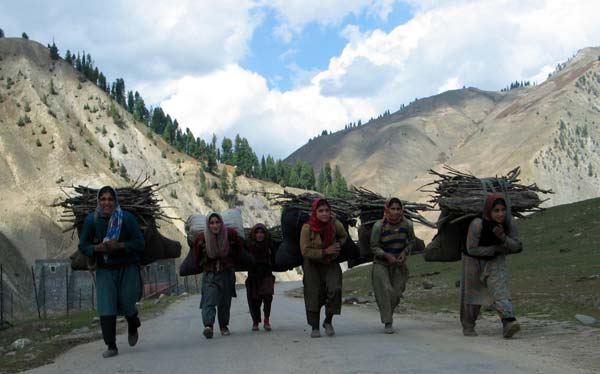
In terms of linguistic identity, the Dards of Gurez and Kargil proudly uphold their heritage through the Shina language. This linguistic thread weaves a rich tapestry, fostering a profound sense of cultural unity among the community. Alongside Shina, the Dards of Kargil are fluent in Balti and Urdu, a testament to centuries of historical interactions and cultural exchanges that have enriched the region’s linguistic landscape. The pure Shina language, spoken by the Dard community, exhibits subtle variations across its dialects, reflecting the intricate diversity within this cultural mosaic.
In regions such as Gurez, Drass, and Kargil, distinct dialects of the Shina language emerge, each bearing its unique linguistic characteristics.
In Gurez, the Shina language takes the form of the Gurezi dialect, marked by specific linguistic nuances that set it apart from other variants. Local influences and historical interactions have shaped the evolution of Gurezi Shina, crafting a linguistic identity that is distinctly tied to the Gurez region.
Masood Samoon (IAS), former Divisional Commissioner of Kashmir and a literary figure within the Dard community of Gurez is renowned for his efforts in developing and preserving the Shina language. His profound connection to his roots is evident in his extensive understanding of Gurez’s culture and traditions. Passionate about safeguarding and promoting the unique heritage of his homeland, Samoon has devoted himself to researching and documenting the Shina language and its historical narratives. His work details the importance of these elements in preserving the identity of his community.
The Astori dialect of Shina, spoken in the Astor region, incorporates cultural specificities and linguistic features that reflect the area’s local heritage. This variant illustrates how language is deeply intertwined with cultural intricacies, serving as a marker of distinct identity.
Similarly, inDrass, the Shina language manifests as the Drassi dialect, showcasing the linguistic diversity within the broader Shina framework. This variation includes phonetic differences, vocabulary distinctions, and unique expressions that resonate with the cultural context of the Drass region.
Mohammad Shafi Sagar, a 50-year-old teacher from the picturesque village of Girengu in Goshen, shines as a luminary in the realm of Shina culture and literature. A seasoned Shina poet, his verses intricately weave together the threads of tradition, capturing the essence of his cultural heritage. Beyond the classroom, Sagar has devoted himself to exploring the depths of Shina culture, traditions, and history. His dedication extends to preserving cultural treasures, as he has collected numerous ancient songs and translated them into Urdu.
In an era where globalization threatens indigenous cultures, Sagar stands as a beacon, guiding his community towards a future that honours its past. His influence reaches far beyond Girengu, resonating with Shina speakers and cultural enthusiasts across the Dardic region.
The preservation and promotion of the Shina language are vital, as languages often serve as conduits for cultural continuity. Shina plays a pivotal role in safeguarding the collective memory, wisdom, and identity of the Dard community. Its phonetic cadence echoes through the valleys, while its grammar binds together the stories of generations.
The relationship between Dard and Shina is symbiotic: the tribe finds its cultural resonance articulated through the linguistic contours of Shina. Dard, with its historical roots and tribal identity, stands as the guardian of a unique way of life, while Shina breathes life into this cultural narrative, allowing it to endure through the ages. Together, they form a harmonious chord in the symphony of Gurez’s and Ladakh’s linguistic and cultural diversity.
Central and state governments can potentially elevate the Shina language by granting it due recognition within cultural academies, colleges, and universities. Such a step would enable scholars and students to engage with the rich historical legacy of the Dard tribe. The Jammu and Kashmir Cultural Academy, for instance, could invigorate its Shina language centre by providing it with equal standing alongside other indigenous languages.
Furthermore, the establishment of Shina linguistic and cultural centres in Shina-dominant areas such as Gurez and Drasswould allow local communities and younger generations to reconnect with their historical roots through language and literature.

In the Union Territory of Ladakh, Shina speakers form a significant portion of the population, warranting proper representation and space within the Ladakh administration. Collaboration between the Shina community and the cultural academies of Jammu and Kashmir, as well as Ladakh, could effectively preserve and promote the Shina language, shielding it from erosion.
Such efforts would also help younger generations rediscover their ancient links, thereby highlighting the ethnic significance of the region in both Gurez and Ladakh. With robust research management and a practical approach, these initiatives could create repositories of heritage knowledge, disseminating crucial information about the region’s quest to reclaim and relive its historic and linguistic identity.
(The author’s work ‘Cultural Encyclopedia of the Dard Tribe: Journey Through Gurez and Ladakh’ is a sociological and anthropological resource on Dards. Ideas are personal.)