by Firdous Ahmad
Avalanches have repeatedly reshaped Kashmir’s history, destroying settlements, armies, and livelihoods, emerging as silent natural forces that influence geography, memory, and survival.
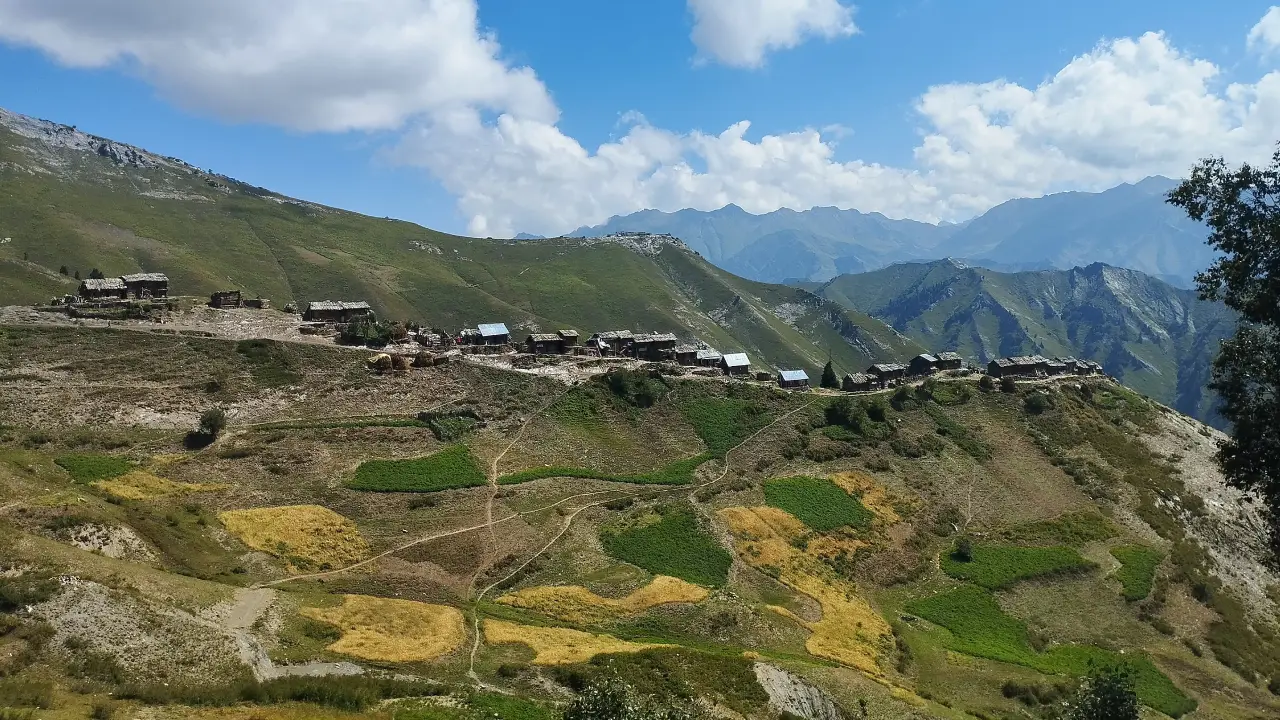
Nestled amid some of the highest and most unstable mountain ranges in the world, Kashmir lives under the constant shadow of snow and stone. For centuries, its people have learned to read the mountains, not only as sources of water, pasture, and beauty, but also as unpredictable forces capable of sudden and devastating violence. Among these natural threats, avalanches stand out as both seasonal and inevitable, recurring with grim regularity and shaping settlement patterns, travel routes, military campaigns, and collective memory.
Unlike floods or earthquakes, avalanches rarely announce themselves. They strike swiftly, often in remote valleys cut off from immediate help, burying entire hamlets, caravans, or battalions within moments. Tracing their presence across chronicles, colonial records, and modern disaster reports reveals how deeply entwined they are with the region’s environmental and human history.
The course of Kashmir’s society and history has also been shaped by natural disasters, in which floods, earthquakes, droughts, and similar calamities have played a major role. Avalanches, too, have their own distinct history. An avalanche is the sudden and rapid downslope movement of snow, ice, rocks, or debris under the force of gravity.
Broadly, avalanches are classified into three types: rock avalanches, snow avalanches, and ice avalanches.
Historical References
Avalanches are mentioned even in Kalhana’s Rajatarangini. The text refers to Vijayamalla, who once came under a massive avalanche and was killed in the Gurez or Tulail Valley. Stein writes:
“Vijayamalla began to lust for the throne and conspired to kill Harṣa. The conspiracy, however, leaked out and Vijayamalla had to seek refuge in the territory of the Daradas in the north of Kashmir, where he was welcomed by Vidyadhara Sahi, the Darada ruler; later, in an attempt to lead an expedition against Kashmir, Vijayamalla was killed by an avalanche.”
About 700 years ago, in 1320 CE, the Mongol warlord Zulchu invaded Kashmir. He set Srinagar on fire, and the situation deteriorated to such an extent that even the king of Kashmir fled to Kishtwar to save his life. Zulchu plundered the valley and enslaved its people. After eight months, while retreating with his army through northern Kashmir, a massive snow avalanche struck them in the mountains of Devsar. Zulchu and his entire force were buried and perished. In this way, it seems as though the mountains of Kashmir took revenge on behalf of their people.
Before 1947
Numerous references to snow avalanches are found in British-written gazetteers, administrative reports, and travelogues.
These sources also mention stone avalanches, which occurred frequently in Hunza and Gilgit. Over generations, local communities drew inspiration from this natural phenomenon, adapting the use of falling rocks from mountain slopes as a defensive tactic against invading forces. Darad soldiers would take cover on steep slopes, and when enemy forces passed below, they would unleash a rain of stones from above.
British travelogues identify the region between Razdan, Kamri, and Burzil Pass as the most avalanche-prone area, ironically, the same region where Vijayamalla had lost his life nearly nine centuries earlier. In Thirty Years in Kashmir, Arthur Neve writes about a camp near Kamri Pass called Murda Dafan (the burial ground), where a detachment of soldiers was buried alive by an avalanche.
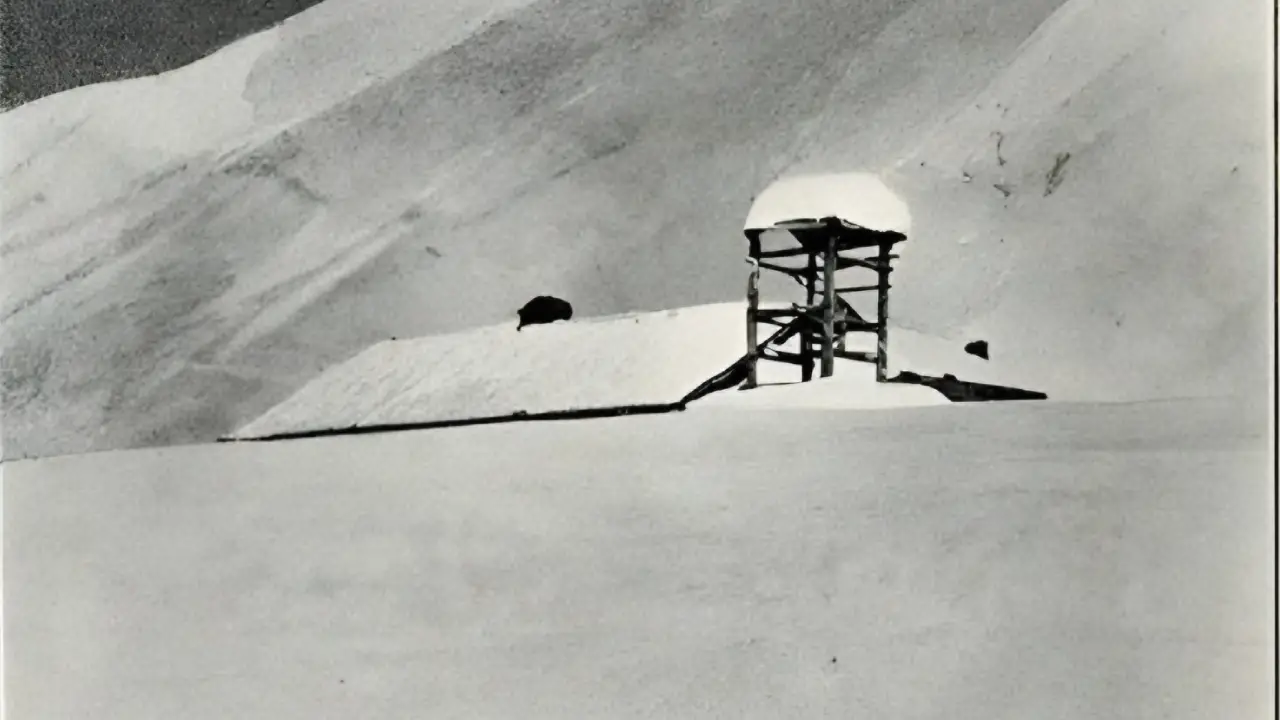
The British had a keen passion for ice skating, skiing, and mountaineering, but these pursuits were not without danger. Near the Rakhiot face of Nanga Parbat, a snow avalanche killed 17 people in 1937. A year earlier, on March 2, 1936, at Khilanmarg, three British army officers and a Kashmiri caretaker lost their lives when an immense avalanche completely engulfed a hut along with the surrounding trees. The pressure wave from this avalanche was reportedly felt in Srinagar, nearly 30 miles away.
In the first week of March 1936, a series of snow avalanches, triggered by heavy snowfall, devastated parts of north Kashmir and Gilgit-Baltistan. The worst-affected areas included Gurez, Karnah, Uri, Bunji, and Hajibal, where hundreds were buried. News of the disaster took weeks to reach Srinagar. Gurez alone recorded 110 deaths, while Karnah reported 86 fatalities by 12 March. Dozens more were killed in Teetwal, Uri, and surrounding villages, many of which were destroyed along with homes and livestock.
Recent Events
After 1947, several large-scale snow avalanches have caused devastation across Kashmir and its surrounding regions. Some notable examples include:
Refugee Village, Gurez: In the 1980s, a snow avalanche struck the Kilshay Valley, trapping fourteen porters from Refugee Village; twelve lost their lives. In 2009, three people from the same village were caught in another avalanche, resulting in one fatality.
1995 Jawahar Tunnel Disaster: On the night of 14–15 January, multiple avalanches struck the Srinagar–Jammu highway, killing 62 people, many of them passengers trapped in vehicles.
1998, Drass (Ladakh): A snow avalanche killed 51 people in Kharbu village.
February 2005, Waltengoo, Kulgam: Following massive snowfall of up to 4.5 meters, an avalanche killed 180 people, one of the deadliest such disasters in Kashmir’s history.
2010 Gulmarg Incident: A massive avalanche hit an army training center, killing 17 soldiers.
Gurez Avalanche Accident (25 January 2017): A series of four avalanches claimed the lives of 24 people, including 20 soldiers and four civilians.
February 2024, Gulmarg: An avalanche killed two Polish skiers.
These events remain among the deadliest avalanche disasters in the region’s recorded history. The scale of destruction has left a lasting mark on Kashmir’s collective memory.
Conclusion

From Kalhana’s chronicles to modern disaster reports, avalanches emerge not merely as natural accidents but as historical actors—silent, impartial, and devastating. They have altered the outcomes of invasions, wiped out communities, and repeatedly exposed the vulnerability of those living and travelling in high-altitude terrain. In many ways, they underscore a central truth of Kashmir’s past: that human ambition, whether imperial, military, or recreational, has always had to contend with the unforgiving realities of its geography.
As climate change alters snowfall patterns and increases the frequency of extreme weather events, the threat of avalanches is likely to grow rather than recede. Remembering past disasters is therefore not an exercise in nostalgia but a necessity, one that can inform preparedness.
(The author is a postgraduate student of History. Ideas are personal.)