SRINAGAR: The Government of India on Tuesday said it has put in place a coordinated, multi-sector response to maintain fuel availability, stabilise aviation operations and ensure the safety of Indian nationals amid the ongoing conflict in West Asia.
At a high-level media briefing held at the National Media Centre, officials from key ministries, including Civil Aviation, Petroleum and Natural Gas, External Affairs, and Shipping, outlined measures taken to mitigate disruptions triggered by widespread airspace closures and supply chain pressures.
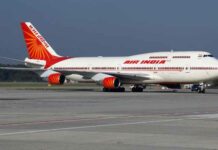
The Ministry of Civil Aviation said the aviation sector is facing “serious operational and financial challenges” due to restrictions across several West Asian countries, including Iran, Iraq, Israel, and the Gulf region. Despite this, Indian carriers have managed to sustain operations by rerouting flights, even as travel time to Europe and North America has increased.
To ease operational strain, the Directorate General of Civil Aviation (DGCA) has temporarily relaxed pilot duty time norms, while foreign airlines such as Emirates and Kuwait Airways have been allowed to operate cargo-only passenger flights to maintain supply chains. The government also intervened in Aviation Turbine Fuel pricing, helping keep domestic airfares stable.
The Ministry of Petroleum and Natural Gas assured that petrol, diesel and LPG supplies remain adequate across the country despite volatility linked to the Strait of Hormuz. Refineries are operating at high capacity, and retail outlets are functioning normally with no reported shortages.

To shield consumers, the government reduced excise duty on petrol and diesel by Rs 10 per litre, while imposing export levies on diesel and ATF to ensure domestic availability. Authorities have urged citizens to avoid panic buying and rely on official information.
Enforcement actions have been intensified nationwide, with over 4,300 raids conducted and more than 1,200 LPG cylinders seized in a single day. Oil marketing companies have issued over 1,700 notices and taken action against erring distributors.
States and Union Territories have activated control rooms and district-level monitoring committees under the Essential Commodities Act to prevent black marketing and ensure equitable distribution.
The government is accelerating the shift to cleaner fuels such as piped natural gas (PNG), with priority supply ensured for domestic households and transport sectors. Regulatory reforms and fast-track approvals have been introduced to expand city gas distribution networks, while incentives are being offered for new PNG connections.
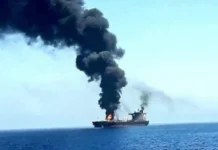
The Directorate General of Shipping reported that all Indian seafarers in the Persian Gulf region are safe, with no incidents involving Indian-flagged vessels in the past 24 hours. A 24×7 control room continues to monitor developments and has facilitated the repatriation of over 1,600 seafarers so far.
Port operations across India remain normal, with no congestion reported.
The Ministry of External Affairs said it is maintaining round-the-clock coordination with Indian missions in West Asia to assist citizens affected by travel disruptions. Since late February, around 7.6 lakh passengers have travelled from the region to India through scheduled and special flights.
Indian missions have facilitated evacuations through alternative routes, including transit via neighbouring countries, and are supporting students, workers and seafarers with logistics, documentation and advisories.
The government reiterated that while the situation remains dynamic, all necessary steps are being taken to ensure energy security, passenger safety, and uninterrupted essential services across sectors.