SRINAGAR: The detection of the highly invasive weed Parthenium hysterophorus L in an agricultural field in Srinagar has prompted Sher-e-Kashmir University of Agricultural Sciences and Technology of Kashmir (SKUAST-K) to call for early surveillance and containment to prevent the species from gaining a foothold in Kashmir’s temperate agro-ecosystems.
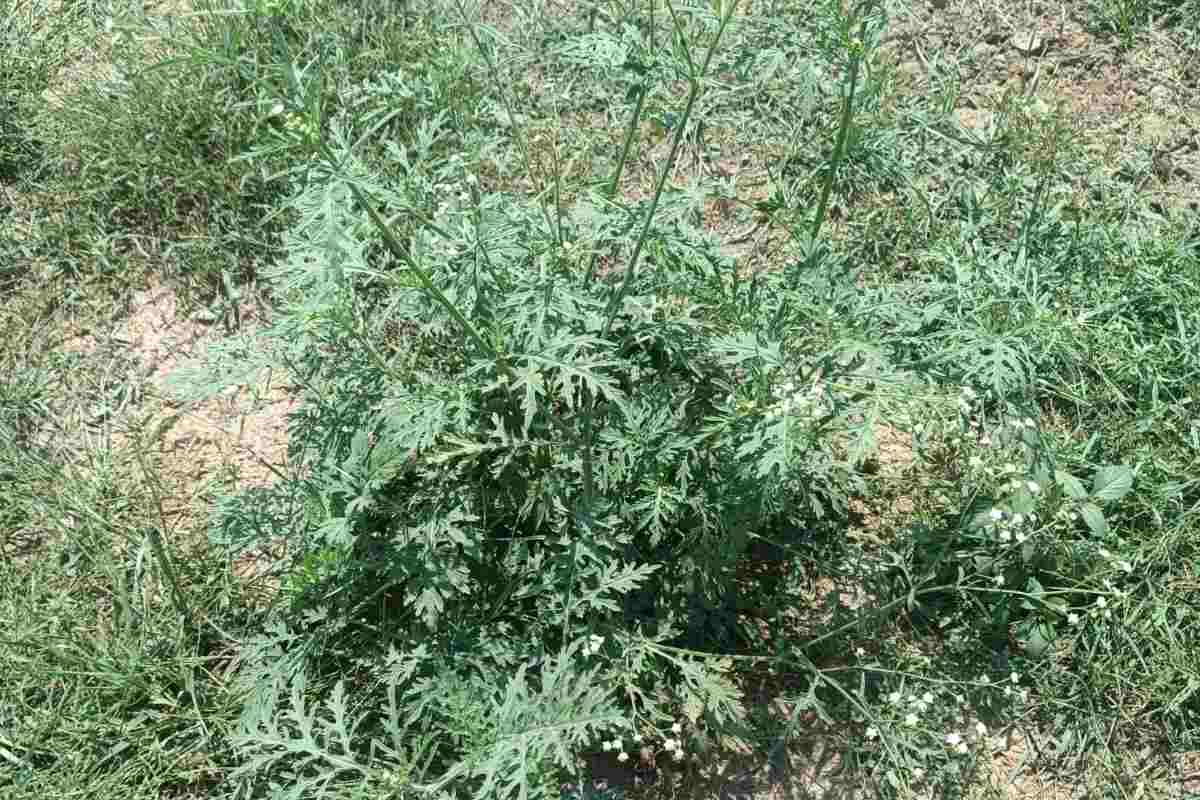
The university scientists have described the finding as an early-warning signal rather than a cause for panic, but cautioned that the weed’s ability to complete its entire life cycle in Kashmir’s climate makes early detection and eradication particularly important.
The warning comes as recent research has established that Parthenium hysterophorus can successfully adapt to Kashmir’s temperate conditions. Its seeds can survive winter in the soil, germinate from late March to early May, and develop into flowering plants capable of producing viable seeds before severe autumn frost sets in.
The finding in Srinagar was reported by SKUAST-K scientists Prof Purshotam Singh, Agronomist; Prof Amal Sexana, Agronomist; and Prof Raihana Habib Kanth, Director Extension, SKUAST-K and Agronomist.
Belonging to the Asteraceae family, Parthenium hysterophorus is an annual weed regarded globally as one of the most aggressive invasive plant species. Its rapid growth, prolific seed production and strong competitive ability allow it to displace other vegetation. The plant also produces allelopathic compounds that can inhibit the growth of neighbouring crops and native plants.
For Kashmir’s agriculture, the concern extends beyond individual fields. An established population could compete with crops, affect native plant communities and alter disturbed habitats, while making subsequent control considerably more difficult.
The university experts said farmers and agricultural stakeholders should therefore pay particular attention to the early identification of unfamiliar weeds in fields, field margins and other disturbed areas. They stressed that a small, newly detected population provides an opportunity for containment before the species becomes widely established.
The weed is capable of travelling considerable distances through a variety of pathways. Contaminated soil, agricultural machinery, moving water, vehicles and contaminated seed or animal-feed supplies can all facilitate its spread, making field-level vigilance important even in areas where the plant has not yet been recorded.
Scientists also pointed to seasonal warming as a potential factor that could favour the weed’s expansion. If warmer conditions lengthen the period during which the plant can grow and reproduce, its chances of establishing persistent populations could increase.
Parthenium is not entirely new to Jammu and Kashmir. Historical records have documented its occurrence in the region. However, the latest observation in Srinagar assumes greater importance because it is accompanied by evidence from recent research that the species can reproduce successfully under Kashmir’s temperate climatic conditions.
The university has consequently called for an integrated management approach rather than waiting for the weed to become widespread. Such a strategy would involve regular surveillance, early identification, mechanical removal or targeted eradication of detected plants, and continued monitoring of affected and surrounding areas.
The scientists said coordinated action by farmers, agricultural agencies and researchers would be critical. Early intervention, they noted, offers the best chance of preventing an isolated occurrence from developing into a wider agricultural and ecological problem for Kashmir.