SRINAGAR: A plant known as ‘false garlic’, an alien weed that can be difficult to eradicate because it reproduces prolifically through underground bulblets and seeds, has been recorded in Jammu and Kashmir for the first time, with researchers finding it growing luxuriantly at several locations in Jammu district. The researchers warn that its ability to produce numerous bulblets could allow it to spread rapidly into nearby areas, and call for a fresh assessment of its potential ecological and agricultural risk.
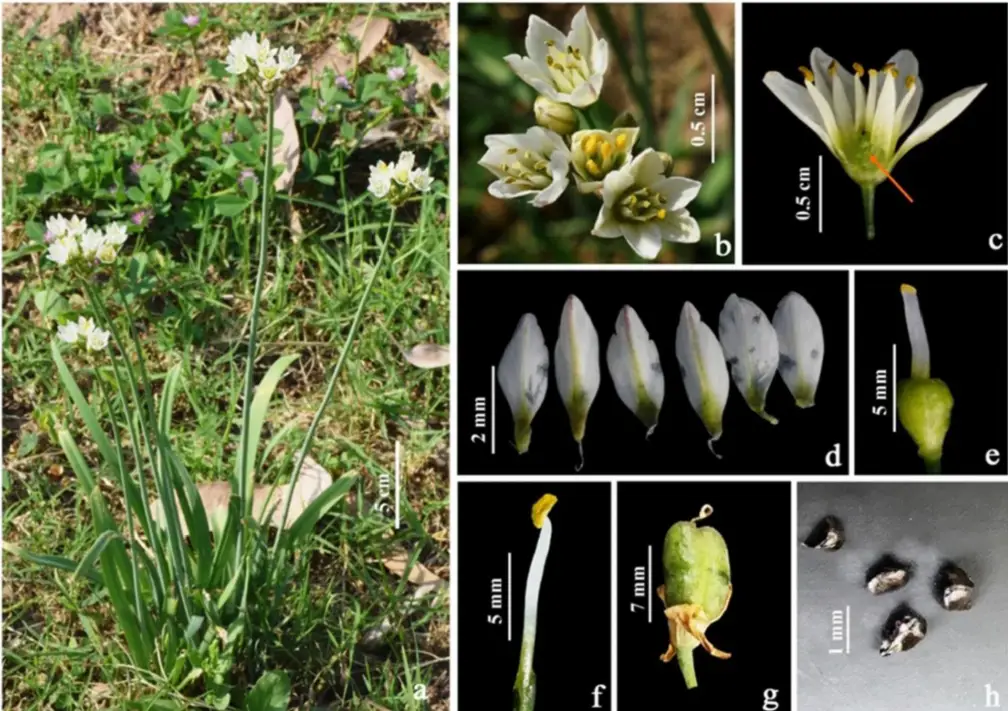
The finding concerns Nothoscordum gracile (Aiton) Stearn, commonly known as false garlic or fragrant false garlic, a member of the flowering plant family Amaryllidaceae. The study, published as a Brief Report in Discover Plants, establishes the species as a new addition to the flora of Jammu and Kashmir and the Western Himalaya.
The paper, Nothoscordum gracile (Aiton) Stearn: a new alien plant record for Jammu and Kashmir, was authored by Sajan Thakur, Bhavana Sharma, Udhay Sharma, Romica Verma, Veenu Kaul and Sunit Singh. Thakur is with the Department of Botany, HBJU Herbarium, University of Jammu; Sharma, Verma and Kaul are with the Biosystematics Laboratory, Department of Botany, University of Jammu; Udhay Sharma is with the Plant Cytogenetics and Reproductive Biology Laboratory, Department of Botany, University of Jammu; and Singh is with the Garhwal University Herbarium, Department of Botany and Microbiology, HNB Garhwal University, Srinagar (Garhwal), Uttarakhand.
The study was was published in 2025 in Discover Plants by Springer Nature.
First Record
The researchers encountered garlic-like plants during field explorations and identified them as Nothoscordum gracile after detailed examination. The species had not previously been documented in Jammu and Kashmir, making the finding the first recorded occurrence of the plant in the Union Territory.
Specimens were collected from Lale da Bagh and the Botanical Garden of the University of Jammu. The researchers systematically analysed and photographed the plants and prepared herbarium specimens, which were deposited in the Herbarium of the Department of Botany, University of Jammu (HBJU). Identification was carried out by comparing the specimens with published botanical literature and floras, as well as online databases including Plants of the World Online, World Flora Online and The Plant List.
Two specimens cited in the study were collected in April 2024. One was collected by Sunit Singh from roadsides and fallow land at Lale da Bagh, Muthi, at an elevation of 316 metres, while another was collected by Sajan Thakur from the experimental lawns of the University of Jammu Botanical Garden at 349 metres.
Fake Garlic
The species is a slender, perennial, bulbous plant growing between 20 and 70 cm tall. Its bulbs can occur singly or in clusters and may produce around 15 to 30 small bulblets. It has linear-lanceolate leaves and produces umbels containing between five and 15 flowers. The flowers are white with a pink or green tinge and measure about 1 to 1.5 cm across.
Its similarity to garlic and onion is of particular significance. The researchers cite earlier work showing that N. gracile can be difficult to distinguish from onion and garlic during its vegetative phase. This resemblance could make its detection and eradication from cultivated fields more difficult if the plant spreads into agricultural areas.
The plant flowers in Jammu between March and April and fruits between April and May. The researchers note that flowering periods can vary according to microhabitat and climatic conditions.
Already Widespread
The researchers say N. gracile has been found at several localities in Jammu district, where its growth is described as ‘quite luxuriant’. It occurs in open areas, roadsides, gardens and other disturbed habitats at elevations ranging from 300 to 550 metres above sea level.
The species was found growing alongside several other plants, including white clover (Trifolium repens), Oxalis debilis, Bidens bipinnata, Oplismenus burmannii, black nightshade (Solanum nigrum), Bermuda grass (Cynodon dactylon), Dichanthium annulatum, sow thistle (Sonchus oleraceus), Jurinea heteromalla and Rumex dentatus.
The concern arises principally from the plant’s reproductive capacity. Its numerous underground bulblets act as perennating organs and allow dense colonies to develop. The researchers note that its prolific reproduction through both bulblets and seeds gives it the ability to encroach upon cultivated fields, disturbed habitats, roadsides and gardens.
Eradication Difficult
The paper cites the California Invasive Plant Council in describing N. gracile as highly invasive and difficult to manage. Simply pulling the plant out may not be sufficient because the operation can disperse its small bulblets through the soil, potentially encouraging further multiplication. The study says the more effective approach is to excavate the entire plant along with the surrounding soil.
The researchers also point to the plant’s perennial and bulbous nature and its prolific seed production. These characteristics enable it to survive and colonise barren land, waste areas, neglected spaces, disturbed landscapes and gardens.
The study records an important qualification. Although earlier research assigned the species a weed-risk score of 14, the authors say a more rigorous assessment is required before it can be classified as a serious weed in Jammu and Kashmir. The earlier assessment was made in 2015, and the researchers argue that several parameters may have changed over the intervening decade.
The conclusion therefore calls for a ‘multipronged evaluation’ of the species to determine its present potential risk and develop appropriate control and management strategies.
An Alien In Jammu
Nothoscordum gracile is native to parts of the Americas, with its natural range extending from the United States and Mexico through Central and South America. It has subsequently been introduced to numerous countries across several continents, including Australia, parts of Africa and Europe. In India, it has previously been reported from Arunachal Pradesh, Delhi, Maharashtra, Nagaland, Punjab, Uttarakhand and Uttar Pradesh.
The species was first recorded in India from Punjab, and subsequent reports established it as naturalised in wastelands there. The authors note that the literature remains unclear about how the plant was originally introduced into India.
Earlier Indian research by Pandey and colleagues had documented N. gracile in northern and north-eastern India and described it as the only species of the genus reported from the country. The present study extends its known distribution to Jammu and Kashmir.
Why It Matters
The significance of the finding lies less in the presence of an unfamiliar flowering plant than in what its establishment may mean for Jammu’s flora. The researchers have documented the species in multiple sites, observed vigorous growth and recorded its capacity to reproduce through numerous bulblets. They therefore argue that its distribution, ecology and potential impact now need to be monitored rather than treating the finding merely as an isolated botanical record.
The authors say further research is needed on the plant’s ecology, distribution, control and management. At the same time, they caution against prematurely describing it as a serious weed without a more comprehensive risk assessment.