by Syed Zeeshan Jaipuri
This crisis will not be resolved through reactive measures after suicides occur. It demands a cultural reconstruction of how Kashmir defines success, childhood, and education.
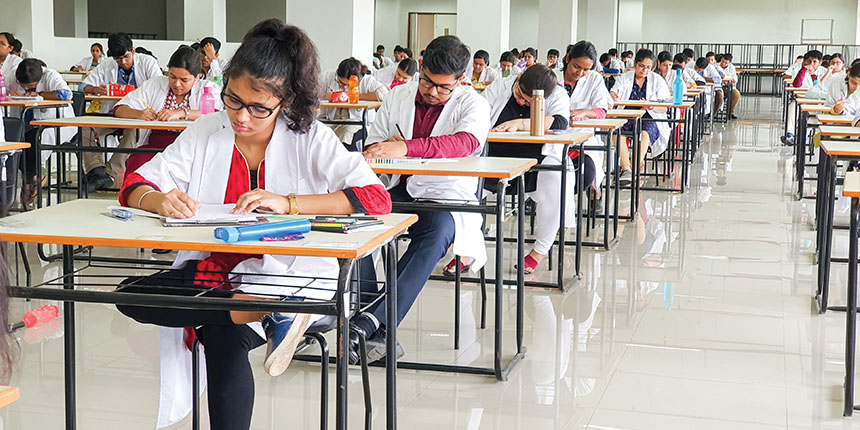
As war looms overhead and uncertainty drapes itself over the valley like a second skin, the results of Class 10 and 12 examinations were declared in April 2025. That same day, a student in South Kashmir died by suicide. He had failed by numbers, not by potential. Yet, while his family mourned in silence, the region around them erupted in celebration. Toppers were congratulated by news anchors, garlanded by politicians, and sermonised by scholars. There was no mention of the dead.
Some forms of violence do not wear uniforms. They arrive in school reports, in whispered comparisons, in the silence that follows failure. In Kashmir, where language has long been shaped by conflict and grief, there is another struggle we rarely name: the war between a child and their worth. It is fought in examination halls, tuition centres, and the dark rooms of self-doubt. Over the last five years, dozens of student suicides have been reported across Jammu and Kashmir, many within days of board or competitive exam results. Some names became hashtags. Most became silent.
This essay does not mourn in abstraction. Instead, it asks: what kind of society manufactures this despair so efficiently? What cultural conditions, policy vacuums, and psychological fractures come together to convince a sixteen-year-old that they have no future beyond a failed score?
The Tyranny of Perfection
Psychologist Paul Hewitt describes perfectionistic self-presentation as a condition where individuals feel compelled to appear flawless to be accepted. In Kashmir, this perfection is not merely personal, it is institutionalised. The education system, shaped by family aspirations and media sensationalism, trains children to conflate identity with academic performance.
By Class 10, most students are pushed into two streams: medical (PCB) or engineering (PCM). This choice, often made without aptitude testing or counselling, is treated as a moral obligation rather than an intellectual decision. Failure, then, is not seen as a temporary academic outcome but as a collapse of social value.
A 2021 study published in the Indian Journal of Mental Health identifies performance-based identity as a predictor of anxiety and suicidal ideation in adolescents. The pressure to perform becomes existential. Students begin to believe they are only as valuable as their last grade. And because society offers no alternative forms of success, no vocational encouragement, no artistic scaffolding, no dignified non-academic paths, the fall feels like annihilation.
In Kashmir, this pressure is intensified by generational trauma. For many parents, education is the only imagined escape from political and economic precarity. So when a child does not “make it,” the family’s imagined future breaks with them.
A Crown and a Casualty
In the same week as the tragedy in South Kashmir, media houses and religious leaders busied themselves with congratulating the top scorers. Posters were printed. Television channels ran ticker-tapes of 99 per cent. One cleric likened a topper to “a crown on the head of the nation.” There was no mention of the dead.
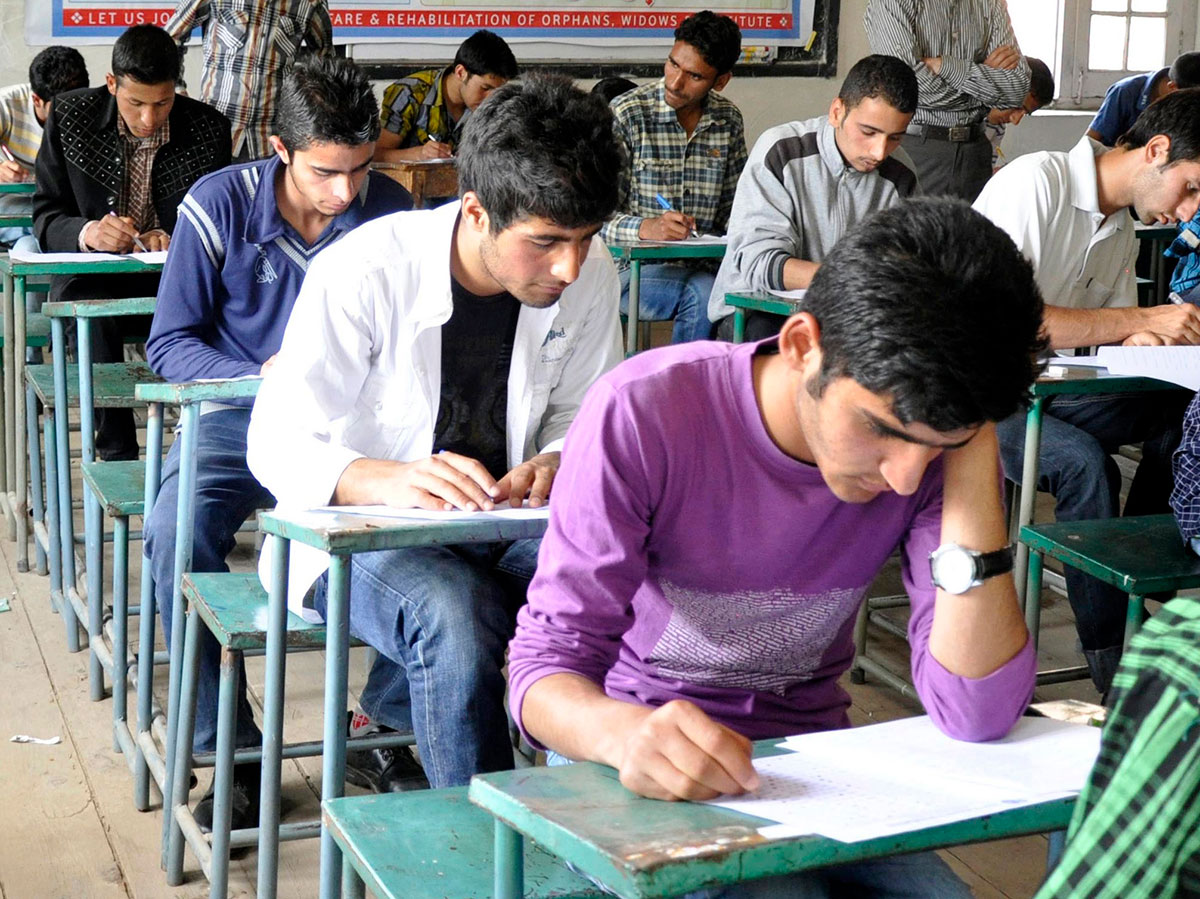
Sociologist Emile Durkheim, in his foundational study on suicide, defined anomic suicide as the consequence of societal disintegration, when norms collapse and individuals are left without guidance or belonging. Yet Kashmir’s condition is not one of normlessness; it is one of hyper-normalisation. Here, failure is not ambiguous, it is condemned. The line between worth and worthlessness is sharply drawn. The “best” are deified; the rest are forgotten.
In one recent case, a student was mistakenly declared a topper due to a technical glitch. She was interviewed by the media, congratulated publicly, and held up as a model, only to discover the following day that she had not even qualified. The backlash was immediate. Accused of manipulating the system, she was mocked online. Eventually, she came forward, visibly shaken, and pleaded with the public to end the harassment. What failed here was not merely an algorithm. It was a collective failure of empathy, enabled by a media culture that exalts achievement not as a reflection of potential, but as a form of social capital.
The Silence of Grief
In Kashmir, success is not simply applauded, it is weaponised against those who do not possess it. There is no therapist in the average school. Few teachers are trained in emotional intelligence or trauma-informed practice. Mental health remains something “outside the syllabus.” This is no minor omission. Children grow up with a layered inheritance of anxiety, fear, and grief. Add to this an exam-centric academic model, and the result is catastrophic.
Children internalise not only the expectation to perform but also the inability to speak of the psychological cost of that performance. Studies in trauma-informed education suggest that children exposed to chronic stress are more likely to exhibit avoidance behaviours, emotional withdrawal, or hypervigilance, all of which are frequently misread as disobedience or laziness in rigid classrooms.
A 2022 UNICEF report on mental health in South Asia found that Kashmiri adolescents experience rates of anxiety and depressive symptoms significantly above the national average. Yet fewer than 10 per cent reported receiving any form of psychological support. In this culture, even mourning must be done silently. And if grief has no language, how does a child name their pain before they decide to end it?
Cultural Reconstruction
This crisis will not be resolved through reactive measures after suicides occur. It demands a cultural reconstruction of how Kashmir defines success, childhood, and education.
Introduce positive psychology frameworks in schools. Teach resilience, self-compassion, and emotional intelligence alongside academic subjects. Schools in Australia and the Netherlands that implement Seligman’s PERMA model report improvements in both mental health and academic performance.
Equip teachers with the tools to recognise and respond to trauma. The HEARTS programme in San Francisco demonstrated measurable improvement in student engagement and emotional safety through such an approach.
Beyond Scores and Streams
Reform must begin with career counselling. Aptitude testing after Class 10 ought to be institutionalised, expanding access to career paths beyond the binaries of medicine and engineering. The dignity of diverse choices must be affirmed, not merely tolerated. When students are offered alternatives that reflect their talents and interests, rather than imposed aspirations, education becomes liberation rather than a burden.
Mental health support must extend into communities. Local NGOs, religious leaders, and trained para-counsellors must collaborate to create safe, culturally resonant spaces. Community-based models, such as those piloted in Kashmir through UNICEF’s Life Skills Education programme, have shown promise in addressing psychological distress at the grassroots. Embedded in local idioms and trusted networks, these initiatives offer a rare antidote to institutional silence.
The media, too, bears responsibility. Ethical standards must be enforced to curb the glorification of toppers and the sensationalism of results. Stories of perseverance must be prioritised over tales of perfection. A child who continues after failing deserves as much recognition as one who excels on the first attempt. In this context, reporting becomes not a spectacle, but a service.
This is not merely a plea for reform. It is an indictment of a cultural malady. We must cease asking why a child took their own life and begin to ask: Who taught them that failure was fatal? Who convinced them that silence was safer than struggle? Who handed them pressure, yet withheld comfort?
A society is not measured by its celebration of toppers but by its response to those who stumble. Let this essay stand not as a memorial, but as a mirror. And let us look into it, even if it wounds.
(The author is a poet based in Srinagar. Ideas are personal.)