by Muazam Khursheed
A candid review of KK Venugopal’s memoir tracing his accidental entry into law, formative struggles, landmark cases, international work, and reflections on judicial reform and responsibility.
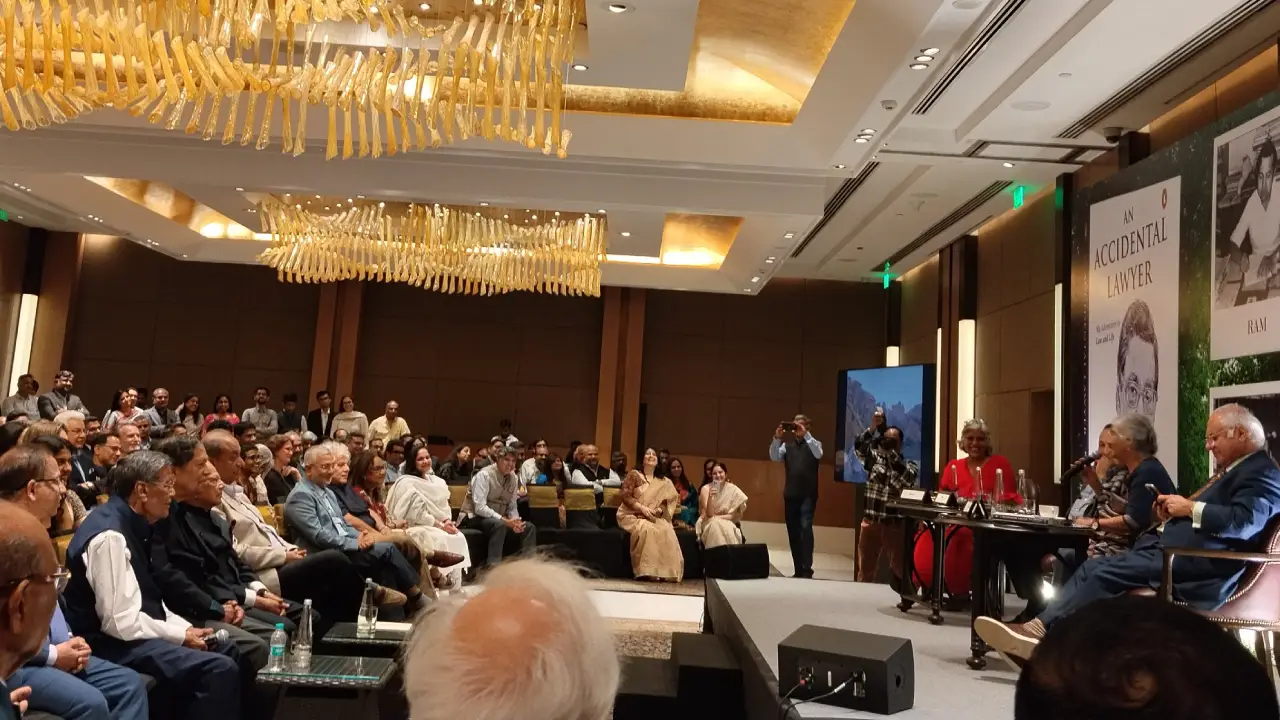
Born in 1931 in a small village in Kerala, KK Venugopal came from a joint family house with seven siblings. His father, MK Nambiar, was practising in the district court in Mangalore and had left a few months earlier for England to instruct Queen’s Counsel in his family’s case against another powerful Tharavad. When he returned to India after winning the case, the family also came back to Mangalore, which was the district headquarters.
On his return, his father was appointed the public prosecutor and government pleader, and they lived there for about 11 years before shifting his practice to the Madras High Court.
He describes Mangalore, though now a flourishing cosmopolitan city, as in the 1930s a small town with mostly mud roads, without municipal sewage or running water. The population consisted of Roman Catholics, Gouds, Saraswats, and other Hindus and Muslims, all of whom lived in total harmony. At the time, Mangalore was a calm and peaceful place, a description that carries a sense of nostalgia and sets a gentle, almost reflective tone for what follows.
An Accidental Entry into Law
In 1947, his father made the decision to shift his practice from the district court in Mangalore to the Madras High Court. Justice P Gopalakrishnan, who had just been elevated to the Madras High Court, asked his father if he would take over his practice. This was indeed a great opportunity, and his father eagerly agreed.
The family shifted to Madras, and he joined the Madras Christian College for his senior intermediate. He passed the senior intermediate exam but failed in his BSc exam: “Once I failed, I had no option but to sit at home,” he writes. There is a certain candour in this admission, a quiet acknowledgement of failure without embellishment.
Completely by accident, his father came across an advertisement in the newspaper for a two-year intermediate LLB course at the Raja Lakhamagouda Law College, Belgaum. Every other college required one to be a graduate before studying law, except this one. Therefore, his father asked him if he would be interested in pursuing law. In those days, he was like a “leaf, tossed wherever the winds took him.” The only thought that crossed his mind was that it would be an excellent opportunity to escape the confines of home and experience a taste of freedom. Thus began his “tryst with the legal profession.” The “accidental” nature of his entry into law becomes evident here.
Carefree Years and Turning Point
He further describes his college days as a time of great fun at the hostel. He notes that they rarely attended classes and would go to college mainly to play “table tennis and carom.” He often teasingly tells his wife that those two years were the happiest years of his life. He adds, by way of digression, that his habit of smoking cigarettes began in college, influenced by his peers and the perception that it was the stylish thing to do. This phase adds a human, almost carefree dimension to an otherwise serious journey.
He notes that despite having spent most of his college life on things other than the study of law, he did manage to graduate on 25 January 1954. Immediately after completing his law course, he enrolled in the Mysore High Court, as he could not then enrol at the Madras High Court due to the internship requirement. After completing a year, he enrolled in the Madras High Court on January 27, 1955.
He frankly admits that he initially remained careless and quite lazy about practising. His father then took it upon himself to discipline him, making him sit in court daily to observe arguments. However, he often slipped away to spend time with friends.
To correct this waywardness, he writes that his father devised a method to compel him to work by assigning him a complex case brief. Initially unable to understand it, he sought help and then studied it thoroughly out of self-respect. When the client returned, he impressed him with his grasp of the subject. Thereafter, his father began entrusting him with more briefs. With no option but to work sincerely, he began studying cases in depth, eventually developing a strong sense of responsibility towards clients. This clearly marks a turning point in his professional life.
The Tis Hazari Incident
The book then moves to an important and striking episode where he recounts the 1988 incident in which a lawyer was handcuffed by the Delhi police, triggering widespread outrage among the Tis Hazari Bar. Lawyers gathered at the office of Kiran Bedi, then Deputy Commissioner of Police (North). While the lawyers claimed the protest was peaceful, she ordered a lathi charge, resulting in injuries.
He further notes that a mob of around 2,000 people descended upon Tis Hazari, vandalising chambers and property. This led to nationwide protests and a strike call by lawyers. A committee headed by Justice D.P. Wadhwa was constituted to inquire into the incident. He appeared before the lawyers before the committee. Kiran Bedi presented a strong defence. He remarked, “Listening to her, I was almost convinced until I checked the facts from the records and found she was right.” The committee later held that the lathi charge was “brutal and merciless” and found her conduct unjustifiable. This episode reflects the tense and often adversarial relationship between state authority and the legal profession.
Rise to the National Bar
Moving forward, he writes about his foray into the national and international bar. In 1984, while serving as Additional Solicitor General, he was nominated to attend the American Bar Association conference in Chicago in place of the Attorney General. His international engagement deepened over time, and in 1996, he was unanimously elected president of the UIA and SAARCLAW. He recounts his journey from being invited to speak in Switzerland to establishing the India chapter of the UIA and rising within its ranks. Despite language challenges, he actively participated in global legal forums and travelled extensively.
As president of SAARCLAW, he fostered cooperation among lawyers and judges from SAARC countries. He highlights how initial distrust, especially between Indian and Pakistani participants, gradually gave way to collaboration and friendship. He recalls a conference in Karachi where visible tension existed between Nawaz Sharif and Chief Justice Sajjad Ali Shah, yet emphasises that SAARCLAW helped build enduring professional relationships. This underscores the ability of legal dialogue to transcend political divisions.
Foray Into the International Bar
Later, he reflects on his experiences advising foreign governments. His association with international legal bodies led to his involvement in Bhutan, Nepal, and Sri Lanka.
In Bhutan, he assisted in drafting a Constitution aimed at establishing a democratic constitutional monarchy. He worked closely with Chief Justice Sonam Tobgye and met King Jigme Singye Wangchuk, whom he describes as visionary and selfless in ceding powers to the people. He contributed to key constitutional aspects and later received a letter of appreciation from the King. This phase highlights his role beyond national boundaries and his contribution to constitutional development abroad.
In Nepal, he was consulted during the process leading to the 2015 Constitution and participated in discussions with senior officials, including the President.
In Sri Lanka, he advised on resolving the conflict with the LTTE. He concluded that the LTTE’s demands amounted not to devolution but to a transfer of sovereignty, particularly due to their insistence on control over territorial waters and customs. His views were shared by others and conveyed to the President. He also recounts a personal anecdote involving a gift of Noritake crockery arranged by the President. The narrative ends on a sombre note with the assassination of Lakshman Kadirgamar, which he describes with deep sadness, calling it a tragic loss for Sri Lanka.
A Missed Opportunity
He then briefly touches upon the National Judicial Appointments Commission, describing it as a missed opportunity for judicial reform. He notes that the Supreme Court of India has often been regarded as one of the most powerful courts in the world, with the Constitution conferring vast powers upon it. Over the years, through an expansive interpretative approach, the Court has widened its jurisdiction and exercised significant influence within India’s democratic framework. Given this outsized role, he observes that appointments to the Supreme Court and High Courts naturally attract serious constitutional attention from all branches of government, as well as from the legal community and the public.
He explains that for the first two decades after independence, the system functioned well, with judges of great erudition and integrity being appointed. However, he notes that things began to unravel in the 1970s, when controversial developments undermined judicial independence. Judges were superseded for decisions against the government, and there were open calls for a “committed judiciary” aligned with the government’s ideological goals. This period marked a serious strain on institutional independence.
He then traces the judicial response in the post-Emergency era, particularly through the First Judges Case in 1981. In that case, the argument that “consultation” should mean “concurrence” was rejected, with the Court relying on constitutional debates, including Dr. BR Ambedkar’s caution against granting veto power to a single authority. However, this position did not remain settled.
In the 1990s, the issue resurfaced, culminating in the Second Judges Case in 1993, where the Supreme Court reversed its earlier stance and established the collegium system, giving primacy to the judiciary in appointments. This marked a decisive shift in the balance of power.
He then moves to the developments of 2014, when a rare political consensus led to the 99th Constitutional Amendment and the creation of the NJAC. The Commission, consisting of members from both the judiciary and the executive, along with eminent persons, was intended to introduce transparency and broader accountability into the appointments process. In his view, it represented a balanced mechanism addressing concerns around opacity in the collegium system.
However, the narrative takes a critical turn when he notes that in 2015, the Supreme Court struck down the NJAC in the Fourth Judges Case, invoking the basic structure doctrine and holding that the inclusion of non-judicial members diluted judicial primacy and thereby threatened judicial independence. He finds this conclusion difficult to comprehend and characterises the decision as a setback to meaningful reform.
He concludes by suggesting that the issue is significant enough to warrant reconsideration by a larger bench of the Supreme Court, much like earlier judgments on judicial appointments had themselves been revisited. This reflection reveals his broader concern with maintaining both independence and accountability within the judiciary.
Son versus Father
He then turns to a deeply personal and engaging chapter titled “Son versus Father and Father versus Son,” where he reflects on the rare experience of facing his own family in court. He recalls an incident in Madras when, despite knowing his father was appearing on the opposite side, he accepted a brief simply for the thrill of arguing against him. He prepared thoroughly, knowing how formidable his father was, but in court found himself unsure of how to even address him, choosing instead to avoid referring to him altogether. That very evening, his father suggested a simple rule: whoever was briefed first, the other would not appear against them.
Years later, he imposed the same rule on his son, Krishnan Venugopal, only to admit that he himself ended up breaking it. In one instance, he appeared against his son in a property dispute, persuaded partly by his juniors and the presence of one of the clients, John Abraham. He even chose not to inform his son beforehand, leading to a moment of surprise in court.
The second instance came when he was Attorney General for India, where he appeared for the Government of India in a case argued by his son. This time, he justified it as a matter of duty, one that could not be set aside for personal reasons. Though he succeeded, he notes with a touch of humour that it remains a sore point for his son.
“Now that I am back in private practice, I believe that the rule stands,” the author writes.
Attorney General of India
In one of the concluding chapters, he reflects on his tenure as the Attorney General for India, describing it as a position of great responsibility which he accepted with the determination to function independently and to the best of his ability. He notes that ultimately, his success or failure in that role is for the Bar and posterity to judge.
He recounts that this phase of his life began rather unexpectedly in the summer of 2017, during the Supreme Court vacation, when he was on a long road trip across the United States with his youngest son, when he received a call from his eldest son conveying that the Home Minister wished to know whether he would be willing to accept the office of Attorney General. After brief deliberation with his family, he agreed, recognising it as a significant honour.
He notes that while he had prior experience as a law officer, having served as Additional Solicitor General, the office of Attorney General, being a constitutional position, carried a far greater degree of responsibility and stature. Although the role does not involve executive authority or cabinet membership, it holds high constitutional importance, with privileges such as the right of audience in all courts and a prominent position in the order of precedence.

He goes on to reflect on the nature of the work during his tenure, which involved dealing with numerous matters of constitutional and national significance. He emphasises that his approach in all such cases was to remain fair and impartial. Among the cases he handled were those relating to reservations for the Maratha community, reservations for economically weaker sections, the Aadhaar Act, and infrastructure projects like the Char Dham
Expressway, environmental concerns such as the protection of the Great Indian Bustard, and major commercial disputes, including those involving gas migration and the Delhi Metro.
Through this account, he presents his tenure not merely as a position of prestige, but as one demanding balance, constitutional sensitivity, and a sustained commitment to fairness in matters of national importance.
Conclusion
In conclusion, An Accidental Lawyer comes together as a deeply engaging narrative that seamlessly blends personal anecdotes with significant professional experiences and craftily penned reflections on law and the judiciary. From an accidental beginning to occupying the highest constitutional office, KK Venugopal’s journey is insightful and grounded, and does make the book an enriching read.
(The author studies law. The ideas expressed are personal.)