by Syeda Hikmat Yaseen
The absence of trained teachers also hinders the integration of visually impaired students into mainstream classrooms, forcing them to rely on recording tools, which can be a significant challenge.

Every year on 4 January, the world commemorates World Braille Day, a celebration that holds profound significance for the visually impaired community. This day marks the birth anniversary of Louis Braille, the genius who illuminated the lives of people living in darkness.
Born on January 4, 1809, in Coupvray, a small village near Paris, France, Louis Braille’s life took a dramatic turn at the age of three. In 1812, while playing in his father’s workshop, he suffered an eye injury from a sharp tool, resulting in complete blindness. Despite the challenges, his parents ensured he received an education, a rarity during that era when the notion of a blind person reading and writing was almost unheard of.
At 15, Louis Braille made a groundbreaking invention in 1824 – the Braille system. This revolutionary tool empowered visually impaired individuals to read and write through touch. Notably, the Braille system is not a language but a script used to write and read various languages, employing raised dots to represent letters, numbers, and punctuation marks.
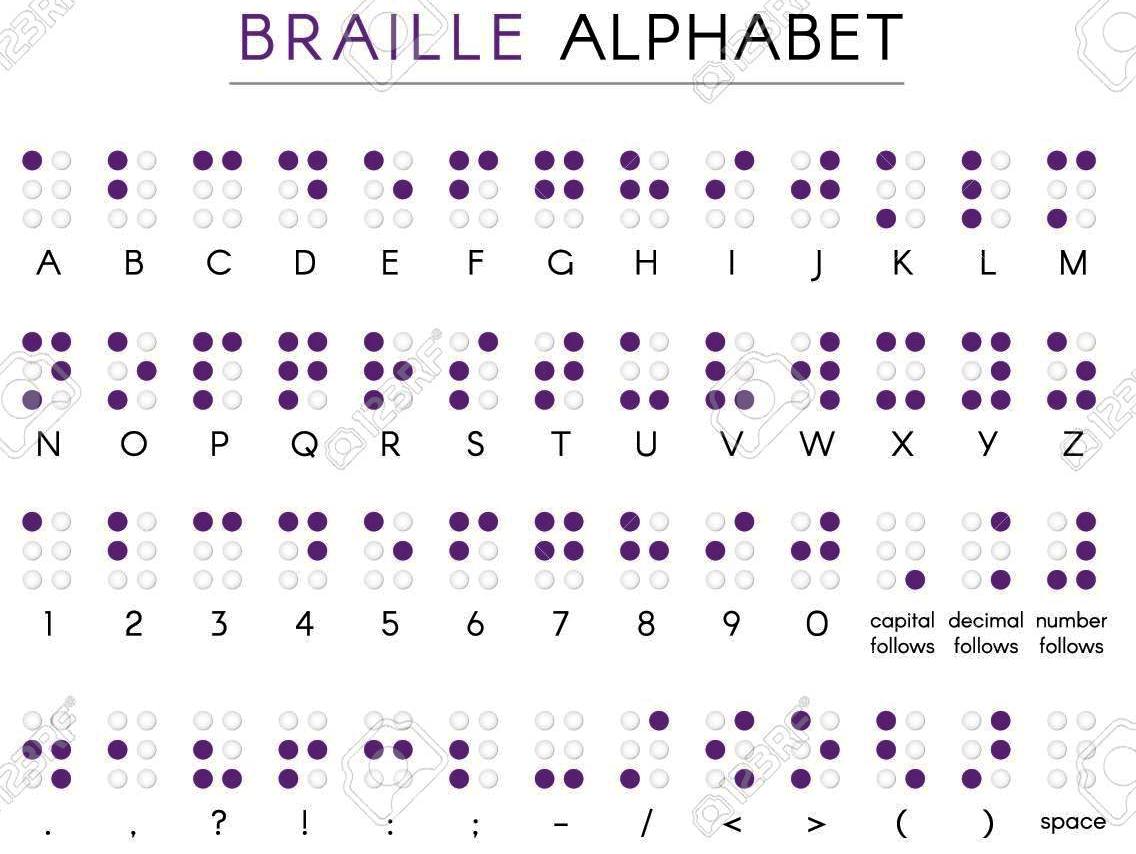
The fundamental unit of Braille is the “Braille cell,” a rectangular block comprising six dots arranged in two columns of three dots each. Different combinations of these six dots denote different characters. For example, a single raised dot in the top-left position signifies the letter “A,” while two vertically aligned raised dots in the first column represent the letter “B.”
The versatility of the Braille system lies in its ability to represent a wide range of characters by varying the number and position of raised dots within a cell. This encompasses all letters of the alphabet, numbers, punctuation marks, and even special characters such as musical notes and mathematical symbols.
The significance of Braille to visually impaired individuals cannot be overstated. It holds a value comparable to that of handwriting and printed reading materials for sighted individuals. Although modern technology has introduced tools that enable visually impaired people to access books through audio formats via various software, these advancements do not replicate the experience and benefits derived from reading and writing in Braille. Braille provides not only knowledge but also a profound sense of peace and self-reliance.
The importance of the Braille system assumes particular relevance in the context of visually impaired students in Kashmir, raising several critical questions. Do visually impaired students in Kashmir have access to adequate Braille facilities? Are government agencies and non-governmental organizations (NGOs) providing sufficient support for the promotion and development of Braille? What resources are currently available to support Braille literacy, and what challenges remain to be addressed?
Institutions in Kashmir, such as the Zaiba Aapa Institute of Inclusive Education, Abhinanda Home, and the Composite Regional Centre (CRC) Srinagar, provide Braille training to students. Moreover, initiatives like Samagra Shiksha have been launched to train teachers in effective Braille instruction. This programme also supplies special teaching tools and technology to support visually impaired students. However, despite these efforts, the demand for Braille education far exceeds the available resources, resulting in significant challenges.
One of the most significant hurdles faced by visually impaired students in Kashmir is the inadequacy of Braille books. Although some non-governmental organisations (NGOs) are working to provide Braille books, their reach is limited, often confined to urban areas. Many students, particularly those in rural regions, remain unaware of or unable to access these resources. This shortage severely hampers their ability to actively participate in the education system.
The high cost of Braille books further exacerbates the problem. The production of Braille books requires specialised equipment and materials, making them significantly more expensive than regular textbooks. As a result, many students cannot afford these books. Furthermore, the available Braille books are often outdated, depriving students of current knowledge and updates present in regular textbooks.
A further challenge confronting visually impaired students in Kashmir is the scarcity of trained teachers proficient in teaching Braille. Despite efforts by government and non-governmental organisations, the shortage of such teachers compromises the quality of education available to these students.

In some instances, district education departments employ resource teachers or special educators to cater to the needs of visually impaired students. However, their numbers are woefully inadequate, leaving numerous students without the requisite support. The absence of trained teachers also hinders the integration of visually impaired students into mainstream classrooms, forcing them to rely on recording tools, which can be a significant challenge.
To bridge these gaps and address the challenges faced by visually impaired students, several measures are proposed. Firstly, the provision of Braille books is paramount. Braille books should be made available to every visually impaired student, akin to the Jammu and Kashmir Board of School Education’s (JKBOSE) provision of free textbooks to students in government schools.
The provision of Braille books in libraries is also crucial. Public libraries, information centres, school libraries, and college libraries – particularly those that admit visually impaired students – should stock essential Braille books, ensuring that these resources are readily available.
Furthermore, the establishment of a dedicated Braille press in Kashmir would be a significant step forward. This would enable the local printing of books, reducing dependence on other states and ensuring timely access to learning materials.
To address the shortage of trained teachers, government schools should employ more educators proficient in teaching Braille. A district-level survey should be conducted to ensure that every school admitting visually impaired students has at least one Braille teacher or special educator.
In addition, Braille knowledge should be incorporated into school curriculums to promote awareness and inclusion. This would foster a more supportive environment for visually impaired students.
The introduction of diploma courses in Braille by the higher education department would provide formal training opportunities for visually impaired individuals. This would not only enhance their skills but also promote empowerment.
Awareness programs should also be organised to educate students, teachers, and the public about the importance of Braille. Non-governmental organisations should collaborate with schools and colleges to conduct such programs, promoting a culture of inclusivity.
In conclusion, while significant progress has been made in promoting the Braille system in Kashmir, substantial gaps persist. Implementing these recommendations can help create a more inclusive and supportive environment for visually impaired individuals.
As the world marks World Braille Day, it is essential to acknowledge the indispensable role of Braille in empowering visually impaired individuals. Braille fosters self-reliance and literacy, and its promotion is crucial for ensuring that all visually impaired individuals have access to education and empowerment.
On this occasion, greetings are extended to all those who cherish the art of reading and writing in Braille.
(The author is a student at the Government Degree College, Anantnag. Ideas are personal.)