by Syed Suhail Yaqoob
Falling college enrolment in Jammu and Kashmir reflects deeper demographic changes, including declining fertility rates and high school dropouts, raising concerns about long-term educational and societal outcomes
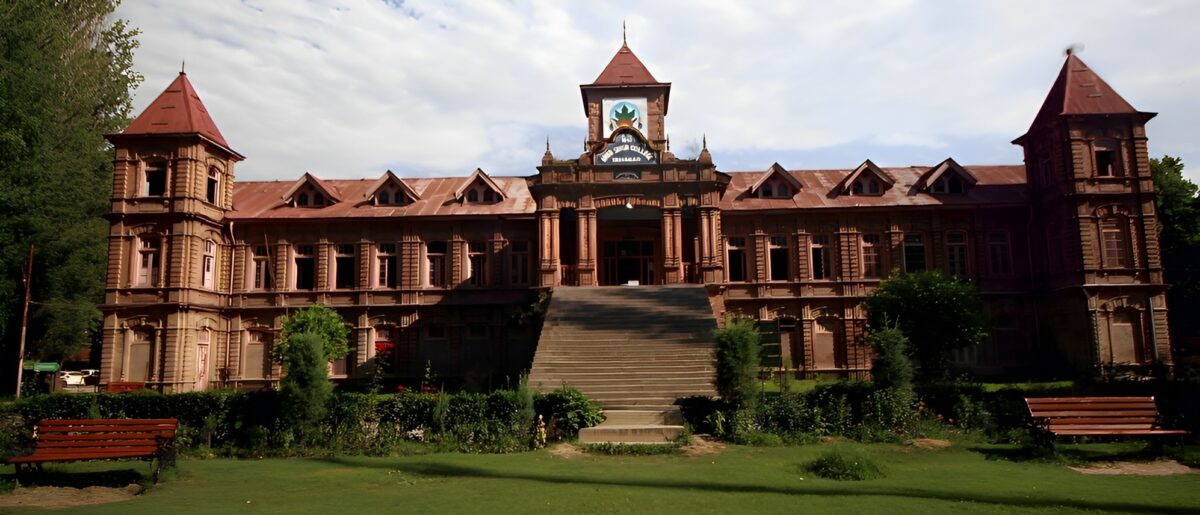
A recent newspaper report about declining enrolment in colleges of Jammu and Kashmir has sent shockwaves among the academic fraternity.
The data revealed that at least 13 colleges have fewer than 30 students each, while five colleges are operating with enrollment below 20 students.
In 14 colleges, student strength is under 50, and as many as 24 colleges have fewer than 100 students enrolled.
Given that there are around 145 colleges in Jammu and Kashmir, this report is alarming and concerning in itself. For a society, it is the college-going cohort that becomes, in future, the bedrock of a given society. From this cohort, society expects future academicians, scientists, and doctors. If there has been a decline in enrolment, and that too of this level, it implies that the society cannot thrive in future.
Responsible Factors
There can be a multitude of reasons for this decline, ranging from a spike in demand for skilled courses to the declining standard of education in colleges, out-migration of this cohort to different states of the country, or the mushrooming of colleges. Many have argued on these lines; however, these factors combined cannot, in themselves, explain the steep decline in college enrolment.
Further, if these factors explain the decline in college enrolment, how can they explain the decline in enrolment in schools of Jammu and Kashmir?
According to a report published in Greater Kashmir, 3,192 schools across the Union Territory have reported less than 10 or zero enrolment since 2022, with 2,518 teachers posted in them. Some observers may suggest that private institutions are providing better quality at the primary level.
The data does reveal that private educational institutions can attract more students at the primary level. The figures show a decline of 2.02 per cent in the student population in government schools from 2024 to 2025. Contrary to this, student enrolment has increased in private schools, as the student population rose from 12.08 lakh to 12.60 lakh from 2024 to 2025. However, it is a zero-sum game. A decline in enrolment in government schools is matched by an increase in enrolment in private schools. One major explanation of this curious decline lies in the population dynamics playing out in Jammu and Kashmir. These dynamics are impacting not only college enrolment but school enrolment as well.
TFR Down
Official estimates suggest a steep decline in the total fertility rate (TFR) in Jammu and Kashmir. The total fertility rate declined from 3.6 in 1990–91 to 2.4 in 2005–06. It further declined to 1.7 in 2015–16 and to 1.4 in 2019–21. At the national level, the total fertility rate has fallen below 2.1, indicating lower population growth in the future. Simply put, it means fewer children. Fewer children imply lower enrolment in schools and colleges in the future.
By 2030, the proportion of Jammu and Kashmir’s elderly population is projected to rise from 8 to 12 per cent. By 2035, when almost 16.5 per cent of the population will be above 60, it will pose serious challenges on many fronts, including enrolment in schools. This is a key reason behind declining enrolment in schools. Given the steep decline in the total fertility rate, schools and colleges must brace for further drops in enrolment.
At the college level, the combined effect of declining fertility over the years and significant dropouts at the secondary and higher secondary stages contributes to lower enrolment. On one hand, declining fertility implies fewer school-going children, who eventually feed into colleges; on the other, there are significant dropouts at both secondary and higher secondary stages. The data is clear on dropouts.
According to a report published in Kashmir Life, Jammu and Kashmir recorded a total dropout rate of 12.9 per cent at the secondary school level (Classes 9–10) in the 2024–25 academic year. Dropout rates stood at 1.5 per cent at the primary level (Classes 1–5) and 3.2 per cent at the upper primary level (Classes 6–8). Gender-wise, boys had slightly higher dropout rates than girls at the primary level (1.9 per cent versus 1.1 per cent), while at upper primary and secondary levels the gap was narrower, with boys at 3.1 per cent and 13.6 per cent, and girls at 3.2 per cent and 12.2 per cent, respectively. The national dropout rate for secondary school students stood at 11.5 per cent, placing Jammu and Kashmir slightly above the national average. This highlights the need for targeted interventions at the secondary stage.
The Transition Rate
A report in Kashmir Life also provided data on transition rates from secondary to higher secondary education. The transition rate stands at 72.9 per cent, indicating that more than one in four students do not continue beyond Class 10. In contrast, transition rates at earlier stages are significantly higher, with 94.8 per cent of students moving from primary to upper primary and 90.7 per cent transitioning from elementary to secondary levels. Factors such as financial instability, the need to support families, and lack of accessibility in remote areas contribute to this dropout trend. The data clearly indicates that the decline in college enrolment is structural.

The statistics reveal that declining enrolment in colleges is inherently linked to changing population dynamics. A declining total fertility rate, coupled with high dropout rates, largely explains the fall in college enrolment. This is a deeply concerning trend. At the college level, authorities have taken encouraging steps, such as introducing skilled courses to attract more students. However, since the issue is structural and long-term in nature, lower enrolment is likely to persist and may become more critical over time. While increasing fertility rates is difficult, authorities can take immediate steps to reduce dropouts at the secondary level and beyond to improve college enrolment. These may include financial support for students, strengthening career guidance and awareness, community outreach by higher secondary schools, and a stronger focus on girls’ education.
(The author is an Assistant Professor (Economics), Higher Education, Jammu and Kashmir. Ideas are personal.)