by Javaid Ahmad Lone and Irfan Ahmad
Kashmir’s communal emotional spaces are fading, triggering rising mistrust, commodified identities, and a deepening mental-health crisis. It urges society to replace judgment with empathy and restore dignity to human vulnerability.

Shame on you.
There was a time in our society when healing was not a medical event; it was a social process with a geography of its own. Places like Waaneh Thad/Waaneh Pend (the shop’s front edge where people gathered to share stories and laughter), Nayed Waan (barber shop), Kaander Waan (baker’s shop), Masjid Hamaam (a warm chamber where people are heated by fire under a hollow floor), and Yaarbal (a communal stream mainly for washing, with social interaction as a secondary function) were not simply physical spots on a map; they were emotional sanctuaries quietly sustained by collective presence.
These were what sociologists now call affective commons: shared environments where the community absorbed individual pain without judgment, where listening was a form of solidarity and not labour. People walked into those spaces heavy and returned light, not because they were counselled, but because society itself functioned as therapy.
Speech was sincere, not performative.
Listening was natural, not transactional.
Receding Spaces
Over the years, these spaces have receded almost unnoticed. What disappeared was not only the physical setting but an entire architecture of belonging. Warmth has been replaced by suspicion; spontaneous conversation by cautious calculation. We now inhabit a social climate where people hesitate to open up, not because they lack emotions, but because mistrust has become the dominant social currency. And we live in an age of hyper-commercialisation, where relationships increasingly resemble marketplaces. Human value is assessed through productivity, beauty, “network value,” or the usefulness of one’s silence.
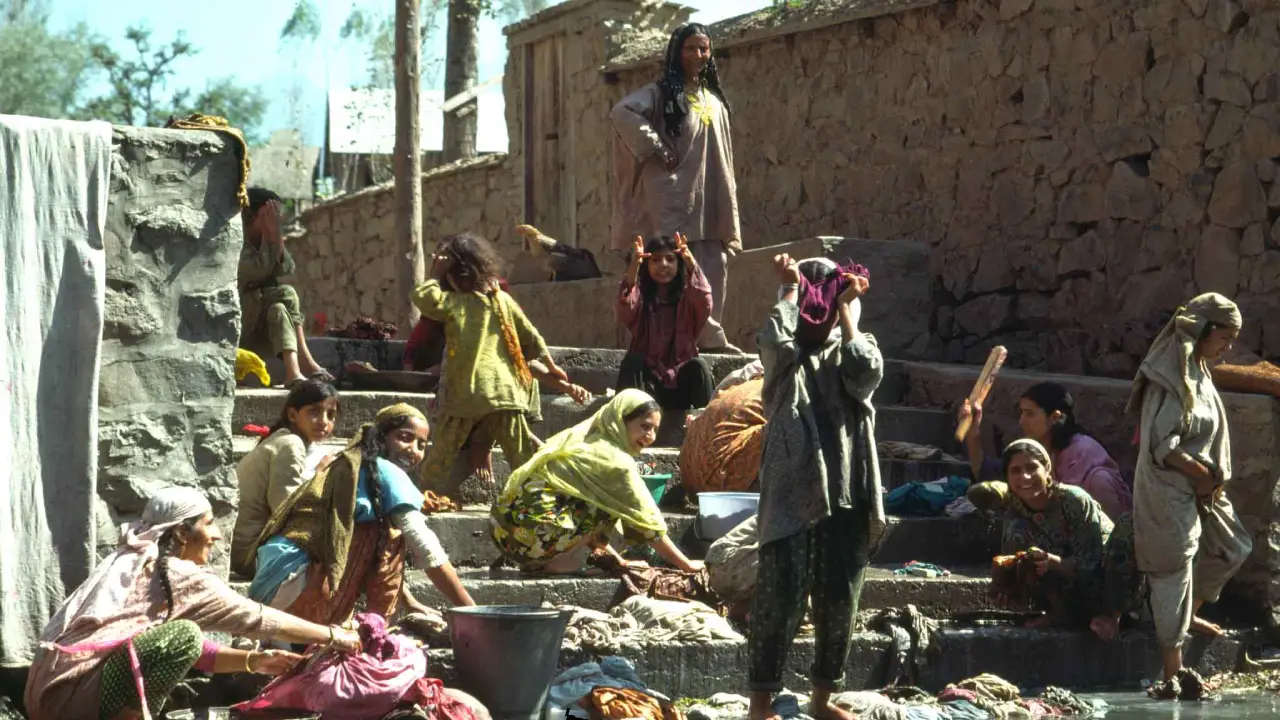
As individuality expands, collective emotionality shrinks. People withdraw into private emotional corners, protecting themselves from a world that treats sincerity as naivety. Even the last refuge, the inner space where one speaks to oneself, has become precarious. A person who talks to himself on the roadside, attempting to unburden his heart, is quickly labelled mad (pagal or bawreh). Even internal dialogue has become socially policed.
This contraction of emotional space is not accidental. I recently came across a book that argued that as communal spaces fade, mental-health crises rise. When collective containers disappear, individuals collapse under emotional burdens they were never meant to carry alone. Technological acceleration, everyday uncertainty, and subtle forms of surveillance have all contributed to this quiet breakdown. But the most dramatic shift is the objectification of the human self. In a society where self-worth is measured through productivity, appearance, and “market value,” young people feel pressured to maintain a spotless emotional façade. Capitalism trains us to view ourselves as commodities to be polished, displayed, upgraded, and evaluated. Vulnerability becomes risky; honesty becomes expensive. In today’s world, emotions are rationalised, filtered, priced, and commodified.
Sociologists conceptualised alienation, but Nida Fazili articulated its emotional depth in ways theory could never fully capture:
Badalaa na apne aap ko, jo the wohi rahe
Milte rahe sabhi se magar, ajnabi rahe.
(I couldn’t change myself; I remained as I was.
I mingled with everyone, yet stayed a stranger.)
Apni tarah sabhi ko kisi ki talaash thi
Hum jiske bhi qareeb rahe, door hi rahe.
(Like me, everyone was searching for someone.
No matter whom I drew close to, I still remained distant.)
Not An Attack
Shame on you is not an attack, but a grief. Shame on you because today every human being carries a grave inside them, and we built that grave with our own hands. People no longer bury only the dead; they bury their emotions, their fears, their heartbreaks, their breakdowns, and their desperation deep within themselves. Why? Because the moment they open their heart, the world sharpens its knives. Friends mock, family panics about “log kya kahenge,” neighbours spread stories like wildfire, and relatives attach shame to suffering as if vulnerability is a crime.

Just a few days ago, a young daughter of this soil set herself on fire. Imagine the kind of silence she must have been carrying to choose flames over life. She was taken to the hospital, burned, fighting, hoping, and after two days, she slipped away. Only then did her parents reveal that she had been struggling with her mental health, drowning quietly inside her own thoughts.
The young lady died alone in a society full of people. If this is not shame, then what is? And this tragedy is not an exception; it is a warning. The crisis is already in front of us: “Mental-health crisis deepens in Jammu and Kashmir, around 2 lakh people were treated at IMHANS last year, and more than 2.7 lakh at GMC Anantnag in the past five years.”
Newspapers reported this on October 10, 2025, but we treated it like just another headline. Everyone is desperate for someone who listens, someone who truly sees them, but no one finds it, not at home, not among friends, not in society. So they carry the weight alone, smiling on the outside while bleeding unseen on the inside.
Tear Policing
We have reached a point where even tears are socially policed. A person breaks down, and instead of receiving a shoulder, they receive gossip. A young woman cries from anxiety, and people call her “too emotional.” A young man admits feeling depressed, and society brands him weak, immature, and dramatic. Someone’s pain becomes a neighbourhood headline. This coldness forces people to swallow every tear that could have healed them. They cry only when no one is watching, into pillows, into silence, into darkness, because daylight belongs to performance, not emotion.
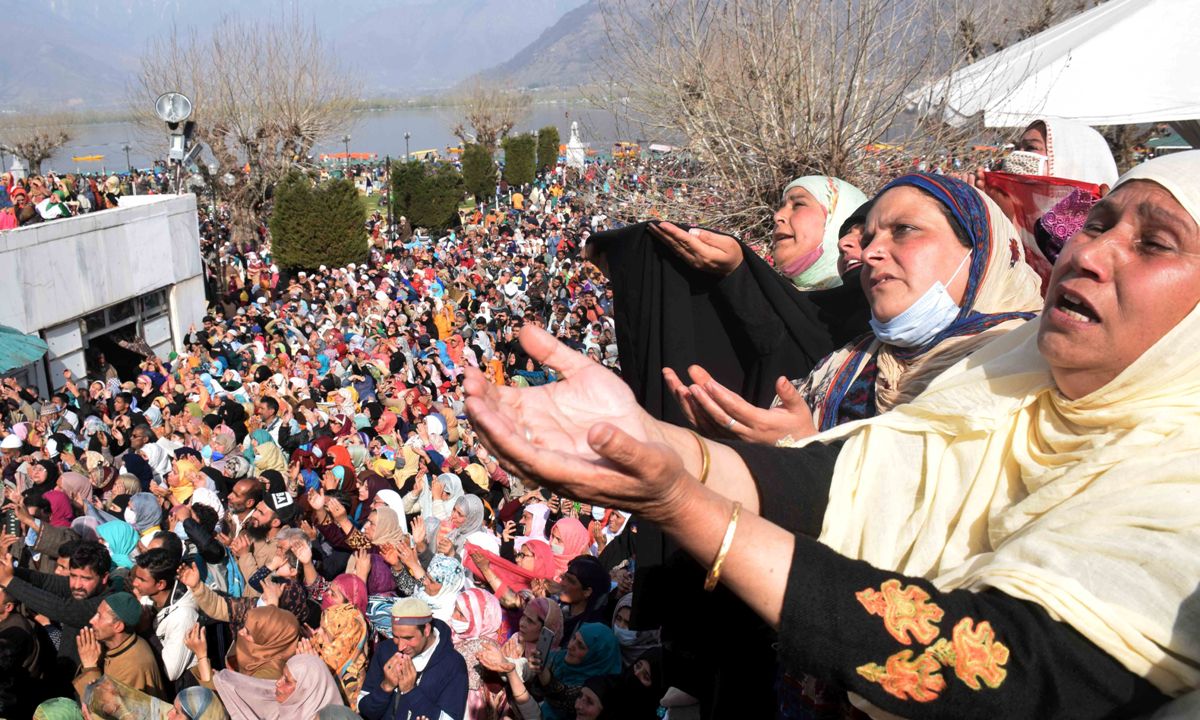
This society has turned human beings into robots: functional on the outside, broken on the inside. No space for emotions, no room for breakdowns. We are taught to perform, not to feel; expected to smile even when dying emotionally; trained to appear strong even when collapsing within. Social media intensifies this pressure; every picture must be perfect, every moment curated, every weakness hidden. Happiness becomes an act; pain becomes a secret.
Stigma
And the most tragic part? When someone dares to speak about their mental health, shame falls not only on them but on their entire family. Parents worry about reputation, relatives whisper, neighbours assume, and the person who needed help ends up apologising for being honest. Honesty has become a burden; truth has become humiliation.
The cruelty does not begin outside; it begins at home. Families claim they care, but when a child fails an examination, their entire personality is shredded. “You are good for nothing.” “You will never achieve anything.” “Look at others.” We celebrate children when they achieve marks, but when they fail, we break them. We humiliate people for their skin colour, appearance, body shape, height, abilities, struggles, even the way they walk or speak. A stutter becomes a joke. A dark skin tone becomes an insult. A poor background becomes a taunt. A mental breakdown becomes a scandal. Without noticing, we have become experts at destroying the emotional foundations of others.
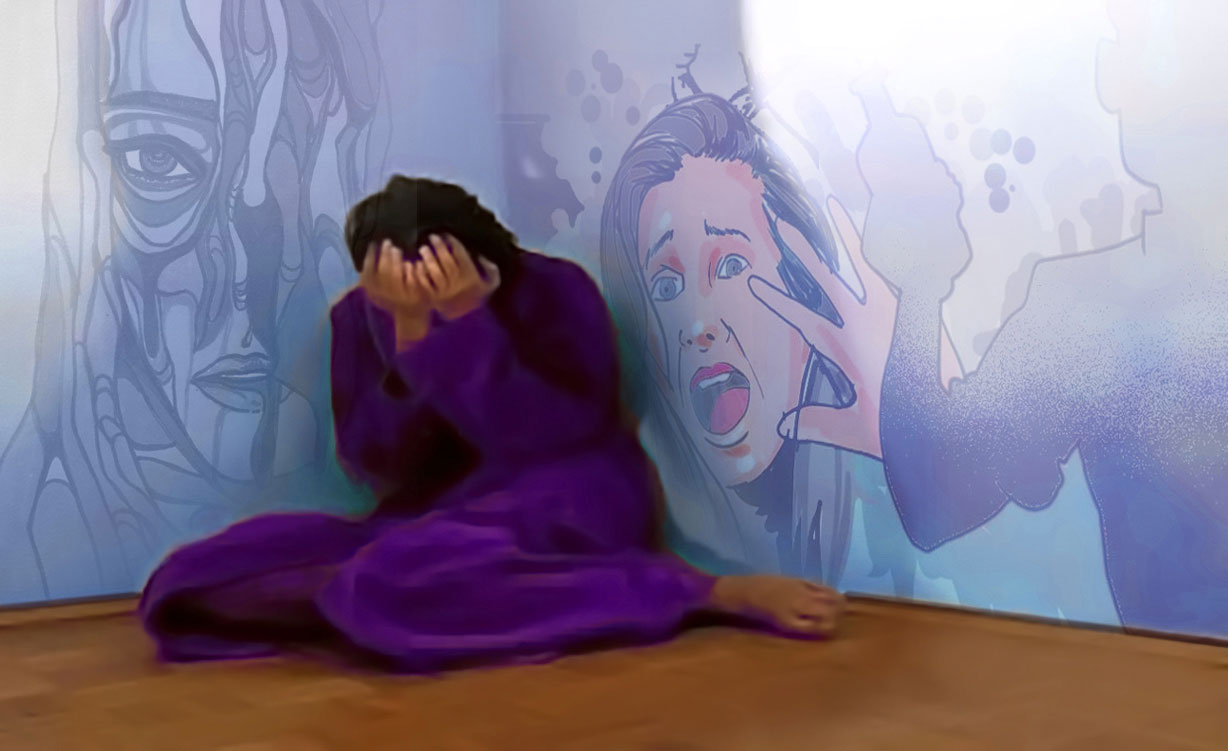
And if society’s cruelty wasn’t enough, commercialisation has completed the destruction. Humans are no longer humans; they are commodities. We polish ourselves like products. Upgrade our personalities like software. Hide our flaws like defects. Filter our emotions like impurities. We fear judgment so deeply that silence becomes safer than truth. We hide our real selves so effectively that one day, even we forget who we are. We pretend to be happy, successful, confident, perfect while carrying a collapsing universe in our chest.
So yes, shame on you. Shame on you for laughing at someone’s breakdown. Shame on you for calling someone weak when all they needed was kindness. Shame on you for turning vulnerability into gossip. Shame on you for teaching people to hide rather than heal. Shame on you for forcing silence on the suffering. Shame on you for creating a world where people are punished for being emotional and rewarded for being numb. Shame on us for every time we mocked, judged, compared, ridiculed, ignored, dismissed, or shamed someone until they silenced their soul.
Let Healing Begin
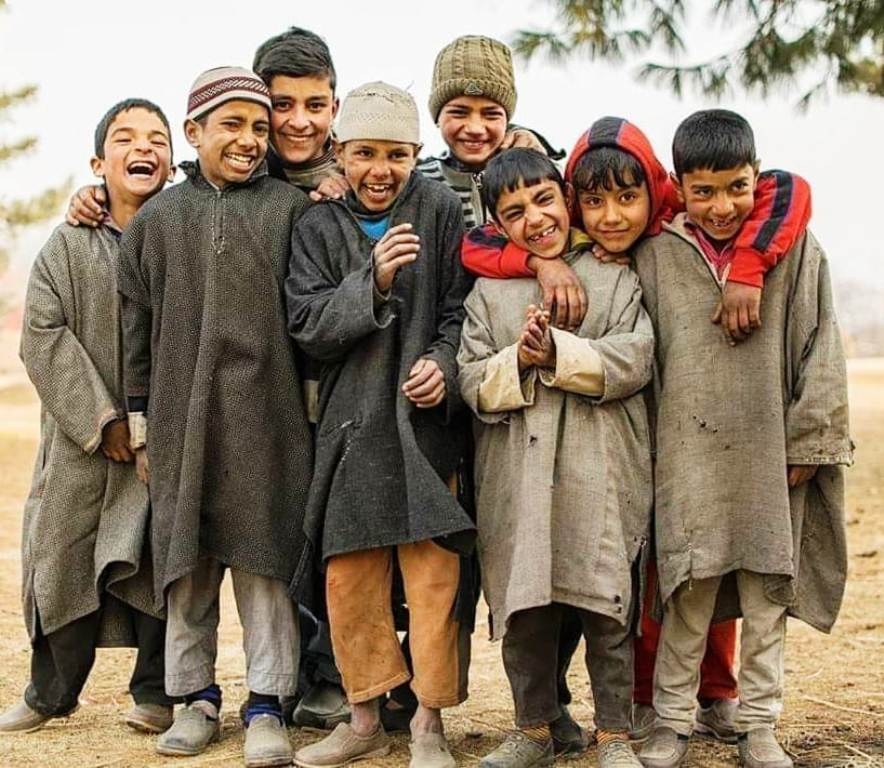
This world will not heal through slogans, hashtags, or awareness weeks. It will heal when you and I choose to stop being part of this cruelty, when we replace judgment with listening, gossip with empathy, comparison with compassion, silence with conversation, and perfection with honesty. It will heal when families stop treating mental health as shame and start treating it as humanity. It will heal when friends stop mocking and start supporting. When neighbours stop gossiping and start caring.
Healing begins the moment we choose to become the ear someone always needed, the shoulder someone always deserved, the voice that says, “You are not alone,” the presence that tells someone, “Your emotions are valid,” and the courage that whispers, “You do not need to hide, I hear you.”


Because at the end of the day, the real shame is not in crying, breaking, failing, or asking for help. The real shame is in being a society that punishes the very emotions that make us human.
We write this not as critics, not as scholars, but as observers, as two people who have watched others bleed behind their smiles, who have seen emotions buried alive inside the chests of those who deserved tenderness but received judgment instead. We write this on behalf of every person who wanted to cry but swallowed their tears, every soul that wanted to speak but stitched their lips shut, every heart that wanted to break but forced itself to stand because society doesn’t allow weakness. This is not just an article; this is a wound engraved in words.
(Javaid Ahmad Lone is a PhD Scholar, Department of Social Work and Irfan Ahmad, a PhD Scholar, Department of Sociology at the University of Kashmir. Ideas are personal.)