by Dr Muzamil Sultan
A society prioritising literacy over education, conformity over diversity of thought, and rapid thinking over reflective reasoning is ill-equipped to meet these challenges.
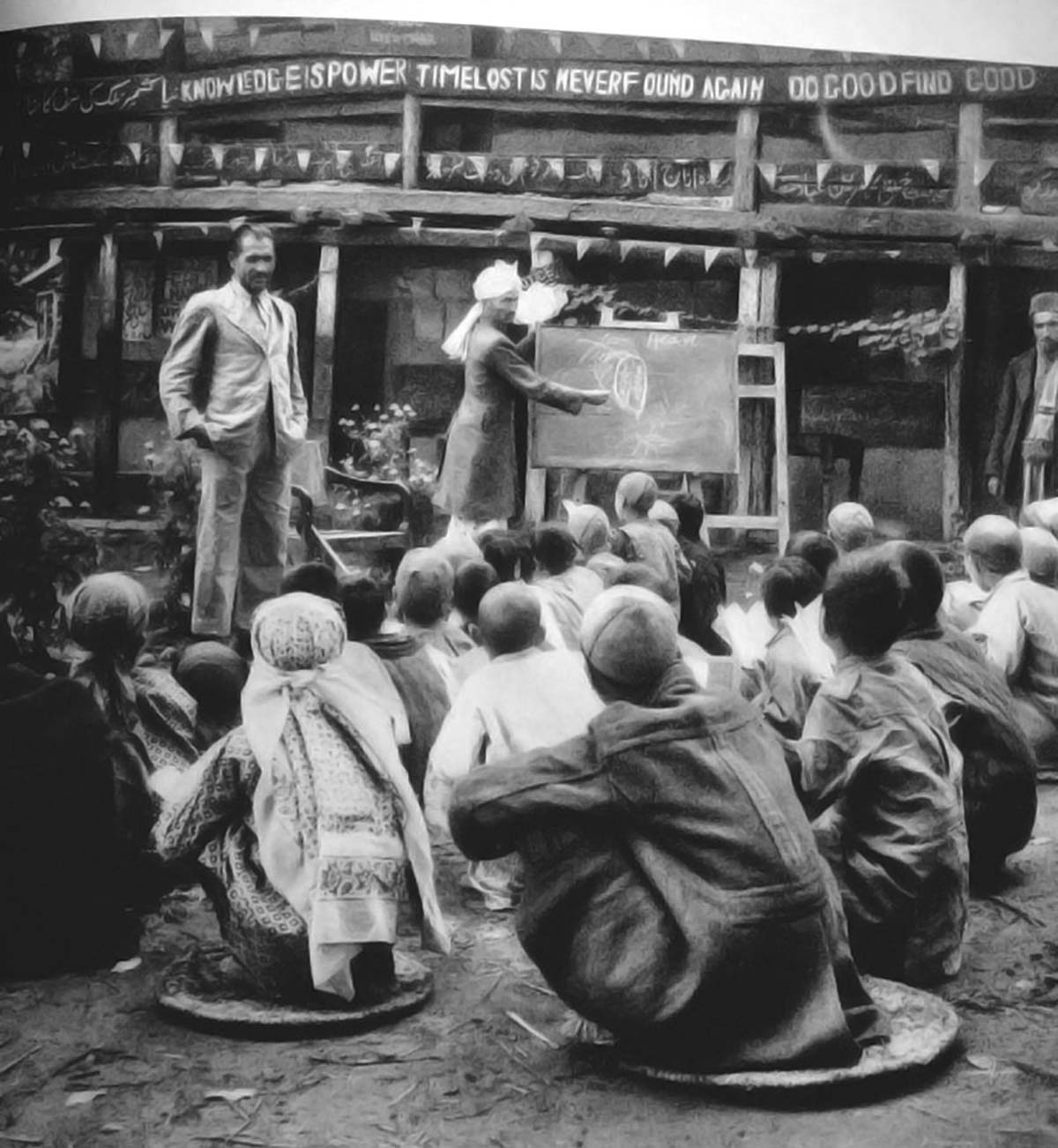
This article examines the Kashmiri community, both in India and abroad. Understanding the psychological dynamics of Kashmiri society requires considerable time and effort. The ongoing conflict in Kashmir is often analysed through a geopolitical lens, focusing on the territorial claims of India and Pakistan. However, that aspect is not the primary concern here. Of greater significance is the rise of intellectual failure in Kashmir.
The book Why Nations Fail by Daron Acemoglu and James Robinson presents a compelling argument. It suggests that extractive institutions, concentrating power in the hands of a few, lead to instability and underdevelopment. In Kashmir, political elites from India and Pakistan have historically imposed their agendas, disregarding local aspirations. Rather than promoting participatory institutions, pluralism, and local governance, Kashmir has faced policies exploiting its strategic value, suppressing dissent, and manipulating local leadership. This has resulted in widespread alienation and unrest.
This intellectual failure is reflected in the lack of basic psychological development within society. Individuals determine principles of justice without understanding their social standing. Any society plays a pivotal role in shaping its values, governance, and progress. When this landscape deteriorates or fails to meet contemporary challenges, it can lead to widespread societal stagnation, injustice, and conflict.
The concept of intellectual failure encompasses more than merely the absence of knowledge. It constitutes the inability of thinkers, leaders, and institutions to apply critical thought, creativity, and ethics to society’s most pressing issues.
This intellectual failure originated long ago in the educational arena, yielding profound consequences. Universities in Kashmir produce graduates ill-prepared for modern life’s complex ethical and philosophical questions. Consequently, societies become increasingly vulnerable to manipulation, social extremism, and shallow thinking perpetuated by the media. This marks the beginning of the loss of a shared intellectual tradition. On the other hand, religious extremism and sectarianism foster stupidity and irrationality.
Attaining a degree or graduating does not qualify a society to be considered educated; it may be literate, but not educated.
Kashmiri culture lacks the necessary tools to navigate the complexities of democratic governance, ethical decision-making, rationality, social equality, and the pursuit of justice, which are integral to an educated society.
The failure of the educational system is a deeply troubling and often unaddressed issue. Teachers, unfortunately, appear more concerned with job security than fostering intellectual growth in their students. This lack of commitment perpetuates a cycle of irresponsibility and moral corruption within institutions.
It is disheartening to note that numerous educators assume these roles not out of passion, but due to an inability to secure employment in their preferred fields. This reality must be confronted with urgency and empathy.
There is a need for caution in establishing a teaching system that addresses the sensitivity of intellectualism. This issue begins as early as primary school, where dedicated and intellectually engaged teaching staff are crucial for shaping future generations.
When education fails to intellectually challenge students, it fails to cultivate informed, critical citizens. This failure renders society more vulnerable to populism, anti-intellectualism, and the erosion of democratic values.
Neil Postman’s work, particularly in Amusing Ourselves to Death, highlights another critical aspect of intellectual failure: the impact of media on public discourse. It is essential to understand that digital media has transformed the way society consumes information.
Whereas earlier societies valued rational debate, deep reading, and thoughtful reflection, the modern era is characterised by entertainment and superficiality. The problem lies not only in the media’s entertaining format but also in its fundamental alteration of public discourse, prioritising style over substance.
How media promotes shallow thinking must be examined. Complex issues are simplified into sound bites, and significant debates are eclipsed by sensationalism. The public, conditioned to prioritize entertainment over critical thought, becomes disengaged from meaningful discussions on governance, policy, and ethics.
This intellectual degradation has profound implications for democracy. Citizens are less inclined to make informed decisions regarding their leaders or future.
Moreover, the rise of social media intensifies this trend. Algorithms favour content that is emotionally engaging rather than intellectually rigorous. Consequently, the public sphere becomes fragmented, with misinformation, outrage, and sensationalism dominating the discourse.
In this environment, the space for thoughtful and nuanced discussion diminishes. This ultimately leads to intellectual failure at a societal level, where reasoned debate and evidence-based decision-making cease to be the norm.
Many young Kashmiris are drawn to civil service, which is commendable. However, their motivations often raise concerns. When asked about their aspirations, many cite the allure of privileges and status rather than a commitment to educational reform, policy-making, or public development. This reveals a deeper issue: a mindset prioritizing personal gain over civic responsibility.
Such attitudes reflect not only intellectual failure but also a cultural challenge within society. Aspirations focused on the trappings of power, rather than making a meaningful impact, can lead to corruption and a lack of genuine progress.
In contemporary societies, intellectual failure manifests in the rise of authoritarianism and suppression of dissent. When governments or powerful institutions dominate public discourse, critical voices are silenced, and intellectual pluralism – the engine of societal progress – contracts. This narrowing of intellectual space limits a society’s ability to adapt, innovate, and solve problems, resulting in stagnation and regression.
Intellectual failure also manifests in ideological conformity. When societies or institutions promote a single narrative – whether religious, political, economic, or cultural – without allowing room for critique or alternative viewpoints, they risk intellectual stagnation. Embracing criticism and fostering rational debate is challenging in societies like Kashmir, where religious manipulation, sectarianism, extremism, corruption, centralization, and cultural influences can overshadow independent thought. This leaves little room for critical analysis, stifling individuals’ ability to think critically and make informed decisions.
One of the most immediate consequences of intellectual failure is the erosion of social institutions. An intellectually vibrant society relies on an informed, engaged citizenry capable of self-criticism, participating in meaningful debate, and contributing to collective decision-making. When intellectual rigour declines, the quality of public discourse also deteriorates, enabling leaders who exploit people for personal gain to rise to power. These leaders are part of the same social fabric that gives rise to moral corruption.
Furthermore, addressing contemporary challenges – social change, moral inequality, or religious doctrine – demands thoughtful, informed, and innovative solutions. A society prioritizing literacy over education, conformity over diversity of thought, and rapid thinking over reflective reasoning is ill-equipped to meet these challenges.

Our society must commit to the principles of critical thought, education, and intellectual pluralism. This necessitates reforming educational institutions to emphasize critical thinking, fostering a media environment encouraging depth and nuance, and resisting ideological conformity. Additionally, cultivating individual habits of reflection and deliberation, as described by Kahneman, enables citizens to engage effectively with complex modern issues.
Ultimately, overcoming intellectual failure requires creating a society valuing positive criticism, moral etiquette, education, critical inquiry, and respectful open debate.
(The author is a Fellow of the Royal College of Emergency Medicine, UK, and a Senior Registrar in the Department of Critical Care Medicine. Views are personal.)