by Mir Tariq Rasool
Critics and literary analysts have drawn parallels between Hyder’s artistry and that of luminaries such as Jane Austen, Leo Tolstoy, Virginia Woolf, and James Joyce. Some even argue that Aag Ka Dariya surpasses Gabriel García Márquez’s One Hundred Years of Solitude in both technical mastery and ideological depth.
Wendy Doniger, an American Indologist and renowned scholar of Hinduism, once remarked that fundamentalism is as much a political phenomenon as it is a religious one, and the same holds for Hinduism. Hinduism did not awaken one morning to find itself transformed into a colossal political entity overnight. Neither the nationalist movements of the nineteenth century nor the demagogues of twentieth-century Hindutva suddenly politicised it.
Doniger’s assertion, if not entirely, is at least partially applicable to the entire Indian subcontinent, where every political entity—each nation-state—is embroiled in a struggle to assert its fundamental religio-political identity, often at the expense of eroding and suppressing its traditional ethos.
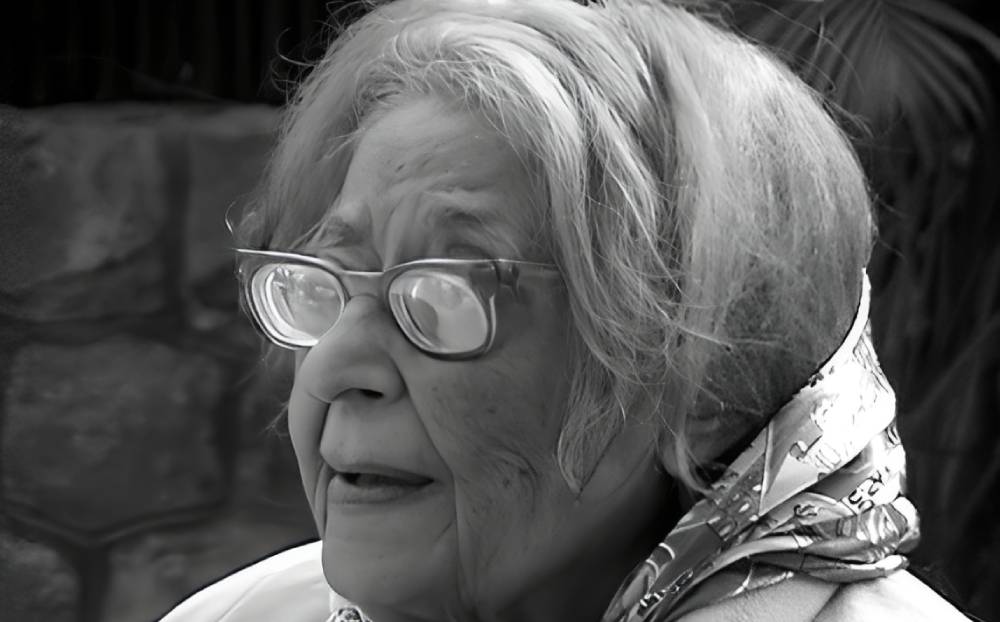
It was within this subcontinent that Quratulain Hyder, a literary genius, author, translator, and celebrated novelist, was born in Aligarh on 20 January 1927. Despite the pervasive influence of religio-political fundamentalism, Hyder consistently placed her faith in the traditions that had once bound the subcontinent together as a cohesive whole. These traditions fostered an environment where diverse ideas, ideals, philosophies, and religions could flourish and evolve.
Hyder mourns the erosion of tradition in her novel of reminiscence, Aag Ka Dariya, where she traces the trajectory of a nationalism that once thrived on unity but now succumbs to the divisive and communal ideologies of modern politics. Through her narrative, she paints a poignant picture of a shared heritage slipping away, replaced by fractured identities.
Literature and novel writing were an inherited legacy for Quratulain Hyder. Her parents, Syed Sajjad Hyder Yildirim and Nazar Sajjad Hyder were celebrated figures in Urdu literature, and their influence undoubtedly shaped her literary journey. Hyder herself emerged as a writer of unparalleled style, distinguished by her thematic depth, masterful characterisation, vivid scene-setting, and unique narrative voice. Often compared to Virginia Woolf, she is widely regarded as the pioneer who introduced the technique of stream of consciousness into Urdu literature.
Hyder began crafting stories at the tender age of eight. While her works seldom focused on the “common man,” history remained a central pillar of her storytelling. For her, history was not merely a backdrop but a fundamental reality. This is evident in Aag Ka Dariya, one of her most acclaimed novels, where she weaves historical facts into a tapestry of memory and consciousness, creating a narrative that is as profound as it is evocative.
Though much of her writing delves into societal, situational, and philosophical issues with both national and global resonance, it is her novel Aag Ka Dariya that stands out as her most compelling and widely read work. This masterpiece, however, also became the reason for her exile from Pakistan. Aag Ka Dariya is widely regarded as one of the finest novels on partition, fundamentalism, and the shifting dynamics of nationhood, earning acclaim from diverse literary circles.
As readers immerse themselves in Aag Ka Dariya, the verse by Jigar Muradabadi, Ik aag ka dariya hai, bus doob ke jana hai (It is a river of fire; one must drown to cross it), echoes persistently in their minds. During her time in Pakistan, Hyder faced vitriol and condemnation. Branded an “Indian agent” and mockingly called “Devi Ji,” she found herself increasingly alienated and uncomfortable, ultimately deciding to return to India.
The upheaval of partition and its lingering aftermath did not merely alter the lives of millions across the subcontinent; it also left an indelible mark on its writers. While countless books have been written on the trauma of partition, Aag Ka Dariya stands apart as a singular achievement. Spanning 2,500 years of the subcontinent’s history—from the era of the Mauryan kings to the cataclysm of 1947—it is a testament to Hyder’s unparalleled ability to weave history into literature, creating a work that is as profound as it is unique.
In Aag Ka Dariya, Hyder explores the concept of nationhood with an expansive and inclusive vision, imbuing it with a broader, more profound connotation. Published in Urdu in 1959 and later transcreated into English by Hyder herself four decades later, the novel stands as a classic reimagining of India. It traces the journey of its people from the Buddhist era to the modern age, rendered in a style that is both classical and deeply traditional.
The narrative spans an astonishing 2,500 years, weaving together the social, cultural, and political fabric of the subcontinent through vivid imagination and engrossing exposition. Hyder metaphorically envisions India as a ceaselessly flowing river, a symbol of continuity and transformation. Throughout the novel, she underscores the intellectual and philosophical syncretism that once defined the region, rooted in cultural harmony, peace, and prosperity.
By intertwining four substories into a single, cohesive narrative, this magnum opus captures the immense complexity and diversity of cultures and identities. Yet, it remains steadfast in its commitment to liberal humanism, a hallmark of both Hyder’s literary work and her ethos.
Through the metaphor of the river, Hyder signifies the “whole united subcontinent,” a vast entity nourished by the tributaries of diverse cultures, philosophies, and ideas, each merging into a greater whole. She captures the intrinsic “part-whole relationship” that once served as the unifying force behind an inclusive, traditional sense of nationhood. At times, she chastises those who obsess over fragmented, often insignificant pieces of history, blind to its overarching totality.
It is often said that Aag Ka Dariya is the river of Time itself. Time, like a river—any river, anywhere, known by any name—flows ceaselessly by its very nature. Those who stand or live along its banks may occasionally watch its waters pass, but few pause to listen to its silent, wordless story. The river beckons those on its shores to journey with it, yet not all heed its call. Even those who embark upon its currents do so only briefly, for they must eventually choose: step ashore or be consumed by its depths.
The world carries on with its affairs—wars are fought, empires rise and crumble—yet Time flows on, ceaseless and unyielding, much like the river.
In Aag Ka Dariya, Hyder underscores this sense of continuity, weaving a narrative where, despite the passage of centuries, the more things change, the more they remain the same. Characters reappear across millennia, their essence enduring, their forms shifting, yet their presence binds the story together.
The novel begins with the rise of Buddhism and concludes with the decline of Brahmanism, spanning four distinct epochs. Within these periods, characters such as Gautam, Hari Krishan, Champa, and Nirmala re-emerge in various guises, maintaining the thread of continuity.
The narrative is propelled by the deep-seated rivalry between Buddhism and Brahmanism, later transitioning into the political strife between the Congress and the Muslim League, and culminating in the tragedy of partition. Hyder portrays this cataclysm not merely as a personal or political misfortune but as a profound human tragedy.
The four central characters—Gautam, Champa, Kamal, and Cyril—serve as anchors, their evolving identities bridging the past and the present. Champa, for instance, reincarnates across the epochs as Champak, Champa Jan, and Champa Ahmad, navigating religious traditions and philosophies untouched by the divisive ideologies of partition. Though these characters are distinct, they must be understood as part of a collective whole to grasp the holistic essence of the subcontinent’s civilisation. Champa, in particular, embodies a tradition rooted in nationalism.
These metaphorical characters not only reflect communal worldviews but also represent regions, religions, and ideologies, all converging into the syncretic Ganga-Jamni Tehzeeb—a cultural harmony that endures until the tragedy of partition shatters it.
From its earliest epoch, Hyder invites the reader to step into a national system steeped in traditional ethos, one that embraces a composite religiosity, diverse philosophies, and interwoven cultures, far removed from the divisive forces of modernity. Aag Ka Dariya challenges the burgeoning Westernised concept of nationalism, which is built on anti-traditionalist values, capitalism, and corporate politics. Instead, the novel draws the reader into the expansive historical events and traditional ethos of the subcontinent, which once served as its unifying force for centuries.
Rather than presenting the subcontinent through the lens of Westernised liberal identity politics, Aag Ka Dariya guides the reader towards the traditional socio-religious pluralism that once bound the region together.
After 1947, as socio-political landscapes shifted, the meanings and significance of master concepts such as “nation” and “nationalism” began to erode. Their functions reversed; instead of illuminating social reality, they obscured it.
In recent years, this reversal has become increasingly pronounced across both parts of the divided subcontinent, a concern that Hyder poignantly addresses. Her novel advocates for peaceful coexistence and tolerance within a heterogeneous socio-political nation-state, offering a vision that could help re-establish these values not only in the subcontinent but also across a world increasingly fractured by divisive politics.
Though Hyder strives to evoke a revival of tradition and syncretism, championing a worldview rooted in communal harmony, peace, scholasticism, and tranquillity, the River of Fire she describes as ceaselessly flowing now veers in the opposite direction.
Aag Ka Dariya serves as a poignant aide-mémoire of the syncretism Hyder believed to be the historical-philosophical legacy of Hindustan. This legacy, once a unifying force, now battles the challenges posed by modern interpretations of national and nation-state politics.
Critics and literary analysts have drawn parallels between Hyder’s artistry and that of luminaries such as Jane Austen, Leo Tolstoy, Virginia Woolf, and James Joyce. Some even argue that Aag Ka Dariya surpasses Gabriel García Márquez’s One Hundred Years of Solitude in both technical mastery and ideological depth.

Shameem Hanfi, a prominent Urdu critic and advocate of the modernist movement in Urdu literature, lauded Hyder’s historical and philosophical consciousness, noting that she achieved in her early career what many modern writers still aspire to attain. Her work yearns for the revival and revitalisation of the true traditional ethos of nationalism and unity, compelling readers to revisit her writings amidst today’s radical politico-social systems.
Hyder, who faced exile in India, passed away in 2007. Her Aag Ka Dariya, a haunting reminiscence of lost traditional nationhood, now stands as a beacon under the shadow of neo-colonial corporate politics. It calls readers to embrace the traditional, united, and syncretic national ethos—necessary in an era increasingly dominated by fundamentalist socio-political ideologies.
(Former Secretary Adbi Markaz Kamraz, the author serves as a patron of the Kashmir Literary and Philosophic Foundation. The views expressed are personal.)