by Mursaleen Bashir
Social media can waste time, support healing or create extraordinary success, depending on how individuals choose to use its power
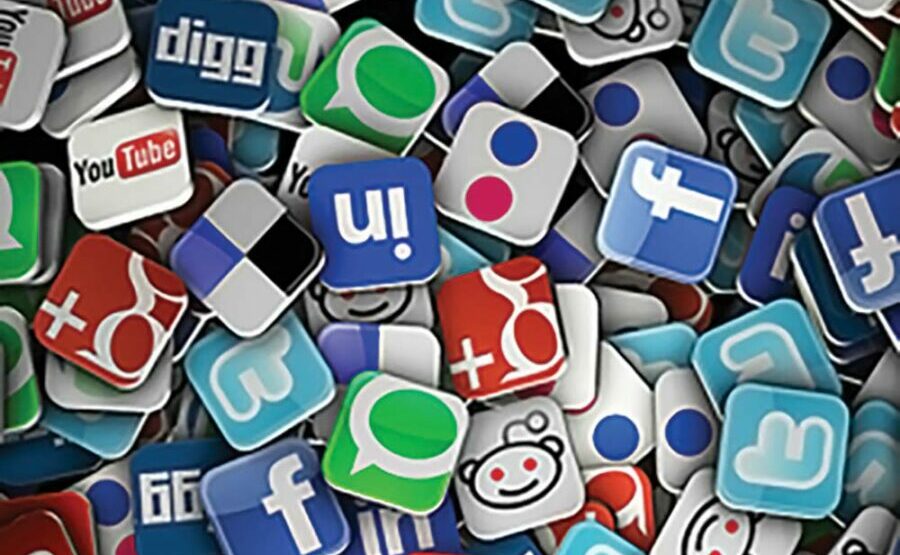
One screen. Three completely different fates.
Social media was supposed to connect us. And it did, but not in the way anyone quite imagined. It connected us to strangers we’ll never meet, to noise we didn’t ask for, and sometimes to a version of ourselves we barely recognise.
Billions of people open Instagram, Snapchat and Facebook every single day. Some are healing. Some are slowly coming undone. And a rare few are becoming legends.
The Breaking
Here’s something most people won’t say out loud: social media wastes a jaw-dropping amount of time. Not a little. A lot.
You pick up your phone to check one notification. Some time later, you’re watching a stranger’s holiday reel from years ago, with no idea how you got there.
This isn’t an accident. These platforms are built to keep you scrolling. Every like, every comment and every short video trigger a small reward in your brain—just enough dopamine to make you want one more hit. Then another. Then another. Quietly, without noticing, the hours disappear.
For young people, this is particularly damaging. Students who could be building skills, reading or simply resting are instead glued to apps that give little of real value in return. Careers get delayed. Ambitions become blurred. The brain becomes so accustomed to fast, constant stimulation that sitting quietly and focusing on one thing starts to feel genuinely difficult.
Then there’s addiction, a word people often resist using here, but one that fits. When someone feels restless without their phone, when Instagram is the first thing they check in the morning and the last thing at night, and when face-to-face conversations feel less interesting than online ones, that’s addiction. It is quiet, socially acceptable and doing real damage.
And perhaps the most overlooked harm is unnecessary relationships. Social media throws open the door to connections that were never meant to exist. Casual conversations turn into emotional dependencies. People fall into relationships built entirely on curated photographs and carefully chosen words. When reality eventually arrives—and it always does—the gap between what they imagined and what actually exists can be brutal. Many people today carry emotional scars from relationships that began and ended on a screen with someone they never truly knew.
The Healing
Now here’s the part that rarely gets talked about.
Someone is sitting alone at 2.00 a.m., crying without fully understanding why, feeling as though no one on earth understands them. Then a video appears. Perhaps it’s someone putting into words the very feelings they’ve been unable to express. Perhaps it’s a poet speaking about loss. Perhaps it’s simply a calm voice saying, “You’re not alone.”
And something changes.
Social media contains a vast, unorganised library of human experience. Someone, somewhere, has lived through what you’re going through, and they chose to share it. When that content reaches the right person at the right moment, it can do something no prescription can: it makes a person feel genuinely seen.
This isn’t insignificant. In a country where mental health remains a difficult conversation in many homes, where suffering in silence is often mistaken for strength, a single video can become the difference between giving up and deciding to try again.
Communities form around shared pain. People recovering from grief, illness, heartbreak and failure support one another across cities and time zones, often without ever meeting.
At its quietest and best, social media reminds people that suffering is universal—and that survival is possible.
The Exceptional Rise
Then some stories feel almost unbelievable.
Not long ago, a name almost nobody had heard of became impossible to ignore across India within a matter of days. Abhijeet Dipke, the founder of what became known as the Cockroach Janata Party, was not a celebrity, not a politician, and not someone backed by a PR team or a large budget.
He simply had an idea. A sharp, absurd and strangely truthful idea that connected the frustrations of India’s youth to a cockroach metaphor, somehow capturing exactly what many people had been feeling but couldn’t express.
Within a single week, he crossed 2 crore followers on Instagram. No film. No press conference. No money behind it. Just one piece of content that struck the right nerve at the right moment on a platform that moves at extraordinary speed.
This is a kind of power no previous generation possessed. Before social media, becoming widely known required years of hard work, the right connections and often a considerable amount of luck. Today, one authentic and resonant idea can transform an ordinary person into an extraordinary one—not over years, but overnight.
Abhijeet Dipke didn’t plan to become a political and cultural phenomenon. He became one almost accidentally.
That word is worth reflecting upon. Because the greatest social media stories are rarely those carefully designed in marketing meetings. They are the moments when an ordinary person says something authentic, and the internet simply cannot stop sharing it.
What You Do With It
Social media is neither good nor bad. It is powerful. And power without awareness is where things begin to go wrong.
It can quietly steal your time, day after day, until you suddenly wonder where the months have gone. It can pull you into shallow relationships and endless comparison, gradually eroding your self-worth.
But it can also find you on your darkest night and offer exactly the words you need to hear. And, on rare but extraordinary occasions, it can take someone with nothing more than an idea and make them someone the entire country is talking about.
The screen in your pocket is a mirror, a medicine and a megaphone, sometimes all three in the same afternoon.
The real question isn’t whether social media is dangerous or useful.
It is both.
(The author studies BTech at NIT, Srinagar. Ideas are personal.)