by Faisal Kawoosa
The year 2026 is going to be a different year when it comes to buying gadgets like smartphones and laptops. The festive season, which officially flags off after Dussehra and peaks during Diwali, is unlikely to offer sweet deals this time
After November 2025, if you have been browsing smartphones, laptops, or other gadgets, you would have noticed one frustrating trend. The prices of both new and old models are going up. As per Techarc analysis, there has been an average 15% increase in smartphone prices across different price tiers in the past seven months. However, there are some models where the price increase has been as high as 40%. In the lower “affordable” tier, the increase has been around 18%.
That’s not all. Even the configurations have stagnated in the 2026 editions of various smartphones. The RAM and ROM specifications are the same as the previous year, or, in some cases, have been reduced. The number of variants, or SKUs, has also been halved. For many models, if there were three to four SKUs for customers to choose from in 2025, based on their preferences, in 2026 they are getting a maximum of two options.
What is causing this paradigm shift in the dynamics of the gadget world? What is forcing the ecosystem to change the rules of the game? What is pushing smartphone OEMs to change the playbook? Ever since gadgets became popular among users, every new year meant offering more for less. This time, it’s the reverse. At best, it is unchanged.
The culprit here is the shortage of memory chips. The explosive, gold-rush boom of AI has caused an unprecedented supply chain disruption. Tech giants are building massive AI data centres at lightning-fast speed. Their insatiable appetite for silicon is starving the everyday consumer electronics that are part of our daily lives.
The Two Hidden Forces
To understand, in a deeper sense, what is exactly happening behind the scenes, one needs to understand the two hidden forces disrupting the technology supply chain.
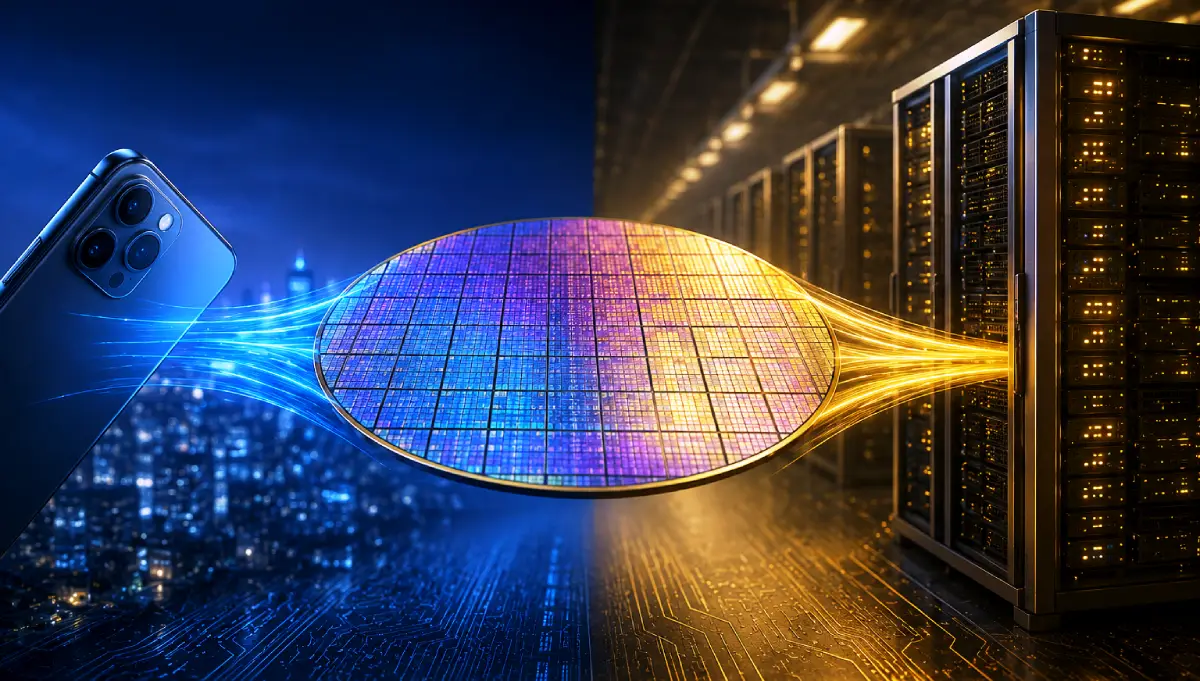
The Wafer ‘Crowding-Out’ Effect: There are only a handful of “mega-factories” worldwide, owned by the likes of Samsung, SK Hynix, and Micron, that print computer brains on circular silicon sheets, also called wafers. Their production capacity is very limited and, because of the complex technology and substantial investment required, it is not easy to scale it up in a jiffy.
Also, if someone were to consider investing, given the opportunity, it is still uncertain whether this demand will remain at such peak levels or return to normal once AI data centres are fully operational.
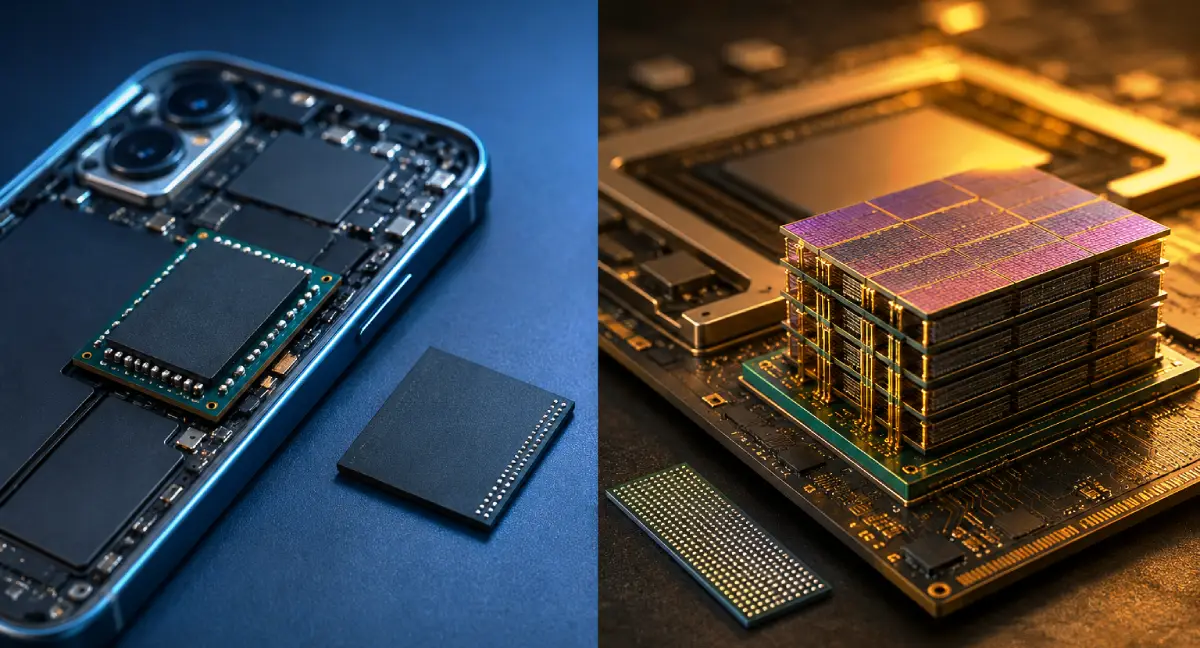
These assembly lines have become the real battleground. Every single silicon wafer consumed in building high-end AI components is a wafer taken directly away from smartphone production. This is what is known within the industry as the Wafer Crowding-Out Effect. AI does not use regular memory. It consumes a specialised, ultra-dense, hyper-fast type of RAM called High-Bandwidth Memory (HBM).
HBMs require stacking multiple layers of memory vertically, like a tower or skyscraper. Manufacturing them takes up three times more physical factory space than producing standard mobile RAM. The scale and magnitude are also vastly different. A high-end premium smartphone may have 12 GB of memory, whereas an AI data centre may require terabytes (TBs) of high-capacity memory to run complex AI models.
The AI chips have physically “monopolised” memory factory floors. This has plummeted the supply of smartphone memory. Tech giants dominating the AI landscape are simply hogging the memory assembly lines. This leaves consumer gadget brands in a vulnerable position.
Big Tech, Big Margins: It’s a “name your price” situation today. The handful of memory suppliers are demanding premium margins from the AI big tech companies. For them, time is critical in winning the AI race, and they are wasting no time in ramping up capacities. The “skim the milk” moment for AI companies appears to be just around the corner, and they do not want to enter the market half-prepared.
The memory companies are in complete control and are making the best of the opportunity. Microsoft, Meta, and Google have historically been trying to establish their supremacy in the tech world. With AI, each now sees this as an opportunity to capture the throne. This has made the race exciting and, at the same time, stressful for the supply chain. The demand-supply imbalance has resulted in memory suppliers commanding premium prices, and the AI companies are willing to pay. Memory companies are booking profit margins of 60–80%.
That’s not all. The big tech companies are booking supplies years in advance to lock them in. Compared to this, smartphone brands operate on very thin margins and have tight budgets for components, including memory. They simply cannot match what AI companies are currently paying to memory manufacturers.
The AI Tax
As a consumer, if you think you have nothing to do with AI, you are already paying for it, not by acquiring AI technology, but by paying more for the gadgets you purchase. The BOM (Bill of Materials) arithmetic for gadgets like smartphones has been disrupted. Memory used to account for 10–12% of the BOM. Today, it is as high as 40% in some segments, and there is no respite in sight. Prices continue to increase.
Following Apple’s recent price hike announcement for most of its ecosystem products, “memflation” or “chipflation” is no longer something that affects only consumers in the lower tiers of the market. It has now become all-pervasive.

As a consumer, if you have to purchase a gadget in 2026, there are only two options left: either pay more to get what you were looking for or compromise on your expectations without overshooting your budget. A consumer will have to pay 15–40% more to buy according to their expectations. Otherwise, they will have to buy a lower-configuration gadget for the same budget.
Many brands in the smartphone industry have started offering “lite” versions by reducing RAM and ROM capacities. Brands that were offering 8 GB of RAM have started offering 6 GB in the same price band.
The Bottom Line

The era of cheap, rapidly advancing consumer gadgets is on a structural pause. As long as the AI revolution continues to swallow the world’s silicon supply, our everyday gadgets will remain collateral damage.
If you are planning to buy a new phone, laptop, or gaming console in the near future, prepare to adjust your budget upward. To get a truly future-proof device that will not feel sluggish in a year, you will need to pay a premium. The AI revolution is officially here, and every tech consumer is footing the bill.
(Founder and Chief Analyst of Techarc, the author is a leading technology analyst and commentator who tracks and analyses emerging trends in the sector. Ideas are personal.)