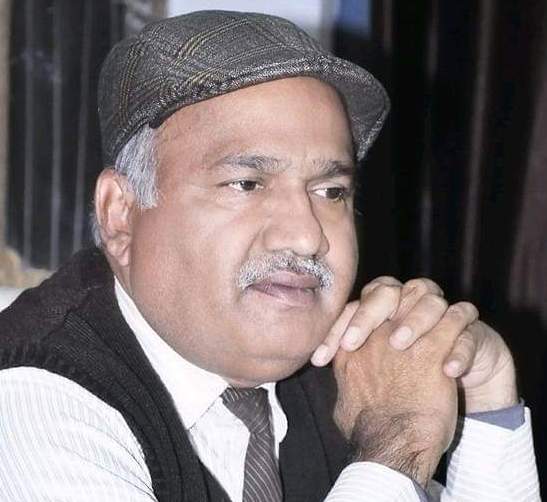
by Dr Vijay Garg
The crisis is not declining births but rising high-consumption lifestyles; ecological limits are breached while inequality and women’s lack of freedom deepen the burden.
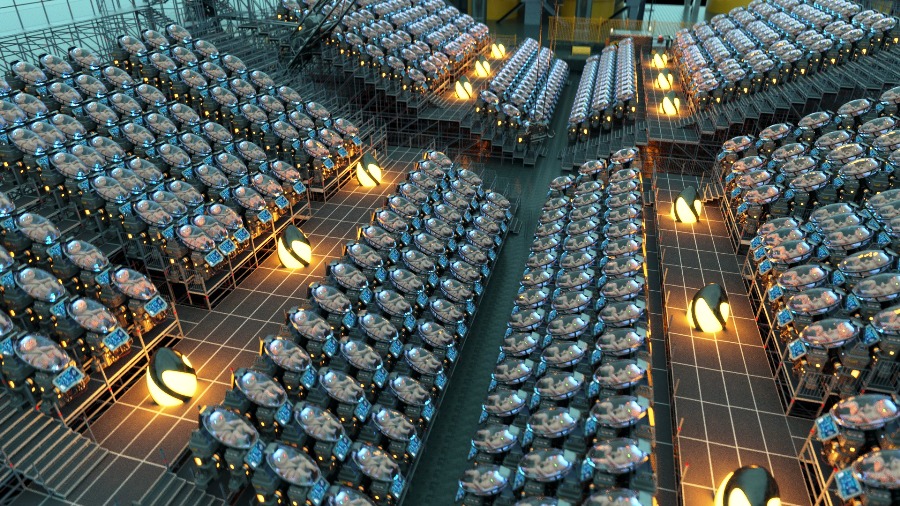
Eight billion of us live on this planet, nearly triple the number in 1960, yet we are told the real crisis is that there are not enough of us. In 1960, there were about 3 billion human beings on Earth. Today, there are around 8.2 billion, and projections suggest we may touch 10 billion by 2050.
India alone now holds nearly 18 per cent of the world’s population. When a human being is added to the planet, it is not merely another body occupying a few square feet. What is added is a lifetime of consumption: food, water, energy, metals, plastics, transport, housing and electronic devices. Overpopulation is not about how many people can stand on a piece of land; it is about how many lifestyles the Earth can afford to support.
Yes, fertility rates have already crashed across most of the world, from nearly five children per woman in 1960 to about 2.3 today. The United Nations’ medium projection expects the global population to peak below 11 billion around 2085 and then slowly decline. Explosive growth is ending. Yet, due to demographic momentum and the rapid spread of high-consumption lifestyles, especially in Asia, humanity’s total ecological footprint is still rising and will continue to do so for decades, even if every country were to drop to replacement fertility levels tomorrow.
And yet, a strange denial persists. While scientists warn that the human footprint has pushed the planet into an emergency, influential quarters, celebrity billionaires, sectarian zealots and jingoists keep repeating that the “real” crisis is population collapse. They promote policies that encourage people, especially women, to have more children. Due to their reach and glamour, people listen more to the showmen and politicians than to the data.
A common argument goes: “Only about five per cent of the world’s land is densely settled; the rest is still open.” This is deeply ignorant reasoning. The question is not whether there is physical room to stand. The question is whether there are enough forests, rivers, fertile soils, minerals and a stable climate to support the way eight billion of us want to live.
Look at what the ecological data is saying. The IPBES Global Assessment warns that up to one million species are now threatened with extinction. WWF’s Living Planet Report 2022 documents an average 69 per cent decline in monitored vertebrate populations between 1970 and 2018. These are not small fluctuations. This is a civilisation-scale crash in the rest of life; some call it the Anthropocene.
Yes, the planet is overpopulated, but not merely with human bodies. It is overpopulated with high-consumption lifestyles and with the ideals that glorify them. The way we are living, every additional human birth often means one more wound to the forests, the rivers, the climate and the other species that must make space for us. When one more human is added to this prevailing culture of ignorant consumption, the rest of existence has one more burden to carry.
But the cost to the planet is not evenly distributed. The richest 10 per cent are responsible for about half of global carbon emissions, the richest 1 per cent for roughly 16 per cent, while the poorest half contribute only around 10 per cent. In other words, the problem is not just how many bodies there are, but what those bodies are consuming, aspiring to and imitating.
Not every additional child carries the same weight. A child born into an affluent urban household in Shanghai or Dallas and raised to expect air conditioning, meat-heavy diets, frequent flying and the latest gadgets will, over a lifetime, consume many tens of times the resources of a child born into a rural family in Chad or Bihar that may never own a car or refrigerator.
The planet is not uniformly overpopulated with people; it is overpopulated with high-consumption lifestyles and with the universal aspiration to imitate them. The planet is not only overpopulated with people; it is overpopulated with wrong ideals.
When a billionaire with multiple mansions, private jets and a large brood of children lectures the world that we need “more babies”, he is really saying something very simple: “Multiply, and live like me.” Look at what is being presented: lavish lifestyle on one hand, seven children on the other. Multiply the per capita consumption of that kind by a population growing at that rate. What do you get? You get tragedy.
It is true that many countries now face birth rates far below replacement—Japan, South Korea, Italy, and soon China and parts of India. Demographers warn of shrinking workforces, collapsing pension systems and the heavy burden of caring for rapidly ageing populations.
Some sincerely argue that encouraging higher fertility in these societies is necessary for economic survival and cultural continuity. Fair enough. An ageing population does strain pension systems, caregiving arrangements and certain models of economic growth. But if the cure for these anxieties is to add more high-consuming bodies to an already overstressed planet, then the cure is worse than the disease. Any honest solution must begin by redesigning economies and welfare systems within ecological limits, not by sacrificing the planet for misplaced nationalism or affluence.
Yet almost none of the voices crying about “baby busts” couple their call for “more babies” with any serious proposal for the already rich to reduce their own ecological footprint, nor do they acknowledge that the same technological, urban, consumerist civilisation driving fertility collapse is simultaneously driving planetary overshoot. Wanting both endless growth and endless consumption while asking women to solve the demographic consequences is not a responsibility; it is evasion.
Now look at how both extremes of the economic spectrum approach having many children. In very poor societies, the reasoning often is: “More children means more hands to earn.” Seven mouth’s, but fourteen hands. This is a tragic, yet often rational, calculation: in the absence of pensions or social security, children are the only reliable insurance against a destitute old age. Never mind that the same poverty, lack of education and lack of healthcare ensure those hands stay trapped in low-productivity labour and cyclical misery.
At the other extreme, the ultra-rich say: “We can afford many children.” They treat children as they treat everything else, as proof of what they can afford. Just as they can have seven mansions and four holiday homes, why not seven children as well? When questioned, they add a noble-sounding excuse: the world will supposedly suffer from population decline, so they are “doing their bit” by reproducing more. It is a fig leaf, nothing more.
Both arguments, one born of desperation, the other of extravagance, evade the same truth: the planet’s limits. Neither takes responsibility for what each additional high-consuming human costs the water, the forests, the climate and the countless other species.
And let it be clear: the overconsumer is not only the billionaire with private jets. It is also the middle-class man or woman who, within their means, keeps imitating the same ideals of endless buying, endless travelling, endless display. You may not be able to afford a mansion, but you can still worship the same god of consumption; the damage then is psychological first, environmental next. Beneath these economic extremes lies a deeper injustice: the one written on women’s bodies.
If we look more carefully, overpopulation is inseparable from the condition of women. We already know that when women are educated, when they have access to healthcare, when they are financially independent and participate in the workforce, fertility rates fall. These are good developments in themselves. The fact that they also reduce population pressure is an added blessing.
India’s own numbers are telling. Our total fertility rate has fallen below replacement to about 1.9 births per woman nationally. But this average masks stark regional divides: Kerala below 1.5, Bihar still above 3. Where women are more educated and freer, they choose fewer children. Which means that runaway population growth is not just an economic or ecological problem. It is a symptom of women’s continued bondage.
Overpopulation is not only an environmental statistic. It is a measure of how unconsciously we have lived. A planet on which one million species are edging towards extinction and wildlife populations have dropped by more than two-thirds in just half a century, is clearly home to too many human beings living in the wrong way.
Yes, the planet is overpopulated. The solution is not panic, coercion or cruelty. The solution is the most demanding thing of all: inner revolution, supported by radical, structural change. Without education that kills the ignorant, consumption-driven ego, no law, no tax, no demographic chart will save us; with such education, population and consumption begin to fall voluntarily and intelligently.
Yet the need is immediate. The wealthy must be legally compelled to reduce their footprint now through steeply progressive carbon fees and legal caps on the most wasteful activities, private flights, luxury water use and excessive property, so that the law at least restrains the worst expressions of an uneducated ego. This does not replace inner work; it merely creates a little ecological space and time for real education and cultural awakening to happen. This policy enforcement provides the necessary ecological space for the cultural shift to catch up.
If women are free, if men are less afraid, if success is not defined by consumption and if self-knowledge replaces cultural conditioning, the population will stabilise and then fall. If inner life remains dark, no amount of demographic chart-making will save us.
(The author is a Retired Principal. Ideas are personal.)