by Janifer Salati and Muazzam Khursheed
The Supreme Court’s 3-year practice rule aims to improve judicial quality but may restrict access, especially for women and disadvantaged candidates, amid India’s mounting judicial backlog
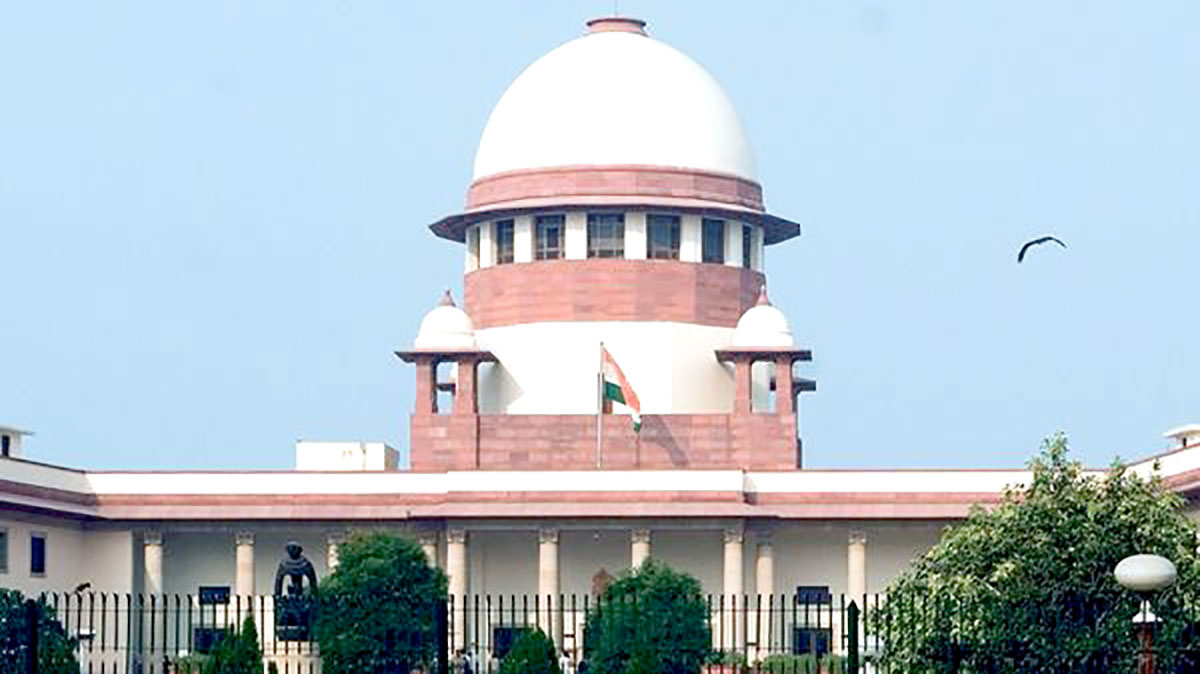
The Supreme Court of India, on May 20, 2025, in All India Judges Association v. Union of India, mandated a minimum of three years of practice as an advocate for candidates appearing for the Civil Judge (Junior Division) exam, the entry-level exam for entry into the judicial system in India. This judgment overruled the 2002 judgment of the SC, enforcing that practical courtroom experience is essential, effective from the next recruitment cycle.
The foundation for this comes from the 14th Law Commission Report of 1958, which suggested that candidates applying for civil judge positions should have 3–5 years of courtroom experience. However, in response to the Justice Shetty Commission’s recommendations, this provision was scrapped in 2002, because top talent was not entering the courts, as, after acquiring experience, recent graduates favoured more lucrative positions in the private sector over the grind of competitive judicial exams. The Court then agreed that a strong training programme may compensate for the inexperience in the courtroom.
Structural Issues
India’s judicial system is not just burdened but is structurally strained. As of early 2024, over 48.73 million cases were pending in district and subordinate courts alone, according to the National Judicial Data Grid, with total pendency now hovering around 5.4 crore cases. Nearly 9 out of 10 of these cases are concentrated in the subordinate judiciary alone, which stands as the very backbone of India’s justice delivery system. Yet this backbone is under visible and immense stress.
It is against this backdrop that the Supreme Court of India’s recent decision to reintroduce the mandatory 3-year practice requirement for entry into judicial services must be examined. This move marks a significant departure from the position adopted in 2002 in the All India Judges Association v. Union of India line of cases, where fresh law graduates were permitted to enter the judiciary directly upon clearing state judicial service examinations. For over two decades, this model produced generations of judges who entered the judiciary straight from law school, equipped with academic grounding supplemented by formal judicial training.
The reinstatement of the 3-year practice requirement signals a palpable shift in the Supreme Court’s thinking, reflecting a growing scepticism towards the idea that institutional training alone can substitute for lived courtroom experience. The concern, though not totally unfounded, is that judges without prior exposure to practical litigation may lack a grasp of procedure, evidence, and advocacy, something often internalised only through practice at the Bar. In a judicial system like ours, where subordinate courts handle close to 5 crore cases, even minor deficiencies in judicial handling can have massive effects on both efficiency and fairness.
Yet, while the rationale for the reform is understandable, its consequences warrant scrutiny. By mandating three years of practice, the system inevitably raises the entry barrier to judicial service manyfold. The reality of litigation in India is far less stable than what appears from the outside. For many young law graduates, particularly those who are first-generation lawyers, and even more so for those without proper financial backing, the early years at the Bar are marked by uncertainty and very meagre earnings. This requirement may, therefore, exclude precisely those candidates whom the earlier system sought to include. Its impact may be especially pronounced for women and first-generation lawyers, for whom sustained engagement in litigation is often structurally more difficult. In attempting to improve judicial quality, the reform risks narrowing access to the judiciary itself.
Women at Disadvantage
According to the India Justice Report 2022, 35% of district judiciary judges are female, and the Supreme Court of India’s placement of the 3-year practice rule is not just a matter of law but, in reality, reflects the struggles that many women go through, even if these struggles are not always spoken about openly. For a majority of women in the legal profession who aspire to become judges, the issue goes far beyond talent or hard work; it is about the very challenge of making a place for themselves in a society that constantly views them through a microscopic lens, where the weight of expectations and the harsh reality of discrimination coexist.

Among the harshest truths of a legal career is that it is in no way easy. The level of uncertainty and the demands it places require considerable support, including financial support, which not everyone has access to. Many women choose to pursue law to enter the judiciary, as it offers a more stable career progression and allows them to balance both professional and personal responsibilities in a judicious manner, especially when compared to the arduous working hours and conditions often encountered in litigation.
However, the SC’s 3-year practice rule after the completion of their degrees coincides precisely with the most critical period for women to grow in their careers. What makes it more troublesome is that this is the exact period that coincides with a phase in women’s lives when they are often pushed to make significant personal decisions in the form of marriage, eventual childbearing, and naturally added responsibilities. Many women in this timeframe either put their aspirations “on hold” or give them up entirely.
Given our societal set-up and historic gender biases, more often than not, it is women who are already putting in extra effort just to be seen and heard. A system that is meant to deliver justice should not make individuals feel as though they do not belong within it. Yet, somewhere along the way, that is what is happening.
With the Hon’ble Supreme Court’s practice requirement, many women may find it increasingly difficult to continue in the field, and it would just be a matter of time before many capable and deserving women, particularly from disadvantaged backgrounds, choose to walk away from the field simply because they do not have access to the resources and support needed to enable their growth.
A Paradox?
Looking at the practice requirement for entering the judiciary across the globe, there is no singular template. In countries like France and China, judges are recruited early through competitive examinations and then trained extensively, with no prior practice requirement. At the other end of the spectrum, countries such as the United States, Canada, and Australia treat judgeship as the culmination of a legal career, typically requiring a decade or more of practice. India has historically occupied a middle ground, blending competitive examinations with modest experience requirements.
The 3-year rule reinforces this hybrid position but also underscores the difficulty of balancing competing institutional objectives. What makes the present moment particularly troubled is the scale of India’s judicial crisis. With millions of cases pending and thousands of vacancies unfilled, the system requires not fewer but more judges. The reintroduction of a practice requirement sits uneasily with this reality: a narrower pool of eligible candidates may inadvertently slow the rate at which vacancies are filled, compounding delays in a system that is already overburdened.
The practice requirement gravely risks disadvantaging candidates from financially constrained backgrounds who cannot afford to spend years in unstable early practice. For many, the need to earn a steady income compels them to commit fully to the profession, making a later return to exam preparation both professionally disruptive. As a result, the judiciary may inadvertently lose out on some of the brightest legal minds. The reform thus operates within a fundamental paradox. It seeks to enhance the quality of justice without aggravating the deficit in its delivery, a balance that is very difficult to achieve. A rigid insistence on prior practice may produce more courtroom-ready judges but risks narrowing the pool of entrants. Conversely, a purely examination-based system may widen access but raise concerns about preparedness.
The challenge for India, therefore, lies in designing a framework that reconciles these competing positions. The 3-year rule, in this sense, is less of a definitive solution than a policy experiment whose success or failure will depend on how it interacts with the deeper structural issues that our country’s judiciary faces, such as huge vacancies, inadequate infrastructure, and systemic inefficiencies in judicial administration. Reforming entry into the judiciary is undoubtedly important, but it cannot singularly resolve a crisis that is fundamentally rooted in capacity constraints and structural deficiencies.
If our courts truly want to stand for justice, they need to examine the on-ground impact of their decisions. If the judiciary genuinely seeks to be fair, it must ask itself a difficult question: Can it truly claim to be equal if the path to reaching it quietly pushes away those who dare to dream of being a part of it?
(Janifer Salati and Muazzam Khursheed are both students of law at the University of Kashmir. Ideas are personal.)