by Iqbal Ahmad
The Vishaw Valley in Kulgam, birthplace of Reshiyet and home to Sheikh Noor-ud-Din Noorani (RA), holds untapped heritage and spiritual tourism potential awaiting rediscovery
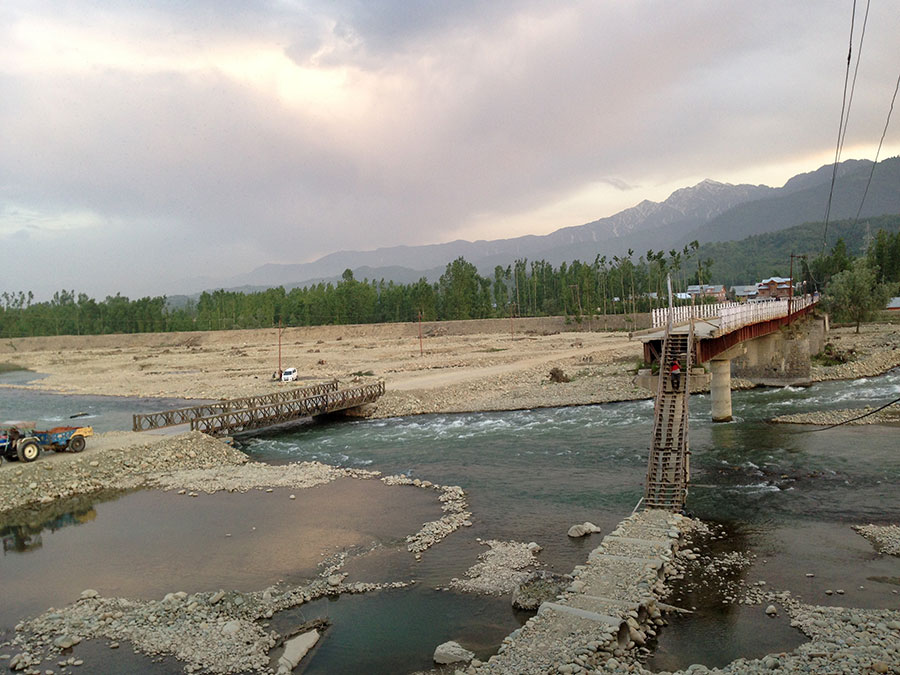
The Kulgam Valley, or to be more precise, the Vishaw Valley of South Kashmir, with its headquarters at Kulgam, remains largely unexplored in terms of its immense spiritual and heritage tourism potential. Rich in natural beauty and sacred legacy, this region has much to offer if only it were brought onto the heritage and spiritual tourism map of Kashmir. The valley, often described as the abode of spirituality, is where one of the most prominent mystic movements of Kashmir, Reshiyet, was born and from where it spread to far-off parts of the valley.
Nestled in the lap of the Pir Panjal towards the south-west of Kashmir, about seventy kilometres from Srinagar, the Vishaw Valley stretches from the spiritual town of Qaimoh in the east up to Kousarnag in the west, following the course of Nallah Vishaw. Its southern flank is guarded by the snow-clad peaks of the Pir Panjal, while well-paved roads connect it from the east, west, and north.
Ancient Heritage
The antiquity of the Vishaw Valley reaches back thousands of years, as traces of Palaeolithic and Neolithic tools have been discovered here, though most went unrecorded. In recent years, fossil deposits were reportedly found in the upper reaches by local teachers, suggesting the need for systematic geological and archaeological surveys.
Among its known historical treasures, Devsar, once called Devesarasa, stands out. The site, situated on the right bank of Nallah Vishaw, is believed to have been an ancient centre of learning and bronze art influenced by Gandhara traditions. Archaeological discoveries from Devsar include a magnificent Kushan-era bronze sculpture of Lord Buddha and a tenth-century bronze door frame from the reign of Shankaravarman. These artefacts, masterpieces of Kashmir’s ancient bronze art, are now preserved in the Archaeology Gallery of the SPS Museum, Lal Mandi, Srinagar.
Other archaeological mounds, such as those at Kotebal and Kousarbal, await exploration and documentation.
Abode of Mysticism
Above all else, Vishaw Valley is a cradle of Kashmiri mysticism. It was here that Reshiyet, the most indigenous spiritual order of Kashmir, took root with the birth of Nund Rishi, better known as Sheikh-ul-Alam or Sheikh Noor-ud-Din Noorani (RA), in the fourteenth century. Whether born at Khee Jogipura or Qaimoh, both places lie within this valley. Local oral traditions and folklore abound with miraculous episodes from the saint’s early life, particularly around Khee and Qaimoh.
Spiritual landmarks associated with the saint include the sacred spring at Khee Jogipura, the underground cave at Gufabal, the tombs of his family at Qaimoh, and his meditation site at Tismer, beneath the Hounhang hill rock. It is believed that at the cave of Gufabal, the saint attained divine enlightenment before continuing meditation at Tismer. A beautifully preserved Reshi shrine now stands there, drawing devotees year-round.
The Saint and His Teachings
Much has been written about the works and teachings of Hazrat Sheikh Noor-ud-Din Noorani (RA), the patron saint of Kashmir and founder of Reshiyet. Known affectionately as Nund Rishi, he championed genuine mysticism, spiritual equality, and the doctrine of divine oneness. His verses remain among the most revered in Kashmiri literature:
There is one God,
But with a hundred names,
There is not a single blade of grass
Which does not worship Him.
Born around 779 AH (1377 AD) to Sheikh Salar-ud-Din and Sadra Moji (Sadra Dedd), his birth itself is recorded as a miracle; his mother is said to have inhaled the fragrance of jasmine blooming beside a spring at Khee Jogipura before he was born. His sayings, called Shrukh, are preserved in Rishi Nama and Noor Nama, forming the spiritual bedrock of Kashmiri Sufi thought.
Reshiyet on Coins
The saint’s influence extended beyond spirituality into Kashmir’s material culture. Numismatists have identified rare gold, silver, and copper coins struck in his name, alongside Sheikh Hamza Makhdoomi (RA), during the Durrani rule (1753–1891 AD). One Persian couplet on such a coin reads:
“Sika shud roshan ze shua-e Noor-ud-Din, reij az Makhdoom Qutub-ul-Arifeen.”
(“This coin is illuminated by the rays of Noor-ud-Din, struck by Makhdoom, the pole of the wise.”)
These coins, issued from the Kashmir mint known as Zarb-i-Kashmir, have been documented by numismatists, including WR Rodgers and later by scholars such as Mohammad Yousuf Taing. The SPS Museum in Srinagar holds several specimens from this remarkable series.
Shrines and Living Faith

Today, the valley remains dotted with mystic shrines and Reshi relics, from Alamdarnag at Khee to Gufabal and Tismer in Kulgam. The most significant Syed shrines belong to Mir Syed Hussain Simnani and Mir Hyder Rahmani, who settled in Kulgam during the reign of Sultan Shahab-ud-Din. It was through Mir Syed Hussain Simnani that Sheikh Salar-ud-Din, father of Nund Rishi, embraced Islam, marking a historic moment in the valley’s spiritual evolution.
While the practices of Reshiyet have waned with time, devotion to its saints endures. Every Thursday and Friday, hundreds of devotees visit these shrines to seek blessings. Most Reshi sites associated with Sheikh Noor-ud-Din Noorani (RA) lie within the Vishaw Valley, though his principal Astana stands at Charar-e-Sharif in Budgam. Mapping these sacred sites could bring this forgotten cradle of Kashmiri mysticism into the spiritual and heritage tourism circuit of Jammu and Kashmir.
(The writer is a senior archaeologist and author. Views are personal.)