Dalits in Jammu and Kashmir, long relegated to the margins, have waged a decades-long struggle against caste oppression, demanding dignity, representation, and justice from monarchy to modern democracy, writes Faiqa Masoodi
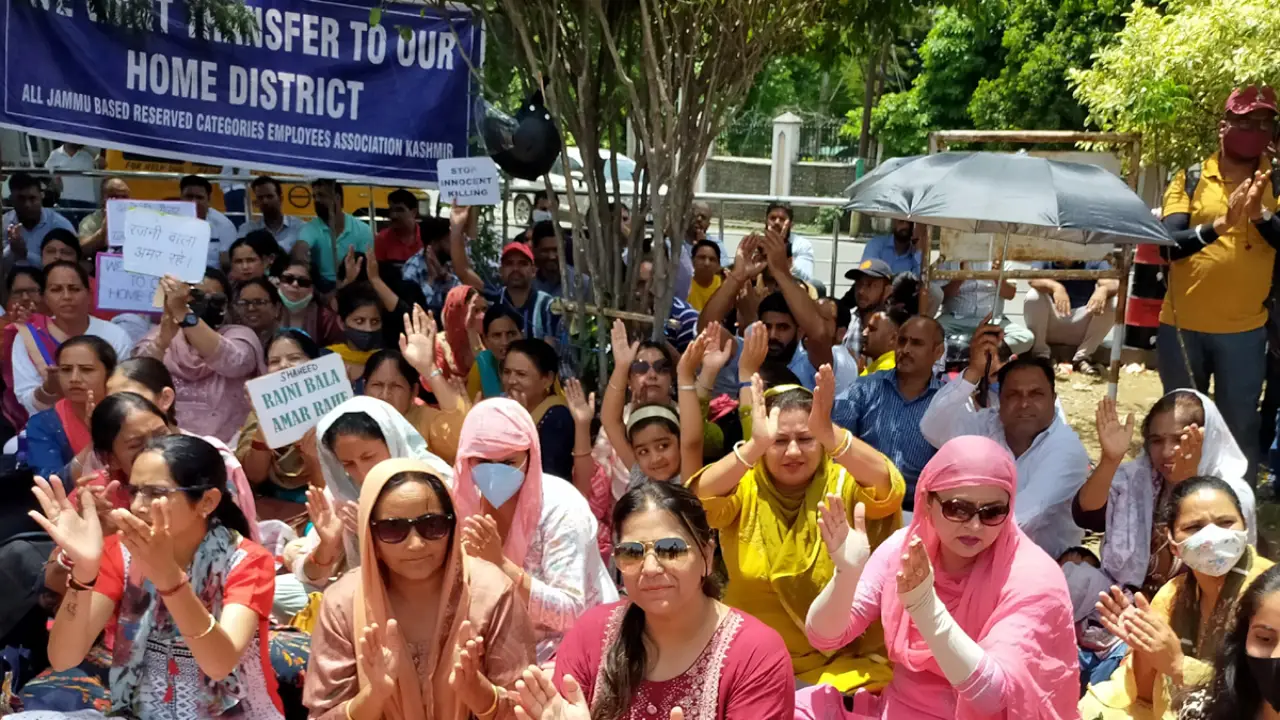
For centuries, the Dalits of Jammu and Kashmir remained bound to the lowest rungs of the region’s social ladder. Scattered across districts and isolated by caste, they toiled under the weight of humiliation, exclusion, and exploitation. From the days of the Dogra monarchy to the complex politics of post-independence India, the Dalits of Jammu have carried forward a struggle that has combined resistance with a call for dignity. This call continues to echo in their fields, institutions, and assemblies.
Caste and Occupation
Under Dogra rule, caste was not only a social marker but an institutional principle. The Dalits, then broadly referred to as Harijans, were designated for what the state and society regarded as ‘polluting’ labour. They faced severe systemic oppression. They were forced into hereditary, degrading occupations like scavenging, skinning, and street sweeping, and refusal to perform such work was treated as a punishable offence. Social interaction with upper castes was strictly prohibited, and untouchables were barred from temples, tea shops, salons, water sources, and cremation grounds. They lived outside village boundaries and endured numerous social handicaps, including bonded labour, restrictions on marriage, food, and movement, and were subjected to huka-pani band (social boycott). In schools, their children were either denied entry or made to sit at the door, often beaten to discourage their return. The caste system denied them dignity even in death, forcing them to carry their dead through fields and bury or cremate them separately from caste Hindus. Their work was both essential and invisible, their presence restricted to the margins of villages and towns.
In the Jammu region, the major Scheduled Caste groups included the Meghs, Chamars, Dooms, Batwals, and Saryaras. Their subordination was legally informal but socially absolute. Temples remained closed to them. Public wells were off limits. In schools, if admitted at all, their children sat on the floor, often at a distance from the rest.
While Brahmins and Rajputs dominated landownership, education, and administration, Dalits were locked out of formal means of mobility. The state’s justice and welfare systems rarely addressed their grievances. The Dogra regime, although nominally secular in administration, upheld religiously informed social divisions through customary practices and policing of caste boundaries.
The First Protest
It was in the 1920s that the earliest stirrings of Dalit organisation began to appear in Jammu and Kashmir. Isolated voices started demanding access to temples, schools, and civil rights. The Glancy Commission, established in 1931 after widespread protests in Kashmir and the Muslim areas of the Jammu region, failed to address Dalit concerns meaningfully. It focused primarily on Hindu-Muslim parity in representation, ignoring those on the lower rungs of Hindu society altogether.
Disillusionment followed again in 1933 with the Franchise Committee, which excluded Dalits from its vision of democratic participation. When the state introduced its Constitution Act in 1934, a paltry two seats were allocated to the Scheduled Castes in the 75-member Praja Sabha, the erstwhile assembly that almost resembles the post-2019 Jammu and Kashmir assembly. While this was the first formal acknowledgement of Dalits in state policy, it remained a token gesture, failing to impact their real conditions of life.
From Identity to Assertion
By the mid-1930s, a political consciousness was gaining ground among Dalits in Jammu. Influenced by social reformist ideas circulating from other parts of India, particularly from the Ambedkarite and Arya Samaj movements, local leaders began forming caste-based associations. The All Jammu and Kashmir Megh Sabha was among the first of these efforts. However, its scope remained confined to a single caste.
In 1940, recognising the limitations of exclusive caste mobilisations, Dalit leaders came together to form the Harijan Mandal. It united thirteen Scheduled Caste communities under one umbrella and aimed to take up broader issues of social and political discrimination. The Mandal became the principal voice for Dalits in the region for decades to come. It held meetings, led delegations, submitted memoranda to the Maharaja, and raised the demand for education, representation, and dignity.
But opposition was fierce. Upper caste hostility, often endorsed by the local administration, limited the Mandal’s outreach. The state’s political institutions remained under elite control, and with the national freedom movement largely absorbed in Hindu-Muslim power-sharing arrangements, Dalits found few allies.
New Constitution, Old Exclusions
The end of princely rule in 1947 and the accession of Jammu and Kashmir to India raised hopes of equality. Land reforms initiated by Sheikh Mohammad Abdullah’s government in the early 1950s changed the landscape. Tenants were granted land ownership, and large estates were dismantled. For many Dalits, particularly agricultural labourers in Jammu province, this reform brought economic empowerment. It altered the feudal order and sowed the seeds of assertion.
But empowerment also provoked a reaction. Landowners, many of whom belonged to dominant castes, resisted the redistribution and frequently targeted Dalits with intimidation and violence. Across the villages of Hiranagar, Samba, and Kathua, Dalits began forming defensive collectives. A pattern emerged: as Dalits began to claim land and rights, retaliation grew sharper.
A Turning Point
On July 26, 1956, a landmark protest shook the political establishment. Hundreds of Dalits gathered at Chhan Arorian, Hiranagar, after an earlier peaceful meeting in Marheen was attacked by upper-caste men. Organised by Pandit Chhano Ram, the protest launched a hunger strike demanding the right to live and work in dignity. Leaders like Havaldar Tej Ram Dogra and Babu Milkhi Ram emerged as central figures.
Despite harassment and state indifference, the hunger strike drew massive support and lasted ten days. The strike forced the intervention of Prime Minister Bakshi Ghulam Mohammad, who visited the protest site and promised reforms. Milkhi Ram would later go on to become the first prominent Dalit MLA from Jammu and Kashmir.
The Marheen protest became a symbolic cornerstone for the Dalit movement in the region. It marked a transition from passive suffering to organised political action.
Mobilisation and Marginalisation
Over the next decade, the Harijan Mandal emerged as the principal organisation for Dalit mobilisation in Jammu and Kashmir. The Mandal adopted Ambedkar’s legacy, spread awareness, and contested elections. But its journey was riddled with betrayals. Government assurances seldom translate into policy. Protests, rallies, and memoranda were often met with silence.
A major flashpoint occurred in 1960 during a hunger strike at Parade Ground, Jammu. The government made vague promises and later backtracked. Frustration built up among Dalit youth and leaders, many of whom began aligning with national-level Scheduled Caste organisations.
In 1968, the Gajendragadkar Commission recommended extending national reservation policies to Jammu and Kashmir. But the state, citing its special constitutional status under Article 370, delayed implementation. The backlog in Scheduled Caste appointments began to mount. Protests erupted, and Dalit leaders were once again on the streets.
In 1970, Bhagat Amar Nath, then president of the state unit of the Depressed Classes League, launched a fast unto death at Karan Park, Jammu, demanding reservation implementation. Despite appeals to delay the strike, Amar Nath persisted. On June 1, after ten days of fasting, he died. His death sent shockwaves across the region. Mass protests followed, and the government was forced to act.
In January 1973, the state issued an order providing for Scheduled Caste reservations in public employment. But implementation remained partial. Even after the issuance of SRO 294 to address reservation backlogs, Scheduled Caste representation in government jobs remained significantly below the mandated percentage.
A Complex Terrain
Unlike in many parts of India, the Dalit experience in Jammu and Kashmir has been shaped not only by caste but also by regional and religious dynamics. In Jammu, caste hierarchies mirrored those of north India, with strong Hindu orthodoxy reinforcing untouchability. In Kashmir, where the majority population is Muslim, caste-based exclusion among Hindus existed in smaller pockets. However, among Muslims too, communities such as Watal and Hanjis faced social stigma, though the theological basis for caste was absent.
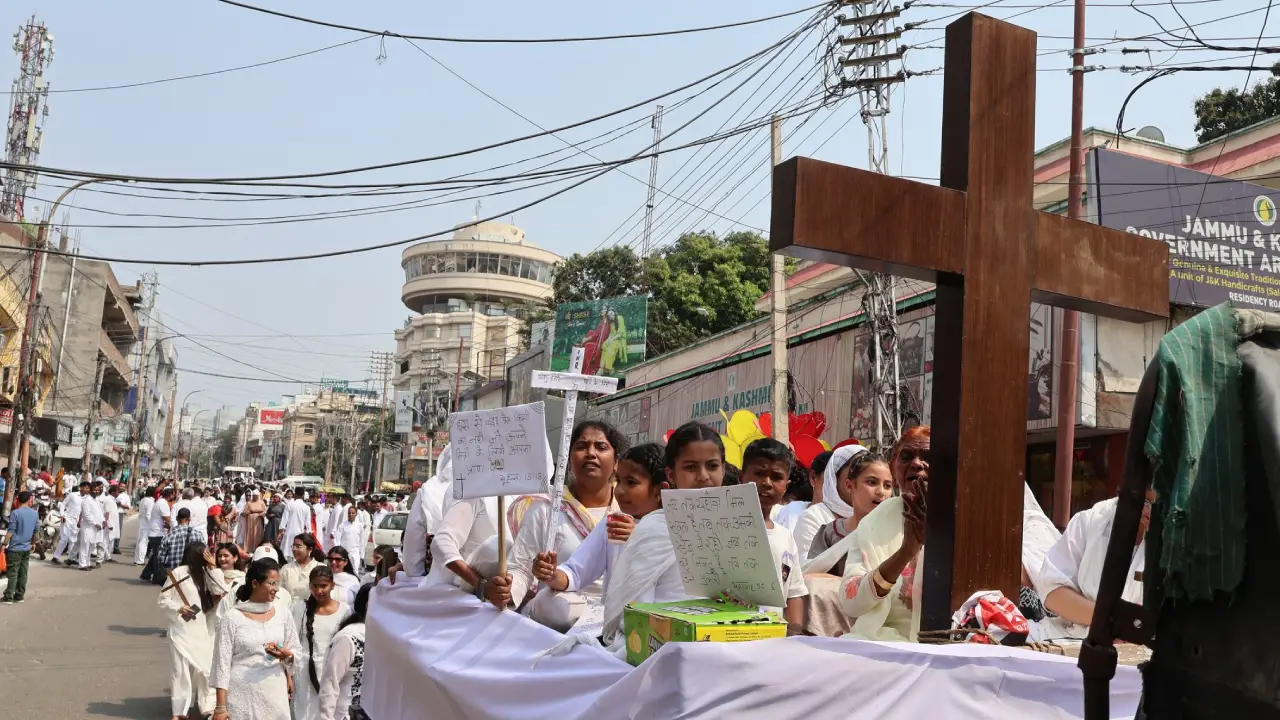
This uneven distribution of caste experiences created different political responses. While Dalits in Jammu found solidarity through organised caste-based movements, oppressed groups in Kashmir were slower to mobilise under caste identity, partly due to different religious frameworks and political priorities.
Within the Dalit community itself, divisions often blunted collective action. The Batwals, Meghs, Chamars, and Dooms, though sharing similar socio-economic conditions, often remained fragmented. Differences over religious affiliations, such as between Ravidassia followers and Kabirpanthis, added further layers to identity politics.
From Street to State
Despite limited success, the Dalit movement in Jammu and Kashmir gradually began to make inroads into formal politics. Babu Milkhi Ram, who emerged from the Marheen protests, served multiple terms as MLA and became a respected figure. In subsequent years, Dalits were elected from reserved constituencies and nominated to the Legislative Council.
Yet, electoral politics also introduced constraints. Many Dalit leaders, once firebrands, were absorbed into mainstream political parties and silenced. Token representation replaced substantive empowerment. With few exceptions, Dalits in positions of power failed to challenge institutional discrimination or raise community-specific issues in the Assembly.
A Movement in Retreat
The 1990s brought new challenges. The rise of militancy in Kashmir and political instability across the state shifted focus away from caste-based issues. Reservation backlogs remained unresolved, and Dalit voices were drowned out by larger security and regional narratives.
Even as Scheduled Castes were granted an eight per cent reservation in public employment and education, implementation was weak. Recruitment agencies failed to fill reserved posts. In rural areas, Dalits continued to face social boycott, limited access to public resources, and barriers to education.
The Harijan Mandal, once a vibrant force, experienced a decline in its influence. With the advent of generational shifts, ideological clarity was lost. Young Dalits, burdened with unemployment and migration pressures, disengaged from collective politics. Occasional protests were launched, but lacked coordination and leadership.
Identity Through Devotion
Amidst political and administrative struggles, Dalits in Jammu also turned to religion and culture for dignity. The emergence of Ravidassia and Kabirpanthi religious spaces helped construct alternative community narratives. Temples and community halls became sites of assertion. Religious processions, gurubandis (community codes), and devotional literature offered emotional and spiritual refuge.
However, these movements also faced resistance from dominant castes and indifference from the state. Despite demands, many Ravidassia temples were denied land or funding. Yet, cultural identity emerged as a parallel space for Dalit dignity.
The Road Ahead
Right now, the SCs are taking an eight per cent reservation, and they have a job share across Jammu and Kashmir. Though the Kashmir society has no history of discriminating against the Dalits for lack of their population, they are still getting a percentage in jobs right from the district levels. More than a few thousand Dalits from Jammu are serving in Kashmir.
However, Dalit activists believe their struggle for their rights in Jammu remains incomplete. While legal protections exist and political representation has improved on paper, the deeper structural inequalities persist. From education to employment, land rights to dignity in public spaces, Dalits continue to face daily battles, they believe.