With restructured GST set to roll out, Jammu and Kashmir, already grappling with weak consumption and post-Pahalgam economic strain, anticipates further decline in collections despite scattered district gains and government safeguards, writes Masood Hussain
When the Goods and Services Tax (GST) was rolled out in July 2017, it was hailed as India’s most ambitious federal tax reform, promising a unified market and higher compliance-led revenues. For Jammu and Kashmir, which initially hesitated to join the system, the first few years indeed showed promise. Collections rose steadily, districts adapted to the new framework, and key sectors like tourism, trade, and handicrafts contributed to a buoyant fiscal trend.
The story went off the script in 2025. A combination of macroeconomic stress, geopolitical challenges, and the devastating impact of the April 22 Pahalgam massacre that killed 26 civilians has reversed much of the optimism. Chief Minister Omar Abdullah, speaking both as head of government and as finance minister, told the 56th GST Council meeting in Delhi on September 3 that Jammu and Kashmir’s public revenues had “collapsed,” with GST collections showing a clear downward trend after years of gains.
Rise and Decline
According to official data, GST collections across Jammu and Kashmir stood at Rs 7272 crore in 2022–23, reflecting consistent growth. The following year, 2023–24, collections improved slightly to Rs 8,128 crore, signalling early headwinds. In 2024-25, the collections were put at Rs 8680 crore.
By the first quarter of 2025-26, the stress was visible: revenues fell by about nine per cent compared to the previous year. Up to July 2025, the GST collections were at Rs 2724 crore, which was less in comparison to the same period ending July 2024, which was Rs 3005 crore. Officials attributed the decline partly to the one-time adjustment of old IGST balances and partly to disruptions in trade and consumption triggered by events in April and May.
The slowdown has persisted into the current financial year. Up to July 2025–26, collections have not returned to their earlier peaks, even though pockets of growth are visible in districts like Budgam and Pulwama.
District-Level Disparities
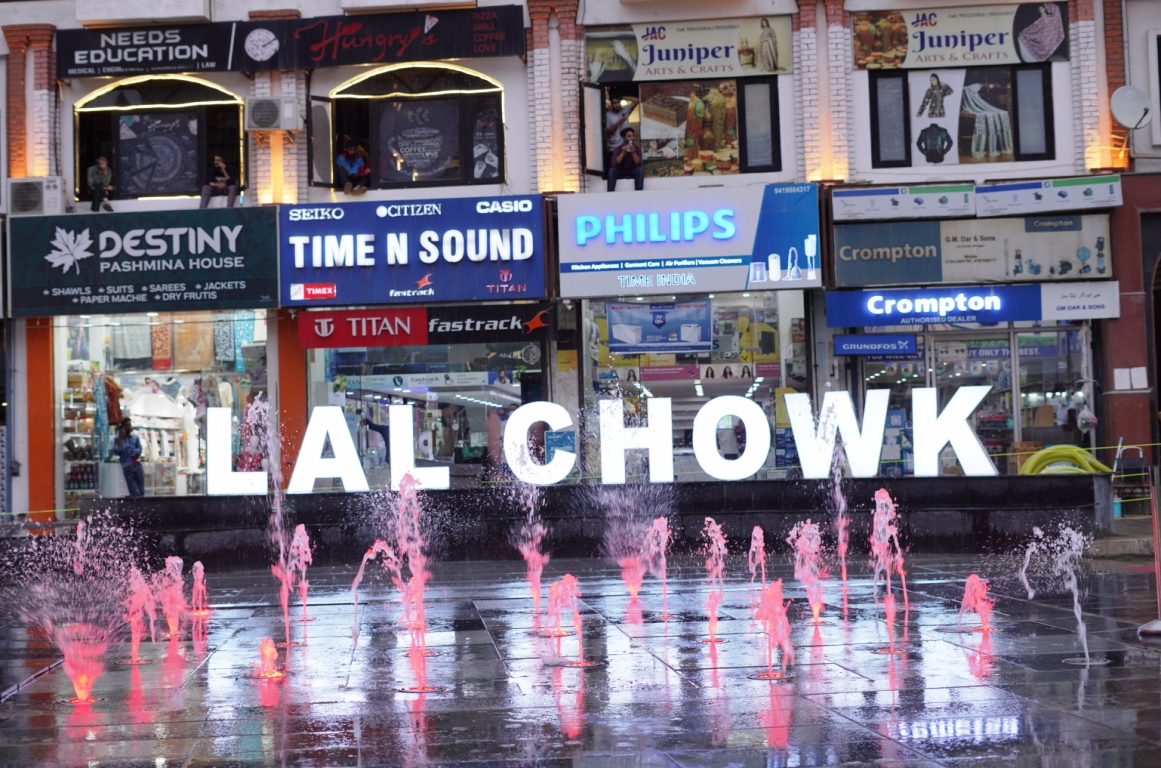
District-wise GST data highlights both resilience and unevenness. Jammu and Kashmir has two major cities, the erstwhile capitals of Jammu (winter) and Srinagar (summer). Jammu is the main industrial hub where most of the businesses and MNCs are headquartered. Srinagar is the consumption sphere where most of it is utilised.
Jammu, driven by expanding industries and infrastructure, is the best performer in the erstwhile state, with Rs 4179 crore in 2023-24 and Rs 4367 crore in 2024-25. Most of the forwarding agents of the major FMCG players are stationed in Jammu and pay their dues there.
Srinagar, the consumption and trading hub, remains the second major GST payer. The GST collections in Srinagar were to the tune of Rs 1399 crore in 2023-24 and Rs 1497 crore in 2024–25.
A surprise in the latest figures has come from Kathua, which surged dramatically from Rs 93 crore in 2023-24 to Rs 303 crore in 2024-25, lifting its rank from 12th to the third spot, driven largely by new industries.
Udhampur, steady in its performance, recorded Rs 267 crore in 2023-24 and Rs 263 crore in 2024-25, but slipped slightly from third to fourth.
Samba followed a similar upward march, jumping from Rs 23 crore in 2023-24 to Rs 257 crore in 2024-25, climbing from 16th to fifth place on the back of industrial activity.
Pulwama, long a mid-table performer, grew from Rs 227 crore in 2023-24 to Rs 253 crore in 2024-25, finishing sixth, just one rank lower than the previous year.
Reasi, too, showed remarkable improvement, with collections rising from Rs 58 crore in 2023-24 to Rs 224 crore in 2024-25, pushing it from 13th to seventh.
Anantnag maintained consistency, climbing from Rs 196 crore in 2023-24 to Rs 219 crore in 2024-25, staying firmly in the middle order.
Baramulla grew modestly from Rs 129 crore to Rs 143 crore, while Budgam moved up from Rs 118 crore to Rs 132 crore. Ganderbal, however, lost ground, falling from Rs 211 crore in 2023-24 to Rs 130 crore in 2024-25, which dragged it from seventh to 11th.
Among the fallers, Rajouri collapsed from Rs 214 crore in 2023-24 to just Rs 44 crore in 2024-25, dropping from sixth to 14th. Poonch witnessed the steepest decline, plummeting from Rs 245 crore in 2023-24 to only Rs 22 crore in 2024-25, sliding from fourth to 18th. Ramban dipped slightly from Rs 103 crore to Rs 101 crore, while Kishtwar moved from Rs 45 crore to Rs 59 crore, a modest rise but not enough to climb higher than 13th. Doda, in contrast, climbed out of the bottom, rising from Rs 20 crore in 2023-24 to Rs 32 crore in 2024-25, improving its rank from 18th to 15th.
At the tail end, Shopian inched up from Rs 14 crore to Rs 17 crore but still languished in 19th place. Bandipora remained stuck at the bottom, unchanged at Rs 11 crore across both years, keeping it at 20th. Kupwara stayed stagnant at Rs 23 crore across both years, while Kulgam saw a slight dip from Rs 28 crore to Rs 27 crore, leaving both districts rooted at the lower rungs.
The data indicate a widening gap between urban-industrial centres and rural peripheries, raising the challenge of how to ensure balanced fiscal growth across Jammu and Kashmir. A regional comparison suggests that 10 districts in the Jammu region paid Rs 5248 crore in 2023-24, and Rs 5672 crore in 2024-25, with Rs 1454 crore up to July 2025, part of the fiscal 2025-26. In comparison, the 10 districts of the Kashmir region paid Rs 2357 crore in 2023-24, and Rs 2452 crore in 2024-25, with Rs 684 crore up to July 2025, which fall in fiscal 2025-26.

Sharp Declines
The impact of the downturn is most visible in sector-wise GST collections, where some of the biggest contributors have seen dramatic falls. The data collection comparison between April and July of 2024 and the same period in 2025 offers a clear idea. In the four months starting April to July 2025 (part of fiscal 2025-26), the fall is visible (in comparison to April-July 2024): 7.38 per cent in the aviation sector; 11.5 per cent in cements; 19.62 per cent in automobiles; 20.04 per cent in hospitality; and 83.77 per cent in constrictions and government contracts.
Aviation has been one of the hardest hit. Spice Jet Limited’s GST revenues fell 74 per cent in 2025–26 compared to the previous year, while Indigo recorded a 28 per cent fall. Vistara and Air India Express registered no revenue at all, a 100 per cent decline, official data suggests.
Hospitality has also collapsed, especially after the Pahalgam massacre, when the booming tourist season fell apart. The Khyber Himalayan Resort & Spa’s collections fell 72 per cent, Lalit Grand Palace by 58 per cent and Hotel Grand Mumtaz by 100 per cent. Other resorts and hotels have seen similar contractions, mirroring the standstill in tourism after April’s attack, officials informed.
Automobiles are no better. Dealers like Fairdeal Motor & Workshop saw a 25 per cent decline, Jamkash Vehicleades a 20 per cent fall, and Prestige Truck & Bus a staggering 81 per cent dip, according to officials who are privy to the developments taking place at ground zero.
The cement and construction sectors, the backbone of infrastructure, have also suffered. Ambuja Cements, ACC, and Tramboo Industries posted double-digit declines, while Vensar Constructions’ GST revenues shrank by 91 per cent and Konkan Railway Corp’s by 41 per cent.
This broad-based sectoral pain reflects both collapsing demand and disrupted supply chains.

Reforms and the Debate
The last GST Council meeting recommended a sweeping package centred on a simplified two-slab structure of 5 per cent and 18 per cent, scrapping the earlier 12 per cent and 28 per cent slabs. Essentials, labour-intensive industries, agriculture and health will see major rate cuts, while luxury and sin goods such as pan masala, tobacco, aerated drinks, high-end cars, yachts and private aircraft will attract a 40 per cent levy to balance revenues. The reforms will take effect from September 22, 2025, except for tobacco and related products, where changes will come later after loan liabilities linked to compensation cess are cleared.
The measures promise direct relief for households, with GST on soaps, shampoos, bicycles and tableware now at 5 per cent, and food products like packaged namkeens, sauces, pasta and chocolates cut from 12–18 per cent to 5 per cent. TVs, ACs and dishwashers will move from 28 per cent to 18 per cent. In construction, cement will fall from 28 per cent to 18 per cent, reducing housing and infrastructure costs. Tractors, harvesters, drip irrigation equipment and bio-pesticides have been cut to 5 per cent, while in automobiles, two-wheelers, buses, trucks and parts will shift to 18 per cent.
Education and healthcare see some of the steepest cuts: exercise books, pencils and crayons will be exempt, while 33 life-saving drugs and diagnostic kits move to zero per cent. Other medicines, including Ayurveda and Unani, fall to 5 per cent, alongside corrective spectacles and medical equipment. Life and health insurance premiums will be exempt, aligning with the government’s Insurance for All by 2047 vision.
The reforms, the Council said, rest on seven pillars: simpler structure, fairer taxation, faster refunds, lower costs for consumers, improved competitiveness for MSMEs and exporters, stronger state revenues, and sustained demand growth. Experts from the pharmaceuticals, textile and handicraft sectors have already welcomed the measures, calling them “timely relief” for both industry and the public.
Omar’s Interventions
At the GST Council, Omar Abdullah endorsed the proposed two-tier GST structure of 5 per cent and 18 per cent, calling it a step towards clarity and reduced compliance costs. But he warned that for Jammu and Kashmir, such rate rationalisation could further reduce revenues by 10–12 per cent in the short term.
“My concern is that these rate changes must ease the burden on the common man and not become opportunities for profiteering,” Abdullah said. He called for systemic safeguards to ensure that lower GST rates translate into lower consumer prices, rather than being absorbed as excess margins by businesses.
Omar also pressed for compensation mechanisms for states and UTs, arguing that the unique fiscal challenges of Jammu and Kashmir, particularly in the wake of the Pahalgam attack.
Wider Implications
The GST reforms, dubbed GST 2.0, were celebrated by several industries nationally, particularly banking, textiles, pharmaceuticals, and renewable energy, which expect to benefit from lower tax rates. The government has projected a short-term revenue loss of Rs 48,000 crore due to rate cuts, but anticipates higher consumption, stronger compliance, and increased economic activity to compensate.

Prime Minister Narendra Modi hailed the reforms as “a double dose of support and growth for the nation,” while bankers projected that the simplified structure would spur consumption, soften inflation, and boost credit demand.
But for Jammu and Kashmir, the optimism has been tempered by immediate fiscal stress. The Chief Minister reminded the Council that geopolitical uncertainties and restrictive global trade policies could deprive India of 20 per cent of its global market access, hitting sectors such as handicrafts and agriculture, both vital for the UT he rules.
The Road Ahead
For now, the GST story in Jammu and Kashmir is one of divergence: while some districts and industries continue to show resilience, the overall fiscal picture is one of contraction and caution. The data reveals that the decline in GST revenues is not just statistical; it mirrors the lived reality of businesses shutting down, jobs lost, and developmental projects slowing.
If the Centre agrees to Omar Abdullah’s call for safeguards and compensation, Jammu and Kashmir may find room to rebuild. But unless trade, tourism, and investment recover, GST collections will remain a barometer of an economy struggling to regain its balance. The major takeaway for Jammu and Kashmir from the Council meeting was that Kashmir’s entire handicraft basket finally entails only 5 per cent GST.